When Chinese President Xi Jinping tells a U.S. president to "do the right thing" on Taiwan, Western headlines usually treat it like a routine diplomatic script. They shouldn't.
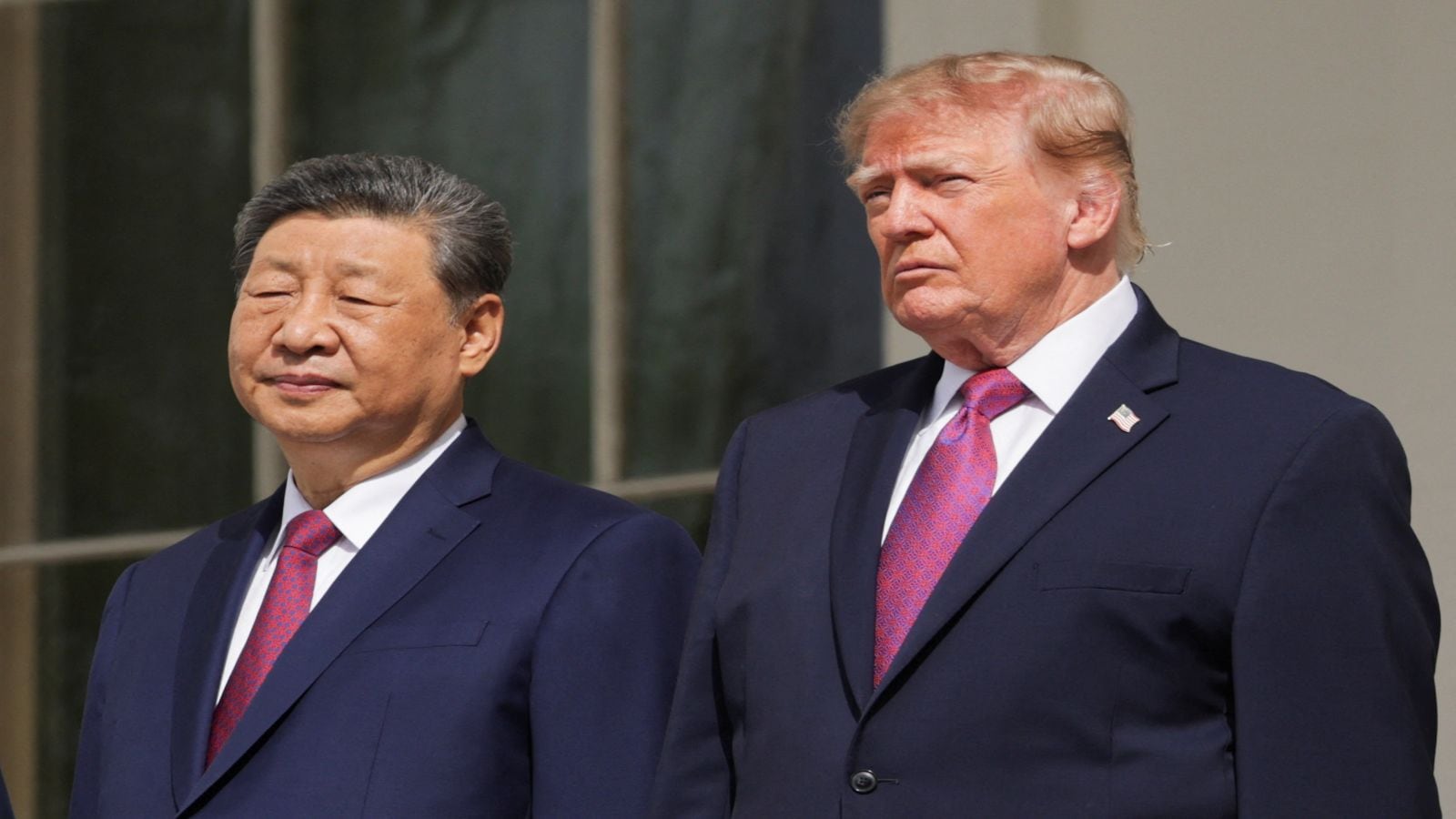
Sitting across from Donald Trump on the sidelines of the Asia-Pacific Economic Cooperation (APEC) summit in Shenzhen on November 19, 2026, Xi delivered that exact warning. If Washington wants to avoid major setbacks in bilateral relations, it needs to handle Taiwan properly. On the surface, the meeting looked remarkably warm—Xi personally greeted Trump at Shenzhen Bao'an International Airport the day before, and both sides described their third face-to-face summit of 2026 as constructive.
Yet buried inside Beijing's official readout is a high-stakes diplomatic chess match that most coverage completely glossed over.
The Readout Gap Between Beijing and Washington
If you've spent any time tracking U.S.-China summits, you know the real story rarely sits in the handshake photos. It lives in the discrepancies between what Beijing publishes and what Washington confirms.
Following the Shenzhen talks, China's Foreign Ministry released a statement claiming Xi urged the U.S. to "keep doing the right thing and avoid major setbacks in China-U.S. relations". More striking, Beijing's readout explicitly quoted Trump as saying the United States does not support "Taiwan independence".
Here's the catch. Washington didn't issue a joint statement. The White House didn't immediately release a matching fact sheet. Even Trump's own Fox News interview summary about his APEC trip skipped Taiwan entirely.
Taipei noticed immediately. On November 20, Taiwan's Mainland Affairs Council Minister Chiu Chui-cheng told reporters that an initial review found Chinese state media accounts inaccurate, urging Washington to clarify what actually happened inside the room.
Why does this gap matter? Because Beijing routinely uses summit readouts to lock American presidents into verbal commitments they may have phrased differently—or never made at all. As National Cheng Kung University political science professor Wang Hung-jen pointed out, Taiwan appeared in two separate passages of China's readout with phrasing and placement that broke from past summit templates. That's a classic sign of post-meeting diplomatic framing.
Why Doing the Right Thing Means Arms Sales and Delays
In Beijing's vocabulary, "doing the right thing" isn't an abstract plea for peace. It translates to three concrete demands.
- Halting weapons transfers: Beijing has repeatedly demanded that Washington stop selling defensive arms to Taipei. Notably, China's Shenzhen readout didn't explicitly mention arms sales, even though the topic hangs over every bilateral meeting.
- Limiting official contact: China objects to high-level visits and diplomatic upgrades between U.S. and Taiwanese officials.
- Reaffirming opposition to independence: Beijing wants public, unambiguous statements from the Oval Office ruling out formal Taiwanese sovereignty.
The timing of Xi's Shenzhen warning makes total sense when you look at the defense calendar. Earlier in September 2026, reporting from the South China Morning Post revealed that the Trump administration had been weighing delays on major arms packages for Taiwan until after the November APEC summit and the December G20 meeting—potentially pushing approvals to the very end of the year.
Xi knows Trump wants wins on trade, Boeing aircraft orders, counter-narcotics, and critical mineral export truces. By framing Taiwan as the single tripwire capable of blowing up their "action plan" for a stable relationship, Xi is tying economic cooperation directly to Washington's restraint in the Taiwan Strait.
Does Not Support Independence Isn't Actually a Policy Shift
Whenever a Chinese readout claims an American president said the U.S. "does not support Taiwan independence," panic ripples through foreign policy circles. Honestly, most of that anxiety misses historical context.
Saying the U.S. doesn't support independence has been standard American diplomatic phrasing for decades. It's a core pillar of Washington's "One China" policy—which, crucially, is distinct from Beijing's "One China" principle. Back in 1995, President Bill Clinton went even further in a private letter, stating the U.S. would actively oppose Taiwan independence.
Even Taiwanese President Lai Ching-te hasn't treated that phrasing as a crisis. After Trump remarked in a May 2026 Fox News interview that he didn't want Taiwan to declare independence, Lai responded publicly that Taiwan doesn't have an independence issue in the first place—maintaining Taipei's position that the Republic of China is already a sovereign, self-governing entity.
What would actually alarm Taipei? Language endorsing "peaceful unification" or pressuring Taiwan into cross-strait political talks. Neither showed up in the Shenzhen readouts.
Extending the List of Cooperation While Daily Pressure Continues
Look closely at Xi's broader pitch to Trump in Shenzhen. Xi told the U.S. president that the two powers should "extend the list of cooperation and shorten the list of problems".
He pointed to tangible areas where both governments can claim domestic victories:
- Counter-narcotics enforcement and cracking down on precursor chemicals.
- Repatriation of undocumented immigrants.
- Joint efforts against telecommunications and online fraud.
- Artificial intelligence safety to ensure AI remains under human control.
It sounds cooperative. Almost friendly.
Meanwhile, China's military continues operating around Taiwan every single day. That's the dual-track reality of Beijing's strategy. At the summit table in Guangdong province, Xi offers trade stability, AI guardrails, and law enforcement help. In the air and waters surrounding Taiwan, People's Liberation Army jets and naval vessels maintain relentless gray-zone pressure.
Interestingly, Taiwan wasn't completely absent from Shenzhen either. Senior Taiwanese government representative Shih and National Security Council Deputy Secretary-General Vincent Chao attended APEC events in the city—a rare visit to mainland China by high-ranking Taipei officials, where Shih publicly thanked like-minded partners for deepening bilateral cooperation.
How to Read U.S.-China Diplomacy Without Getting Played
If you're tracking geopolitical risk—whether for supply chains, semiconductor exposure, or policy analysis—stop reacting to single quotes from state media readouts. Summit rhetoric is designed for domestic audiences first.
Watch three concrete indicators over the next sixty days instead:
- White House Congressional notifications: Check the Defense Security Cooperation Agency (DSCA) docket through December and January. If delayed Taiwan arms packages finally drop after the G20 summit wraps up, Xi's warning didn't stop the pipeline.
- Official U.S. readout language: Compare any belated State Department or White House transcripts against Beijing's November 19 summary to see whether Washington confirms or walks back the "does not support" quote.
- PLA sortie patterns: Monitor Taiwan's Ministry of National Defense daily trackers. A spike in median-line crossings right after a friendly summit tells you more about Beijing's actual posture than a banquet toast ever will.


