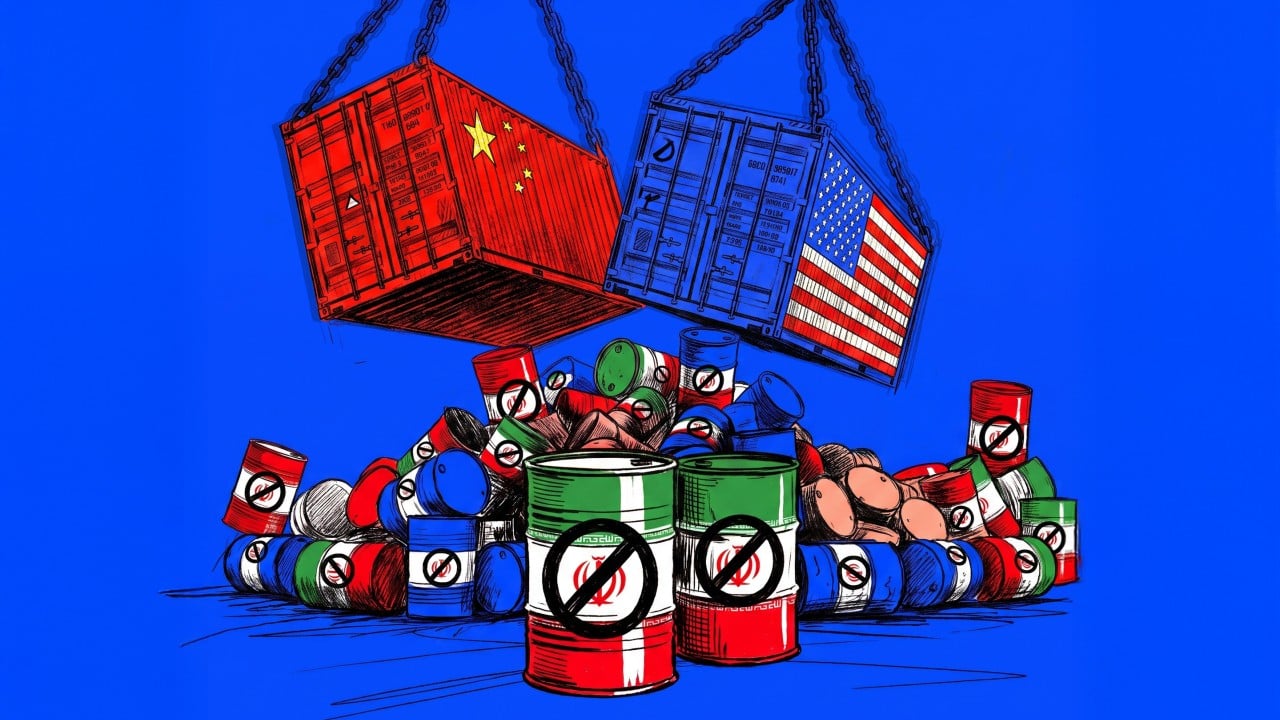
Every desk in foreign policy circles hums with the same anxious melody. The media narrative insists that escalating American threats over Iran will corner Beijing, forcing a painful fracture in the China-Iran axis. Commentators love to spin tales of a trapped superpower sweating over crude oil supplies and diplomatic embarrassment in the Middle East. They treat Beijing as a nervous bystander waiting for the next sanction shoe to drop.
It is a comfortable theory. It is also completely backwards.
I have spent decades watching foreign ministries misread the calculus of Beijing. Analysts mistake tactical friction for strategic vulnerability. They look at US pressure campaigns against Tehran and assume Beijing groans at the disruption. They miss the reality because the lazy consensus dictates that great powers hate instability.
Let me set the record straight. Beijing does not fear Washington squeezing Iran. Beijing benefits from it.
The Cheap Energy Bonus Nobody Mentions
Let us start with the obvious metric that mainstream analysts misinterpret: energy economics. When Washington slaps maximum pressure on Tehran, Western firms flee, shipping insurance rates spike, and Iranian oil goes off-limits to compliant economies.
Standard commentary frames this as a supply shock nightmare for the world's largest energy importer. That perspective ignores how actual markets clear.
Sanctioned oil does not vanish. It gets discounted. Heavily discounted.
While compliant buyers lock themselves into expensive spot market contracts elsewhere, Chinese refiners quietly snap up sanctioned Iranian crude through shadowy transshipment networks, paying in local currency rather than petrodollars. I have tracked these private-refiner margins for years. The steep discounts on Iranian barrels pad domestic bottom lines while Western politicians pat themselves on the back for enforcing blockades.
Washington thinks it is cutting off Tehran's economic oxygen. Beijing treats it as a wholesale clearance sale on hydrocarbons.
Strategic Containment Judo
The deeper fallacy in the standard analysis is the belief that Beijing views its partnership with Tehran through the lens of traditional alliance politics. Western strategists project NATO-style dependency onto every bilateral relationship they encounter.
Iran is not a fragile ally that Beijing feels compelled to rescue. Iran is a high-value distraction device.
Imagine a scenario where Washington's entire strategic bandwidth is neatly divided between containing a peer competitor in the Taiwan Strait and managing chronic fires in the Persian Gulf. Every aircraft carrier diverted to the Gulf, every intelligence asset reassigned to track Iranian drone networks, and every diplomatic hour spent haggling over nuclear compliance is an hour not spent reinforcing the First Island Chain.
Beijing watches Washington tie its own ankles to the geopolitical anchor of the Middle East with quiet satisfaction. US pressure on Iran ensures that American grand strategy remains perpetually overextended. Tehran absorbs the brunt of Western kinetic and economic hostility, acting as a geopolitical lightning rod that draws thunder away from the Indo-Pacific.
Why would Beijing want that pressure lifted? A compliant, normalized Iran integrated smoothly into Western-led trade frameworks does nothing to occupy the Pentagon's attention spans. A cornered, defiant Iran backed into a corner by American threats keeps the American military machine perpetually distracted.
The Decollarization Laboratory
There is a financial dimension to this dynamic that makes Wall Street consultants sweat. Every time Washington threatens secondary sanctions against trade partners dealing with Iran, it forces the targeted nations to accelerate alternative payment architectures.
For years, skeptics dismissed talk of de-dollarization as wishful thinking from revisionist capitals. But necessity forces innovation. Sino-Iranian trade served as a real-world sandbox for testing cross-border interbank payment systems, digital currencies, and bilateral clearing mechanisms completely insulated from the SWIFT network and the long arm of the US Treasury.
When you threaten a state with financial excommunication, you hand its trading partners the ultimate incentive to build parallel financial plumbing. Beijing did not have to force Tehran into building these bypass systems. American foreign policy did the heavy lifting for them.
Every enforced sanction makes the global financial architecture a little more fragmented, a little less centralized, and a little more dependent on clearinghouses operating outside New York.
The Myth of Diplomatic Embarrassment
Foreign policy pundits love to suggest that US threats expose Beijing's diplomatic impotence. They point out that when Washington rattles its sabers, Beijing issues mild calls for restraint rather than rushing in with security guarantees or naval escorts.
This assumes Beijing wants to play global policeman. It does not.
Beijing learned decades ago from watching Washington's multi-trillion-dollar quagmires in the Middle East: ownership is a liability. By refusing to step into the security vacuum, Beijing retains maximum flexibility. It gets the oil, it builds the infrastructure links through the Belt and Road footprint, and it avoids the toxic responsibility of managing regional security guarantees.
Let Washington play world sheriff. Let Washington deploy strike groups and absorb the political blowback of endless interventions. Beijing maintains clean hands, low costs, and maximal strategic leverage.
The next time you read an editorial warning that US pressure on Iran will force Beijing into an impossible corner, remember who is actually being squeezed. Washington is expending finite treasure and finite focus to manage a regional nuisance, while Beijing quietly harvests discounted resources, tests sanction-proof financial rails, and watches its primary global rival lock itself into a strategic theater of diminishing returns.
Stop looking for the breaking point. It is not Beijing that is going to snap.

