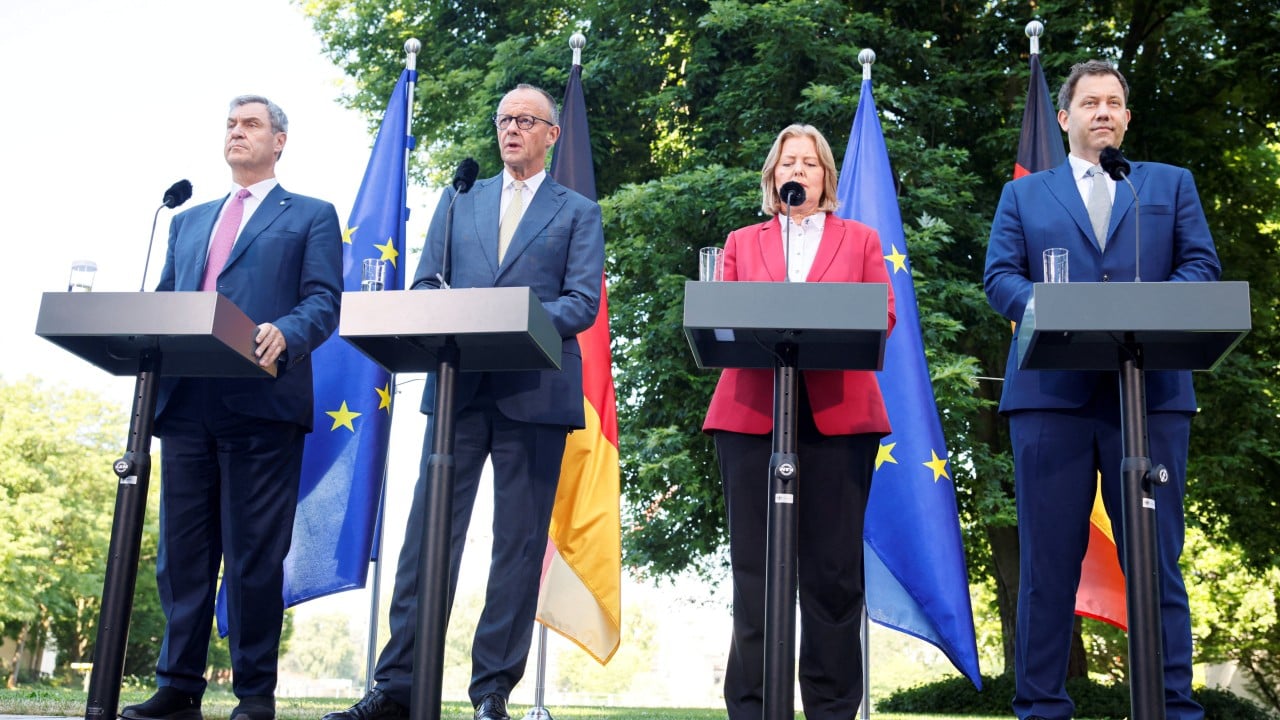
The headlines out of Berlin are dripping with a sudden, unearned bravado. We are told the German government has finally found its backbone. Officials are pledging to "defend trade" and signaling a sharper, more aggressive stance against Beijing. The media is eating it up, framing this as a long-overdue awakening to geopolitical reality.
It is a comforting narrative. It is also entirely detached from economic math.
Let’s dismantle the lazy consensus right now. Berlin isn't signaling strength; it is performing geopolitical theater to mask an existential vulnerability. The idea that Germany can casually pivot away from China, erect trade barriers, or "de-risk" its industrial core without triggering an absolute collapse in its domestic economy is a fantasy born in political think tanks, not corporate boardrooms.
I have spent years analyzing global supply chains and advising multinational firms on cross-border capital allocation. I have seen companies burn through tens of millions of dollars trying to replicate tight, specialized ecosystem clusters outside of Asia, only to realize the infrastructure, specialized labor, and raw material access simply do not exist anywhere else.
When politicians talk about "defending trade" through protectionism, they are actually talking about suffocating their own industrial base. Germany cannot decouple from China. Germany is decoupled without China.
The Myth of the Easy Pivot
The mainstream press loves the word "diversification." It sounds clean, corporate, and responsible. The prevailing argument claims that German automakers and engineering firms can simply reallocate their capital to emerging markets in Southeast Asia or North America to offset any friction with Beijing.
This betrays a fundamental ignorance of how modern advanced manufacturing works.
China is not just a massive consumer market for Volkswagen, BMW, and BASF; it is the foundational bedrock of their supply chains. The deep integration of the German Mittelstand with Chinese suppliers isn't a casual outsourcing arrangement that can be undone via executive order. It is a highly optimized, decades-old web of specialized component manufacturing, rare earth processing, and rapid prototyping.
Consider the fundamental mechanics of the automotive transition. A modern electric vehicle battery relies on a supply chain heavily concentrated in Chinese hands—from lithium and cobalt refining to anode and cathode production.
[Raw Materials: Lithium/Cobalt] -> [Chinese Refining & Processing] -> [Cell/Pack Manufacturing] -> [German Automotive Assembly]
To believe Germany can unilaterally dictate terms to its primary supplier while lacking domestic alternatives is sheer hubris. If Berlin enforces aggressive tariffs or investment restrictions under the guise of "defending trade," Beijing won't need to launch a full-scale trade war. A simple, targeted bureaucratic slowdown on the export of critical battery components or gallium and germanium would grind Wolfsburg and Stuttgart to a halt within days.
Dismantling the Prejudices: The "China Threat" to German Industry
Let's address the question everyone keeps asking: Hasn't China been stealing German intellectual property and systematically undermining its manufacturing edge?
The conventional answer is a resounding yes. But the brutal, honest truth is more embarrassing for Berlin. German industry didn’t lose its edge because of Chinese espionage; it lost its edge because of German complacency.
For two decades, German executives treated China as a high-margin dumping ground for internal combustion engine (ICE) vehicles while completely misjudging the speed of the digital and electrical revolution. While German engineers were busy perfecting the fuel efficiency of diesel engines, Chinese firms like BYD and CATL were building the entire ecosystem for the next generation of transport.
Blaming "unfair trade practices" for the current plight of German industry is a pathetic cop-out. It shifts the blame from boardroom incompetence to foreign malice. Imposing protectionist barriers now won't magically make German legacy automakers more innovative. It will merely insulate them from competition, guaranteeing their long-term obsolescence.
The High Cost of Geopolitical Posturing
There is a massive downside to my contrarian position, and we must look at it clearly. Accepting that Germany must maintain deep economic ties with China means accepting a high degree of geopolitical vulnerability. It means Berlin cannot easily align with Washington's aggressive containment strategies without destroying its own standard of living. It means making uncomfortable ethical compromises.
But the alternative is economic self-immolation.
Let's look at the hard data regarding Germany's economic health. The country's industrial production has been on a downward trend for years, exacerbated by the loss of cheap Russian gas. The energy-intensive chemical sector is already moving production capacity out of the country because operating domestically is no longer financially viable.
If you strip away the ability of German engineering firms to sell high-value machinery to China, and if you cut off access to cheap Chinese intermediate goods, the German economic model is completely dead. The country cannot survive simultaneously losing its cheapest energy source (Russia) and its largest trade partner (China) within the span of a few years.
Stop Trying to "De-Risk" (Do This Instead)
The current policy prescription of "de-risking" is a slow poison. It forces companies to misallocate capital into less efficient regions, driving up production costs and making German exports uncompetitive on the global stage.
If Berlin actually wanted to defend its trade and secure its future, it would completely flip its script:
- Double down on domestic structural reform: Stop obsessing over trade deficits and start fixing the catastrophic internal failures. Germany’s digital infrastructure is notoriously outdated, its energy policy is a chaotic mess, and its corporate tax structure disincentivizes domestic investment.
- Acknowledge co-dependence as a feature, not a bug: Mutual economic destruction is a powerful deterrent. Instead of trying to break the chain, German firms should focus on maintaining their choke points—such as highly specialized industrial machinery and advanced optics—where China still relies on European expertise.
- Invest heavily in basic R&D: The government needs to stop subsidizing dying legacy industries and start funding moonshot projects in synthetic biology, advanced materials, and next-generation computing.
The current political theater out of Berlin is a dangerous distraction. Pledging to stand tough against your most vital economic partner while your domestic infrastructure decays is not strategy. It is a suicide note dressed up as a press release. Stop trying to fight a trade war you’ve already lost the capacity to win. Fix your own house first.