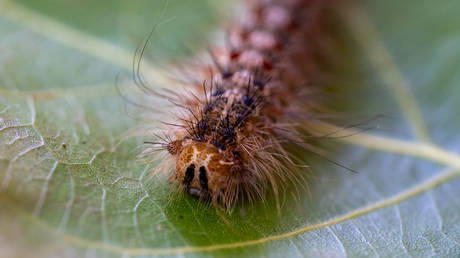
Berlin is facing an unprecedented ecological disruption as millions of toxic oak processionary moths and invasive pest species overrun the capital's famous green spaces. Local media reports have focused on the surface-level panic of closed playgrounds and canceled outdoor events. The real crisis, however, runs far deeper than a few ruined picnics. This sudden infestation highlights a compounding failure of urban forestry management, decades of short-sighted municipal budgeting, and the undeniable acceleration of shifting regional microclimates.
The immediate threat stems from the Thaumetopoea processionea—the oak processionary moth. In its caterpillar stage, this insect is covered in up to 700,000 microscopic, barbed hairs containing the toxic protein thaumetopoein. When airborne, these hairs trigger severe allergic reactions, respiratory distress, and painful skin inflammations upon human contact. As municipal teams struggle to contain the outbreak, Berliners are discovering that the city's celebrated urban canopy has transformed into a public health hazard.
The Mechanized Defenses are Failing
City officials have deployed specialized contractors equipped with industrial vacuum trucks and chemical sprays to clear the infested oaks. It is a losing battle. The sheer volume of the infestation has overwhelmed the available workforce, leaving vast swaths of Tiergarten and Volkspark Hasenheide completely untreated.
Municipal budgets for tree maintenance have been squeezed for over a decade. Berlin boasts more than 400,000 street trees, yet the specialized arborists required to handle toxic infestations are in critically short supply. The current strategy relies on reactive spot-cleaning. Workers vacuum nests from lower branches while the canopy above remains a breeding ground, allowing the next generation of pests to mature undisturbed.
Furthermore, the mechanical removal process itself presents risks. High-powered vacuums can inadvertently fracture the brittle nests, sending clouds of toxic micro-hairs into the wind. A single nest can pollute the immediate air radius for months, as the hairs remain potent in the soil and undergrowth long after the caterpillars have pupated.
The Monopoly of the Monoculture
To understand how Berlin became an ideal incubator for these toxic swarms, one must examine the post-war replanting strategies of the city. During the reconstruction eras, urban planners favored fast-growing, uniform tree lines to quickly restore the ruined cityscape. Oak trees, particularly the English oak, were planted in dense, unbroken corridors along major thoroughfares and residential avenues.
This created a perfect ecological highway for the processionary moth. In a diverse forest ecosystem, a pest encounter with a non-host tree slows its spread. In Berlin, the caterpillars can migrate from canopy to canopy without ever leaving their preferred food source. The city essentially built a buffet line for the species, and the bill has finally come due.
Biologists have long warned about the vulnerabilities of urban monocultures. When a single species dominates the landscape, any specialized predator or pest can achieve exponential population growth. Berlin is now paying the price for prioritizing aesthetic uniformity over ecological resilience.
The Thermal Island Effect
Urban centers are inherently warmer than their rural surroundings. Concrete, asphalt, and dark roofs absorb massive amounts of solar radiation during the day and radiate that heat back into the atmosphere at night. Berlin's dense core experiences a pronounced urban heat island effect, keeping nighttime temperatures several degrees higher than the surrounding Brandenburg countryside.
This elevated temperature profile acts as an artificial incubator. The oak processionary moth thrives in warm, dry conditions. The urban heat island effect shortens their pupation cycles and extends their active feeding windows, allowing them to strip trees bare at an accelerated rate. What used to be a cyclical seasonal nuisance has mutated into a prolonged, multi-month siege.
Predator Deficit in the City
In a balanced woodland environment, populations of these caterpillars are kept in check by natural predators. Cuckoos, certain species of beetles, and parasitic wasps specialize in penetrating the toxic defenses of the processionary moth. In the concrete-heavy environment of central Berlin, these natural predators cannot survive in sufficient numbers to make an impact.
The lack of nesting sites and the heavy use of cosmetic urban pesticides over the years have driven away the very birds and insects needed to combat the swarm. Without these biological checks and balances, the caterpillar population faces zero resistance, leading to the explosive growth witnessed across the city this season.
The Economic and Social Fallout
The economic consequences of the infestation are rippling through Berlin's summer economy. Outdoor dining, a vital revenue stream for thousands of cafes and beer gardens, has plummeted in heavily infested districts like Pankow and Reinickendorf. Business owners report empty terraces as customers choose to sit indoors rather than risk exposure to drifting toxic hairs.
| District | Estimated Public Tree Infestation Rate | Closed Public Spaces (June) |
|---|---|---|
| Pankow | 42% | 14 Parks/Playgrounds |
| Mitte | 28% | 6 Parks/Playgrounds |
| Reinickendorf | 51% | 22 Parks/Playgrounds |
| Steglitz-Zehlendorf | 35% | 11 Parks/Playgrounds |
The tourism sector is also vulnerable. Berlin’s reputation as Europe’s greenest capital is a major draw for summer travelers. With iconic landmarks like the Grunewald forest turning into restricted zones, travel agencies are beginning to issue advisories. The financial impact of lost tourism revenue, combined with the skyrocketing costs of emergency pest control contracts, is creating a significant deficit in the city's seasonal budget.
Rethinking the Urban Forest
Fixing this crisis requires looking beyond emergency chemical interventions and short-term panic fixes. Spraying entire parks with biocides kills off non-target insect species, further degrading the local food chain and ensuring that future pest outbreaks will be even more severe.
The long-term solution demands a radical restructuring of Berlin’s urban forestry strategy. Municipal authorities must initiate a multi-decade diversification program, replacing aging or dead oaks with a varied mix of climate-resilient, non-host species like hornbeam, field maple, and wild cherry. Introducing structural diversity into the tree lines disrupts the migratory paths of the caterpillars and builds natural barriers against future swarms.
Additionally, urban planners must prioritize the creation of predator-friendly habitats within city limits. Installing widespread nesting boxes for specialized birds and establishing untamed, pesticide-free green corridors will allow natural predators to re-establish a foothold in the capital.
The current infestation is a stark warning that managing an urban environment requires respecting basic ecological principles. Berlin cannot simply pave over nature and expect the remaining fragments to function flawlessly without maintenance, diversity, and foresight. The swarms filling the city's parks are not a freak natural disaster; they are the predictable result of treating living ecosystems like static infrastructure.