The sea at night does not look like water. It looks like polished obsidian, heavy and cold, throwing back the faint glow of the bridge console. On a merchant tanker plowing through the western edge of the Black Sea, the only sound is the rhythmic, sub-bass thrum of a massive diesel engine deep in the ship’s belly. It is a sound that becomes a heartbeat for the crew. You sleep to it. You eat to it.
Then, it stops. Or worse, it changes.
For the international crew aboard the oil products tanker navigating toward Ukraine, the routine of the night shift vanished in a heartbeat. A sudden shudder ripped through the engine room, followed by the shrill, frantic wail of the fire alarm. In the tight, metal corridors of a ship at sea, fire is not just a hazard. It is an immediate, suffocating predator.
When the smoke cleared off the coast of Romania, the global shipping community registered another statistic. One dead sailor. A damaged vessel. A minor disruption in the logistical chess match of Eastern Europe.
But behind the cold lines of the official maritime reports lies a human reality that the modern world prefers to ignore. We want our fuel cheap, our grain delivered, and our global supply chains uninterrupted. We rarely ask about the men trapped in steel boxes, navigating mine-strewn waters, standing between global stability and absolute chaos.
The Invisible Highwire
Merchant sailors are the ghosts of global commerce. They spend months isolated from their families, working in environments where a single spark or a misplaced footstep can mean disaster. When you add a geopolitical conflict to the equation, the normal hazards of the job multiply exponentially.
Consider the geography. The western Black Sea has become a tense, heavily monitored corridor. Since the escalation of hostilities in Ukraine, commercial shipping has been forced to hug the coastlines of NATO members like Romania and Bulgaria, squeezing through a narrow maritime highway. The waters are littered with drifting naval mines. The skies are filled with reconnaissance drones.
The tanker in question was bound for a Ukrainian port, carrying out a mission that was entirely commercial yet inherently perilous. The vessel was operating in the shadow of conflict, where insurance rates skyrocket and crews demand hazard pay just to step onto the deck.
Imagine standing on that deck. The air smells of salt and fuel. You know that beneath the hull, the water holds weapons designed to tear iron apart. You know that above you, political decisions made in distant capitals have turned your workplace into a friction point. You are not a soldier. You do not carry a weapon. Your only defense is a life jacket, a hard hat, and the hope that the flashing lights on the horizon belong to a friendly coast guard.
The Fire in the Iron Box
The fire broke out in the engine room, the most dangerous place for an incident to occur. An engine room is a labyrinth of pressurized oil lines, superheated exhaust manifolds, and high-voltage electrical systems. When a fire takes hold there, it feeds on the very lifeblood of the ship.
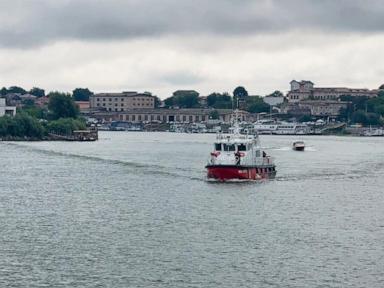
Reports from the Romanian naval authorities and rescue coordination centers paint a frantic picture. The call for help went out as the vessel drifted off the coast of Sulina, a small Romanian port town near the Ukrainian border. The Romanian agency for saving human life at sea dispatched vessels immediately.
For the crew on board, those minutes waiting for rescue stretched into eternity.
In a land-based fire, you run outside. You stand on the grass and wait for the sirens. On a ship, there is no outside. There is only the blistering heat of the steel deck beneath your boots, the choking black smoke billowing up from the companionways, and the realization that the nearest fire truck is hours away across open water.
The crew fought back. They used the ship's fixed carbon dioxide suppression systems, sealing off the engine room to starve the flames of oxygen. It is a desperate tactic that requires precise timing. If anyone is left inside when the gas is released, they die.
Despite the frantic efforts of the crew and the arrival of Romanian rescue boats, the incident claimed a life. One crew member suffered fatal injuries during the initial outbreak and the subsequent chaos. By the time the fire was contained and the ship was stabilized, a family thousands of miles away had lost a father, a son, or a brother.
The ship was eventually towed toward port, a blackened, silent hulk of iron. The news cycle moved on within twelve hours.
The True Cost of Contentment
We live in an era of profound disconnection. We touch a screen, and a package arrives at our door. We turn a key, and our cars come to life. The complex, fragile web of ships, ports, pipelines, and sailors that makes this convenience possible is entirely hidden from view.
It takes an tragedy like the one off the Romanian coast to briefly rip the curtain open.
This was not an isolated incident of bad luck. It is the predictable outcome of a global economy that asks ordinary civilians to assume extraordinary risks. The Black Sea remains a vital artery for the transport of agricultural products and energy resources. If the ships stop moving, food prices spike in Africa, factories close in Europe, and inflation surges in the Americas.
The men who crew these ships are well aware of the stakes. They are often recruited from developing nations—the Philippines, India, Ukraine, and Russia—where the promise of a steady paycheck outweighs the terror of the open ocean. They work side by side, often coming from nations that are actively at war with one another, bound by the universal brotherhood of the sea.
They keep the world moving. And occasionally, they pay for our stability with their lives.
The Empty Chair
When a sailor dies at sea, the bureaucracy takes over. Investigations are launched by flag states. Insurance adjusters board the vessel with clipboards. Lawyers draft liability waivers. The machinery of global commerce seeks to quantify the loss, to assign a monetary value to a human life so the spreadsheets can balance.
But the real math is done elsewhere.
It is done in a living room where a phone rings in the middle of the night. It is done by a child who looks at a photograph of a smiling man wearing a blue boiler suit, standing against the backdrop of an endless blue horizon.
The tragedy off Romania was not just a maritime accident, nor was it merely a footnote in a faraway geopolitical struggle. It was a reminder that every resource we consume comes with a human price tag. The smoke over the Black Sea may have dissipated, but the vacancy left by that single sailor remains forever.
Next time you look out at the ocean, or even when you simply pump fuel into your car, remember the silent fleet. Remember the iron boxes moving through the dark, and the men inside them who watch the horizon, waiting for the smoke to clear.


