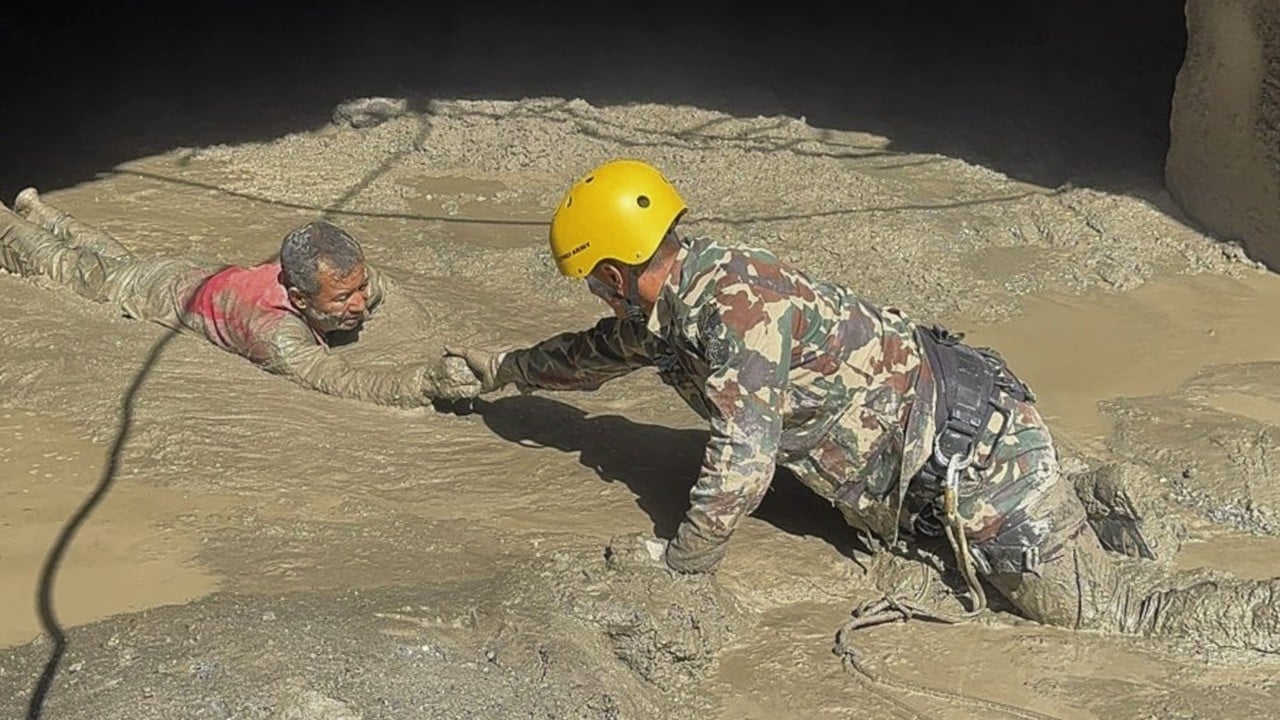
Every monsoon season, the headlines write themselves. Commuters trapped for days on a crumbling asphalt corridor. Outraged editorials demanding immediate federal intervention, fresh tarmac, and multi-million dollar contracts handed to the lowest bidder. The public nods along, comforted by a simple, digestible narrative: bad road equals bad outcome.
It is a clean story. It is also completely wrong.
I have spent the better part of two decades analyzing transit logistics across volatile emerging corridors. I have watched billions of dollars in asphalt vanish into the rainy season mud while traffic snarls remain precisely as lethal as they were twenty years ago. Puring more concrete onto a broken artery does not save a patient suffering from internal hemorrhage. Fixating purely on potholes misses the systemic collapse happening entirely off the pavement.
The Comforting Myth of the Pothole
Ask anyone stuck on that infamous Nigerian trunk line why they are sleeping in their sedan, and they will point at the craters. They will curse the federal ministry. They will swear that a smooth, freshly paved superhighway would solve everything.
This is the lazy consensus. It assumes infrastructure is a static pipe: pour a wider pipe, move more fluid.
Real-world transit economics does not work that way. When you widen a broken bottleneck without fixing the governing institutional choke points, you simply invite more volume into an unmanaged system. You build a faster runway to a permanent parking lot.
Look at the underlying physics and economics of these massive corridors. A highway is not just a ribbon of bitumen; it is an economic exchange mechanism. When a heavy axle-load transport truck breaks an axle in the middle of a single-lane stretch, it does not just block traffic. It acts as an economic anchor, cutting off supply chains for three neighboring states.
The mainstream media loves the visual drama of a stuck fuel tanker sinking axle-deep into red clay. It makes for incredible drone footage. But the physical degradation of the road surface is a symptom, not the root disease.
The Real Culprits Hiding in Plain Sight
If you want to understand why thousands of people spend three days marooned in their vehicles, stop looking at civil engineering textbooks and start looking at regulatory capture, axle-load enforcement, and informal taxation checkpoints.
- Unchecked Axle Weights: Commercial carriers routinely overload trailers by two to three hundred percent because the cost of a routine bribe is lower than the margin lost by running half-empty fleets. A road designed for a ten-ton limit takes a constant pounding from forty-ton juggernauts. No amount of cement can withstand physics when enforcement is entirely negotiable.
- The Checkpoint Economy: Along these major interstate veins, security operatives and municipal revenue collectors set up informal roadblocks every few miles. Each stop creates a micro-queue. Multiply those micro-queues by thousands of commercial vehicles, add a single stalled truck due to mechanical failure, and you create a cascading gridlock matrix that stretches for thirty miles.
- Zero Predictive Routing: There is an absolute vacuum of real-time telemetry. Commercial fleets operate on tribal knowledge and WhatsApp group chats. When a blockage occurs, freight operators continue driving blindly into the trap because alternative bypass networks are unmapped, unmaintained, or controlled by local cartels charging passage fees.
What Actually Works
If we stopped wasting capital on endless cycles of patching and repatching the same failed concrete, what would an effective intervention look like?
First, decentralize maintenance funding away from bloated federal ministries and tie it directly to localized toll-concession models with teeth. When private operators have skin in the game—meaning they lose revenue every minute a road is blocked—heavy trucks get weighed at the point of origin, not negotiated with at a roadside palm-wine shack.
Second, embrace dynamic corridor management. We do not need more asphalt; we need better choke management. Imagine a scenario where commercial transit licenses are automatically suspended for operators who gridlock primary corridors during peak seasonal shifts, backed by satellite-tracked geofencing.
The commuters trapped on those highways have every right to be furious. But their anger is being channeled toward the wrong enemy. The road isn't failing you. The entire operational architecture surrounding how we move goods and people across sovereign borders is broken.
Stop asking for more concrete. Start demanding accountability for the systems that turn a rainy afternoon into a three-day humanitarian crisis. Until we fix the incentives, the potholes are the least of our worries.