The national conversation about traffic safety has officially lost its mind. Every time a new batch of data drops showing that pedestrian fatalities are climbing, the media rushes to print the exact same headline: SUVs and oversized trucks are killing America.
It is a neat, tidy narrative. It gives activist groups a clear corporate villain to protest, and it gives regulators a convenient excuse to avoid doing their actual jobs. It is also completely wrong. Read more on a connected topic: this related article.
Yes, American vehicles have grown larger. Yes, pedestrian deaths have surged by over 75% over the last decade and a half. But correlating those two facts is a textbook example of lazy data analysis. By fixating entirely on vehicle hood heights, we are ignoring the structural, behavioral, and systemic failures that actually dictate who lives and who dies on our roads.
I have spent years analyzing transportation systems and urban design. I can tell you from the trenches that if every single American driver suddenly swapped their Ford F-150 for a Honda Civic tomorrow, people would still be dying at catastrophic rates. Further analysis by The Guardian highlights similar perspectives on the subject.
We do not have a car size problem. We have a systemic design problem that we are too lazy to fix.
The Blind Spot in the Hood-Height Panic
The core argument against big cars is simple physics: a higher grille hits a pedestrian in the chest or head rather than the legs, making the impact far more lethal. The Insurance Institute for Highway Safety (IIHS) has published extensive data backing this up, showing that vehicles with a hood height greater than 40 inches are significantly more dangerous to pedestrians.
Nobody is arguing with physics. A bigger mass traveling at speed delivers more kinetic energy. But focusing on the vehicle itself ignores the fundamental question of traffic safety: Why are the vehicles hitting the pedestrians in the first place?
Safety is not just about crash survivability; it is about crash prevention. If you look closely at the data from the National Highway Traffic Safety Administration (NHTSA), you find a glaring reality that the "ban big cars" crowd completely ignores. The vast majority of the spike in pedestrian fatalities occurs under three specific conditions:
- At night or during twilight hours
- On high-speed, multi-lane arterial roads
- In areas completely devoid of mid-block crosswalks
If vehicle size were the primary driver of this crisis, we would see a proportional rise in pedestrian deaths across all times of day and all road types. We don't. The surge is overwhelmingly concentrated in the dark, on roads designed like highways but lined with strip malls.
The Deadly American Stroad
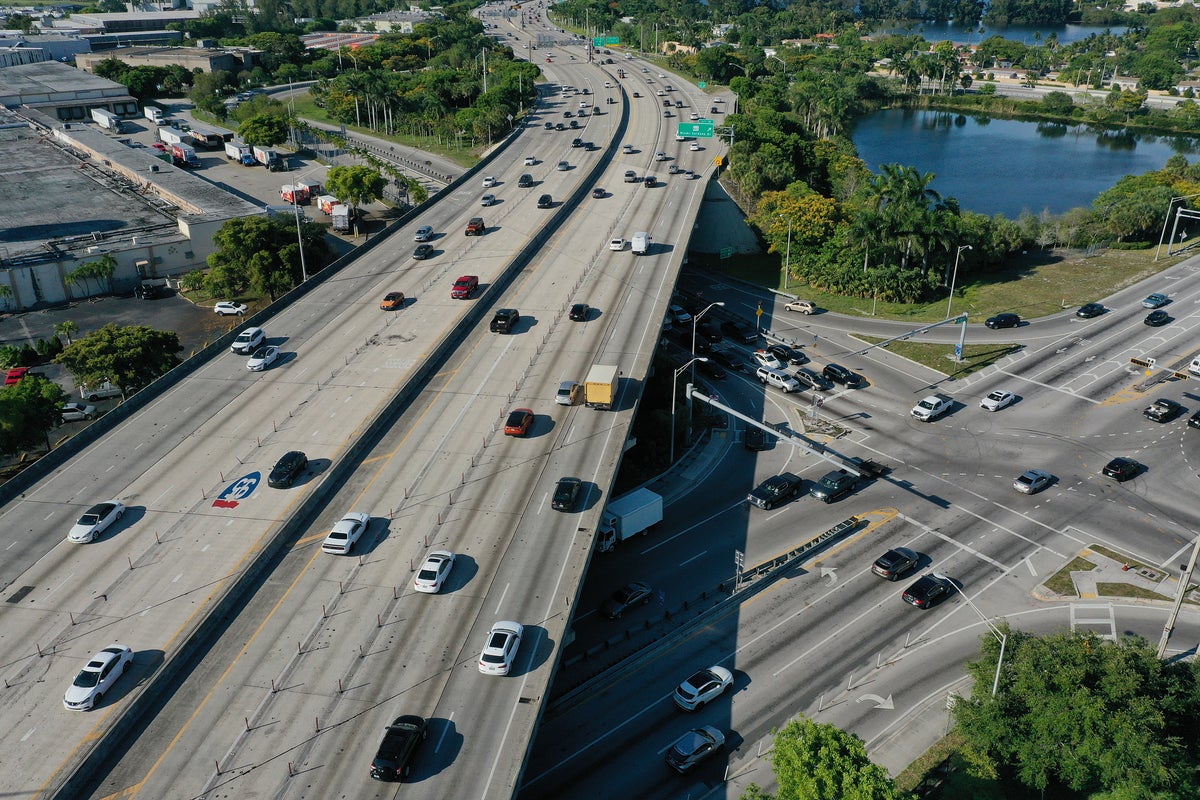
Go to any modern European city and you will see SUVs. They are buying them in record numbers over there too. Yet, European pedestrian deaths have generally trended downward or remained flat. Why? Because Europe builds roads for cars and streets for people. America builds "stroads."
An urban planner named Charles Marohn coined the term "stroad" to describe a street-road hybrid. A road is a high-speed route designed to move vehicles efficiently between two points. A street is a complex environment designed for human interaction, commerce, and foot traffic.
A stroad tries to do both and fails miserably at both. It is a six-lane asphalt desert with a 45 mph speed limit (which means people actually drive 60 mph), lined with driveways, fast-food joints, and bus stops.
Imagine a scenario where a retail worker misses their bus at 9:00 PM. The next bus stop is a quarter-mile away on the other side of a six-lane stroad. The nearest marked crosswalk is a half-mile down the road. It is dark, the streetlights are poorly spaced, and the speed limit is 50 mph. The worker attempts to sprint across the lanes. A driver traveling at 55 mph hits them.
Did that person die because the driver was in a Chevy Silverado instead of a Toyota Corolla? No. At 55 mph, a Toyota Corolla is just as lethal as a pickup truck. The pedestrian died because the infrastructure forced them into a game of real-life Frogger.
The Suburbanoization of Poverty
To understand why pedestrian deaths are skyrocketing, you cannot just look at vehicle manufacturing plants in Detroit. You have to look at shifting demographics.
Over the past twenty years, low-income populations have increasingly been pushed out of gentrified city centers and into older, inner-ring suburbs. These suburbs were built in the mid-to-late 20th century, completely optimized for automobile ownership. They lack continuous sidewalks, they lack adequate street lighting, and they lack frequent transit options.
When you shift millions of people who rely on walking or public transit into environments built exclusively for car owners, casualties are guaranteed. Data consistently shows that low-income individuals and minorities are disproportionately represented in pedestrian fatality statistics. They are not dying because their neighbors bought bigger trucks; they are dying because they are forced to walk in environments hostile to human life.
The Digital Distraction Epidemic
Let us address the elephant in the room that everyone acknowledges but no one wants to solve: distraction.
The timeline of the pedestrian death spike perfectly mirrors a massive technological shift. The sharp upward trajectory began around 2009 and 2010. What happened then? The mass adoption of smartphones and the explosion of mobile data usage.
We now have an environment where drivers are staring at screens integrated into their dashboards or held in their hands, while pedestrians are walking with their eyes glued to phones and noise-canceling headphones covering their ears.
Automotive manufacturers have turned vehicle interiors into rolling living rooms. Dashboards are now dominated by massive, glowing touchscreens that require drivers to take their eyes off the road just to adjust the air conditioning or change the radio station. The loss of physical buttons is an unmitigated disaster for situational awareness.
When you combine a 5,000-pound vehicle traveling at high speed on a poorly lit stroad with a driver looking at an infotainment screen and a pedestrian looking at a text message, the result is inevitable. Blaming the physical height of the truck grill for this outcome is like blaming the caliber of a bullet for a gun accident while ignoring the fact that someone was playing Russian roulette.
The Failure of "Smart" Technology
The automotive industry loves to claim that technology will save us. They point to Automatic Emergency Braking (AEB) and pedestrian detection systems as proof that vehicles are getting safer.
The reality is far less impressive. Independent testing by groups like AAA has repeatedly shown that existing pedestrian detection systems are borderline useless at night—which, again, is when the majority of these deaths happen. They fail to detect pedestrians in dark clothing, they fail on curves, and they fail at speeds above 30 mph.
By relying on these unproven tech solutions, regulators have given automakers a pass. We allow them to market these systems as lifesavers, giving drivers a false sense of security that leads to even more profound levels of inattention.
The Regulatory Loophole No One Talks About
If we want to assign legitimate blame to the government and the auto industry, we need to talk about the Corporate Average Fuel Economy (CAFE) standards. This is where the real policy failure lies, but it is far more nuanced than just "cars got bigger."
In the mid-2000s, regulators reformed CAFE standards to base fuel efficiency targets on a vehicle's "footprint"—the area enclosed by its wheels. Smaller cars were held to incredibly strict fuel economy targets, while larger vehicles were given much more relaxed targets.
Automakers quickly realized that instead of investing billions to make small cars radically more efficient, it was far more profitable to simply scale up the footprint of their vehicles to qualify for lower efficiency standards. The government accidentally created an economic incentive to kill the station wagon and the compact sedan, replacing them with massive crossovers and SUVs.
This regulation directly altered what vehicles are available on dealership lots. Consumers did not collectively wake up one day and demand that every vehicle have a grille matching the height of an adult male's shoulder. They bought what the regulatory structure made profitable for car companies to build.
How to Actually Fix the Crisis
If we want to stop burying thousands of pedestrians every year, we have to stop focusing on vehicle design and start focusing on the environment where these vehicles operate. It requires moving past easy corporate scapegoating and implementing solutions that require actual political will.
1. Kill the Stroad
We must redesign suburban arterials. This does not mean painting a few lines on the asphalt and calling it a bike lane. It means narrowing lanes to naturally force drivers to slow down, installing physical medians that serve as pedestrian refuge islands, and building roundabouts to eliminate high-speed T-bone and turning conflicts. Speed kills, and the most effective speed limiter is a narrow, complex road design, not a sign with a number on it.
2. Mandate Continuous Sidewalks and Mid-Block Crossings
If a transit authority places a bus stop on a road, it must be legally required to provide a safe, illuminated crosswalk within 100 feet of that stop. Expecting people to walk half a mile out of their way to cross a street legally is a fantasy. If you do not build infrastructure for actual human behavior, humans will improvise, and they will die doing it.
3. Ban Touchscreen-Only Interfaces
Regulators should immediately mandate that critical vehicle functions—climate control, windshield wipers, and audio volume—must be operated by physical buttons or knobs that can be located by touch alone. Forcing a driver to navigate three sub-menus on a glowing screen to defog a windshield is a regulatory failure of the highest order.
4. Overhaul Street Lighting
We need to transition from outdated, yellow high-pressure sodium streetlights to targeted, high-contrast LED lighting at intersections and mid-block crossings. If a driver cannot see a pedestrian until they are 30 feet away, the vehicle's bumper height is entirely irrelevant.
The narrative that American car buyers simply fell in love with monster trucks and caused a national crisis is a comforting fiction. It allows us to ignore the systemic degradation of our public infrastructure, the failures of our regulatory agencies, and our collective addiction to digital distraction. Until we fix the environments we live in, the body count will continue to rise, no matter what size cars we drive.