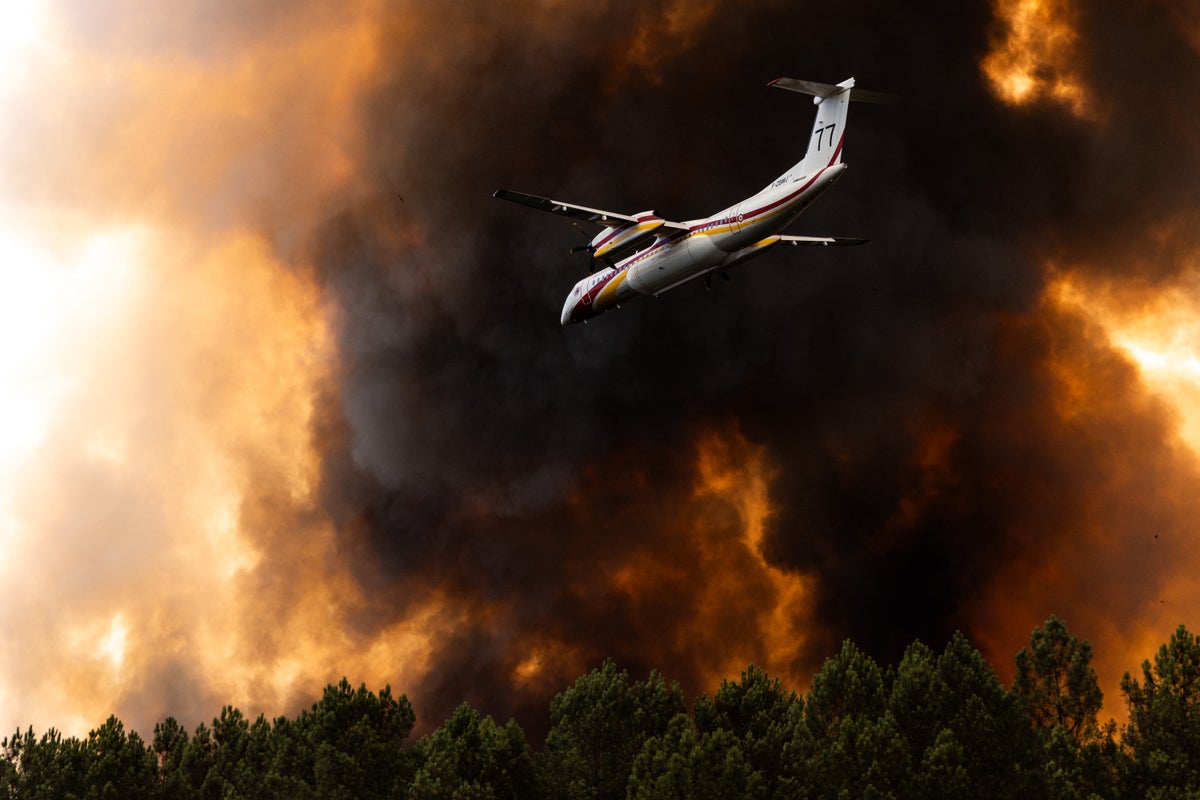
Every single summer, the media falls into the exact same lazy trap. The thermometer creeps up, a patch of brush catches fire in the south of France, and the headlines scream about an unprecedented climate apocalypse. Reporters dust off the tired script of a frantic battle against nature, painting towering walls of flame as an unstoppable, novel fury.
It is a comforting narrative for armchair observers. It pins the blame on an abstract global phenomenon, absolving local policymakers, forestry bureaucrats, and agricultural planners of any direct responsibility.
The standard consensus claims we are helpless victims of a warming planet. That perspective is not just lazy. It is catastrophically wrong.
France is not burning because the weather is hot. France is burning because for decades, the country systematically dismantled its rural economy, abandoned the Mediterranean scrublands, and criminalized the very human stewardship that kept these ecosystems safe for centuries.
The Myth of Pristine Nature
Listen closely to the standard news broadcast. You will hear breathless descriptions of pristine pine forests and ancient woodlands succumbing to an unforgiving inferno.
That imagery belongs in a fairy tale, not a risk assessment.
Much of modern southern France is not a pristine wilderness. It is an overgrown, unmanaged wasteland of abandoned agricultural terraces, dense pine plantations, and unchecked underbrush. When rural populations migrated to the cities through the twentieth century, they left behind a countryside that used to be grazed by sheep, cleared by smallholders, and harvested for firewood.
Without human intervention, nature does not maintain a peaceful balance. Nature accumulates fuel.
Every hectare of abandoned pastureland is essentially a giant matchstick waiting for a spark. When policymakers treat forests as museum exhibits that must never be touched, they turn those forests into tinderboxes. The intense heat of modern fires is a direct mathematical result of the sheer volume of dead biomass piling up on the forest floor year after year.
Drop a match on a manicured lawn, and you get a puff of smoke. Drop that same match in a dense, unthinned thicket choked with forty years of dead pine needles and dry shrubs, and you get a firestorm that overwhelms every water-dropping plane in Europe.
The Fallacy of More Water
When a blaze breaks out, the public demands more firefighting aircraft, more hoses, and more dramatic heroics on the evening news. Governments obligingly throw billions of euros at aerial firefighting fleets.
This is the equivalent of buying a bigger bucket while leaving the front door wide open.
Aerial water drops are a magnificent spectacle. They look great on television. They soothe public anxiety. But from a structural standpoint, they are a reactionary band-aid applied to a hemorrhage. Water dropped from a plane evaporates before it hits the ground in high-heat conditions, or it simply rolls off a dense canopy without penetrating the fuel bed below.
You cannot out-water a structural fuel surplus.
If a building is soaked in gasoline, dumping a cup of water on the roof from a helicopter will not save it. You have to remove the gasoline. In forestry, removing the gasoline means active, aggressive vegetation management. It means prescribed burns during the cooler months, targeted livestock grazing to keep underbrush low, and creating wide strategic firebreaks that give firefighters a fighting chance to anchor a line.
France spends a staggering proportion of its civil protection budget on suppression rather than prevention. That is a terrible economic trade-off. Every euro spent on putting out a fire that should never have reached that intensity is a euro stolen from landscape management.
The Bureaucratic Paralysis
Why does this keep happening if the solution is obvious? The answer lies in administrative inertia and environmental romanticism.
Modern conservation laws in Europe are heavily tilted toward passive preservation. Getting a permit to clear brush, thin a dense pine stand, or execute a controlled burn in a protected regional park is a bureaucratic nightmare. Local mayors and landowners find themselves trapped in a web of ecological red tape designed to protect individual trees while accidentally dooming the entire ecosystem to total incineration.
Environmental ministries often view human activity in forests as a pollutant. They fail to understand that Mediterranean ecosystems evolved alongside human land use and, in many cases, depend on cyclical disturbance. By locking the landscape in glass cases and forbidding active management, regulators created the exact catastrophe they were trying to prevent.
The people on the ground know this. Local farmers, hunters, and rural firefighters watch in quiet frustration as urban-based bureaucrats dictate policies that prioritize aesthetic perfection over actual safety.
The Uncomfortable Prescription
Fixing the French wildfire crisis requires abandoning sentimental notions of untouched nature and returning to a model of active stewardship.
First, decentralize forest management. Hand the authority and the funding back to local municipalities and regional cooperatives who actually live near the land and understand its topography.
Second, legalize and massively scale up prescribed burning. The only way to stop high-intensity crown fires is to introduce low-intensity surface fires when weather conditions are mild. It is counter-intuitive to the untrained eye to set fire to a forest to save it, but controlled fire is the oldest and most effective tool in the ecological toolkit.
Third, revitalize rural economies. Subsidize pastoralism. Bring goats and sheep back into the hills to graze down the combustible underbrush naturally. A farmer with a flock of sheep is a more effective fire prevention asset than a squadron of water bombers.
We can keep blaming the weather, watching the skies, and wondering why each summer feels worse than the last. Or we can admit that we broke the landscape with our absence, and do the hard, unglamorous work of fixing it with our hands.