Every time the Federal Open Market Committee leaves interest rates untouched while a loud politician tweets demands for cheaper credit, the financial commentariat reaches for the exact same tired script. The headline writes itself. The central bank is under pressure. Jerome Powell is standing firm against political interference. Markets are reacting to the looming shadow of the White House.
It is a clean narrative. It is also completely wrong.
If you believe that Donald Trump, or any sitting president, dictates the actual monetary policy trajectory of the Federal Reserve through social media rants and public bullying, you do not understand how institutional inertia works. I have spent two decades watching macroeconomic policy get filtered through the media blender, and I am tired of the lazy consensus. Presidents bark. Central bankers ignore them. Then macroeconomic data dictates the tape.
Let us dismantle the myth of political coercion.
The Institutional Shield Against Noise
The central bank is not a fragile political committee waiting for permission from a campaign rally. It is a massive bureaucracy fueled by internal models, econometric forecasts, thousands of PhD economists, and a deeply ingrained institutional ego.
When the Fed holds rates steady despite external screaming, it is not because Powell is courageously defending democracy against an autocrat. It is because the employment numbers, the sticky components of the Consumer Price Index, and the structural labor market dynamics do not justify a cut. The mandate is dual: maximum employment and price stability. It is not "keep the executive branch happy."
To claim that rate decisions are made under direct political pressure is to fundamentally misunderstand the lag structure of monetary policy. Monetary policy operates on a long, variable lag of roughly twelve to eighteen months. The rate decisions made today are responding to inflation dynamics that baked into the system quarters ago. A president tweeting about rate cuts in the morning has zero econometric bearing on the yield curve in the afternoon. Bond markets do not price in political temper tantrums; they price in liquidity, risk premium, and default probability.
The Real Power Dynamic Nobody Discusses
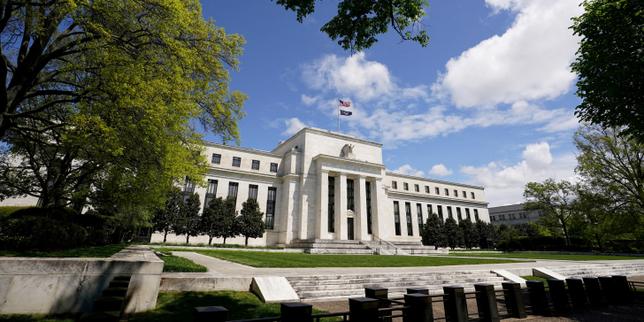
The actual relationship between the White House and the Eccles Building is far more cynical and much more boring than the headlines suggest.
Presidents want lower rates because cheap money stimulates asset prices, juices GDP growth ahead of midterms or general elections, and makes debt servicing cheaper for the federal government. Central bankers want credibility. Credibility is their only currency. If Powell cuts rates because a president yells at him, the bond market violently punishes the Fed by sending long-term yields soaring, steepening the yield curve, and signaling a complete loss of inflation-fighting credibility.
Imagine a scenario where the Federal Reserve capitulates to political pressure tomorrow, slashing the federal funds rate by fifty basis points simply to appease executive demands. What happens? Inflation expectations unanchor. Import prices spike. The dollar weakens dramatically. Bond vigilantes return with a vengeance, driving mortgage rates and corporate borrowing costs up even as the short-term policy rate drops. The political win turns into an economic catastrophe within ninety days.
Jerome Powell knows this. The governors know this. They protect their own institutional survival above all else. Political pressure is just background noise, the weather channel playing on a muted television in the corner of a trading floor.
The Consensus Blind Spot
The lazy media narrative treats the Fed as reactive to political posturing because it makes for good theater. Drama sells clicks. Nuance does not.
Look beneath the surface of any rate decision statement. Ignore the political commentary on cable news and read the actual transcript of the press conference. Notice how questions about political pressure are routinely swatted away with polite, institutional boilerplate. Why? Because the press corps wants to write a political thriller, while the central bankers are running a risk-management desk for a seventeen-trillion-dollar economy.
The real driver of the current rate stance is not political intimidation. It is structural inflation. We are living through an era of deglobalization, shifting supply chains, demographic aging, and structural labor shortages. These forces are inherently inflationary. The old playbook of lowering rates at the first sign of economic cooling no longer applies when the structural floor under inflation is higher than it was during the twenty-year deflationary snoozefest of the post-Great Financial Crisis era.
Blaming political pressure lets journalists and analysts off the hook. It saves them from doing the hard math on fiscal dominance, debt-to-GDP trajectories, and productivity growth. It is much easier to write a story about a feud between a central banker and a populist leader than it is to explain why structural wage growth in the service sector keeps core services inflation sticky at three percent.
Stop Watching the Tweets
If you are managing capital based on who is shouting at the Federal Reserve, you are playing a losing game. Stop reading the political columns to divine the path of monetary policy.
Look at the data that actually moves the needle. Watch the labor force participation rate. Track unit labor costs. Monitor the Treasury auctions for demand weakness at the long end of the curve. Those are the invisible gears turning behind the curtain, and they care nothing about campaign slogans.
The next time a headline screams that the central bank is holding rates steady under pressure from the political class, remember what is actually happening. The machine is running its own diagnostics, ignoring the noise, and steering the ship by instruments that have nothing to do with Washington politics.