Every time a drone buzzes a container ship off the coast of Yemen, the financial media panics. Cable news anchors lean into their desks, pointing at arrows shooting upward on digital charts, blaming local militia skirmishes for the price you pay at the local pump. It makes for clean television. It gives everyone a neat, distant villain to shake their fists at.
It is also complete nonsense.
I have spent the better part of two decades watching energy traders weaponize geopolitical headlines to pad margins while armchair analysts nod along like trained seals. When crude benchmarks twitch, the machine immediately pivots to the easiest scapegoat available. Right now, that scapegoat wears sandals, fires homemade rockets, and operates out of the Bab el-Mandeb strait.
Let us look past the smoke. The lazy consensus claims that Houthi strikes on commercial shipping choke global petroleum supply chains, forcing tankers on grueling detours around Africa, burning extra bunker fuel, and driving up the cost of a gallon of gasoline. On paper, it sounds airtight. In reality, it completely misunderstands how global energy markets actually clear, where physical barrels reside, and who profits from the panic.
If you want to understand why your fuel costs what it does, stop looking at the Red Sea and start looking at refinery utilization rates, domestic inventory builds, and the quiet consolidation of North American shale.
The Geography of Oil Flows Versus Headline Panic
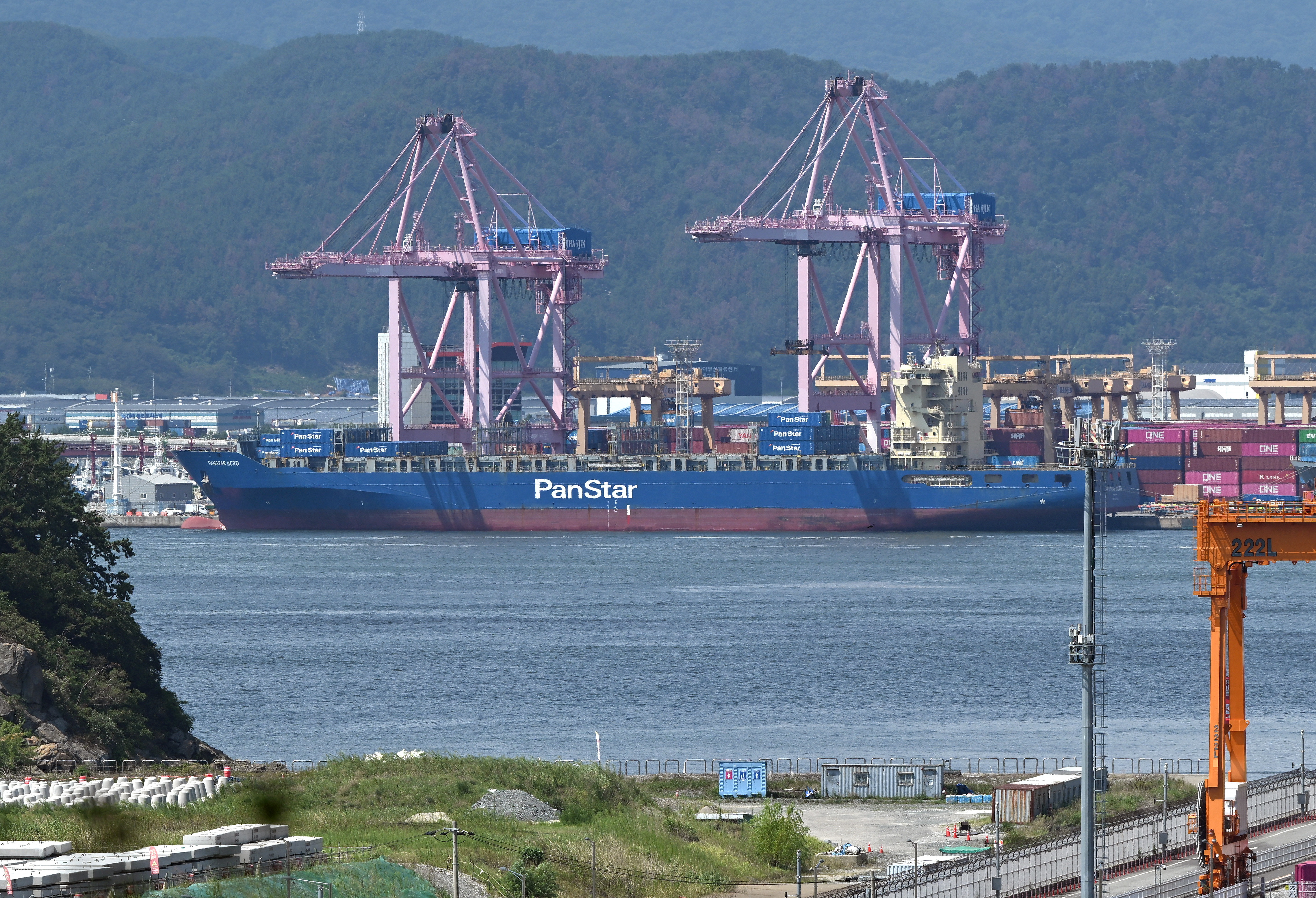
To dismantle this myth, we need to separate petroleum from everything else. Yes, the Bab el-Mandeb strait is a critical maritime bottleneck. About ten percent of total global petroleum trade passes through those waters. When shipping lines reroute around the Cape of Good Hope, transit times increase by ten to fourteen days.
Insurance premiums spike. Charter rates jump. Container ships carrying sneakers and electronics face real logistical delays.
Crude oil, however, does not behave like a container ship of consumer goods.
When a tanker carrying Middle Eastern crude is forced to sail around Africa instead of cutting through the Suez Canal, the oil does not vanish from existence. It is still in the hull. It is still moving toward a buyer. The voyage takes longer, which ties up maritime tonnage, but the physical barrels arrive at their destination. The global supply of crude has not shrunk by a single drop; the delivery schedule has simply been adjusted for friction.
Think of it like a highway commute. If a bridge closes and you have to take the beltway, you arrive twenty minutes late. You burned a little extra gas. But you still get to the office. You did not lose your job, and the city's overall economic output did not crater because of your detour.
Markets price in the physical destruction of supply or a permanent restriction of output. They do not permanently reprice a commodity upward by ten percent simply because tankers are burning extra diesel to sail around a cape, especially when global production capacity sits comfortably cushioned by OPEC+ spare capacity and rampant non-OPEC output.
Yet, retail gasoline prices at your corner station often surge within forty-eight hours of a headline flashing across your screen. Why? Because the market trades on fear before it trades on fundamentals. Refiners and fuel wholesalers buy futures contracts based on the worst-case scenario. They front-run the risk, passing every cent of perceived anxiety directly to the consumer at the pump long before a single tanker's delay impacts actual inventory levels.
Refining Margins Are The Real Culprit
If the Houthi conflict is not driving gasoline prices, what is?
Look at the crack spread. This is the differential between the price of crude oil and the refined products extracted from it, like gasoline and diesel. This is where the real story lives, and it is a story the media routinely ignores because explaining fractional distillation and cracking unit capacity does not drive high click-through rates.
Over the last several years, the global refining landscape has undergone a brutal contraction. Dozens of older, less efficient refineries across North America and Europe were shuttered during the pandemic demand slump or converted to produce biofuels. At the same time, massive, highly sophisticated export-oriented refineries came online in the Middle East and Asia.
When regional refining capacity drops, the bottleneck shifts from crude extraction to product processing. You can have all the crude oil floating around Africa you want, but if regional cracking units are running at maximum utilization or undergoing unexpected maintenance, the bottleneck is finished gasoline, not crude oil.
Furthermore, domestic inventory draws in the United States tell a damning story. When gasoline stockpiles plunge below five-year seasonal averages, retail prices climb regardless of what is happening in the Red Sea. Domestic inventory levels are dictated by domestic demand, seasonal driving habits, and maintenance schedules at Gulf Coast facilities.
Blaming a localized regional militia in Yemen for a tight crack spread in the American Midwest is like blaming a traffic accident in Tokyo for your local grocery store raising the price of milk. It is a convenient narrative designed to mask structural supply-demand imbalances and corporate pricing power.
The Speculative Premium
Let us talk about the financialization of commodities.
Modern oil markets are dominated by algorithmic traders, hedge funds, and swap dealers who trade paper barrels at a volume that dwarfs physical consumption by a factor of ten to one. These market participants do not own oil wells, and they certainly do not take delivery of crude at Cushing, Oklahoma. They trade momentum, sentiment, and geopolitical risk indices.
When tensions flare in the Middle East, algorithmic trading models scan news feeds for keywords like missile, strike, blockade, and Strait of Hormuz or Bab el-Mandeb. These models trigger automated buy orders for crude futures contracts.
Prices spike not because a refinery ran out of feedstock, but because financial algorithms bought contracts on the expectation that other financial algorithms would also buy contracts. It is a self-fulfilling prophecy of panic.
Once the initial shock fades and traders realize that physical oil is still flowing around the cape without interruption, the speculative premium slowly bleeds out of the market. But notice what happens to your gas price: the futures spike is instantly mirrored at the pump on Tuesday, but when the futures contract bleeds down on Friday, your local gas station is remarkably slow to pass those savings back to you.
This asymmetry is not a conspiracy; it is basic margin management by fuel retailers who know that consumers have been conditioned to accept high prices as the new normal whenever a Middle Eastern flashpoint makes the evening news.
Unconventional Action For Rational Consumers
If you are tired of getting fleeced at the pump every time a geopolitical headline breaks, stop reacting to the noise. The system relies on your emotional response to volatility.
First, ignore the daily price fluctuations driven by maritime skirmishes. If your commute or business relies heavily on fuel costs, do not hedge against short-term headline risks. The market over-indexes on fear during the first week of any conflict escalation, creating artificial peaks that always correct once physical delivery data proves the pessimists wrong.
Second, understand your local market dynamics. Retail gasoline prices are overwhelmingly local and regional. They are driven by state taxes, environmental mandates, local distribution logistics, and the market power of regional station operators. If your local fuel prices are spiking faster than the global benchmark, look at your state legislature or regional refinery utilization rates, not a map of Yemen.
The next time a commentator tells you that shipping disruptions in the Red Sea are about to drain your bank account at the pump, remember what is actually happening beneath the surface. It is a smoke screen of financial speculation and margin padding, masking the structural realities of global energy markets.
Stop buying the panic. Start looking at the balance sheets.