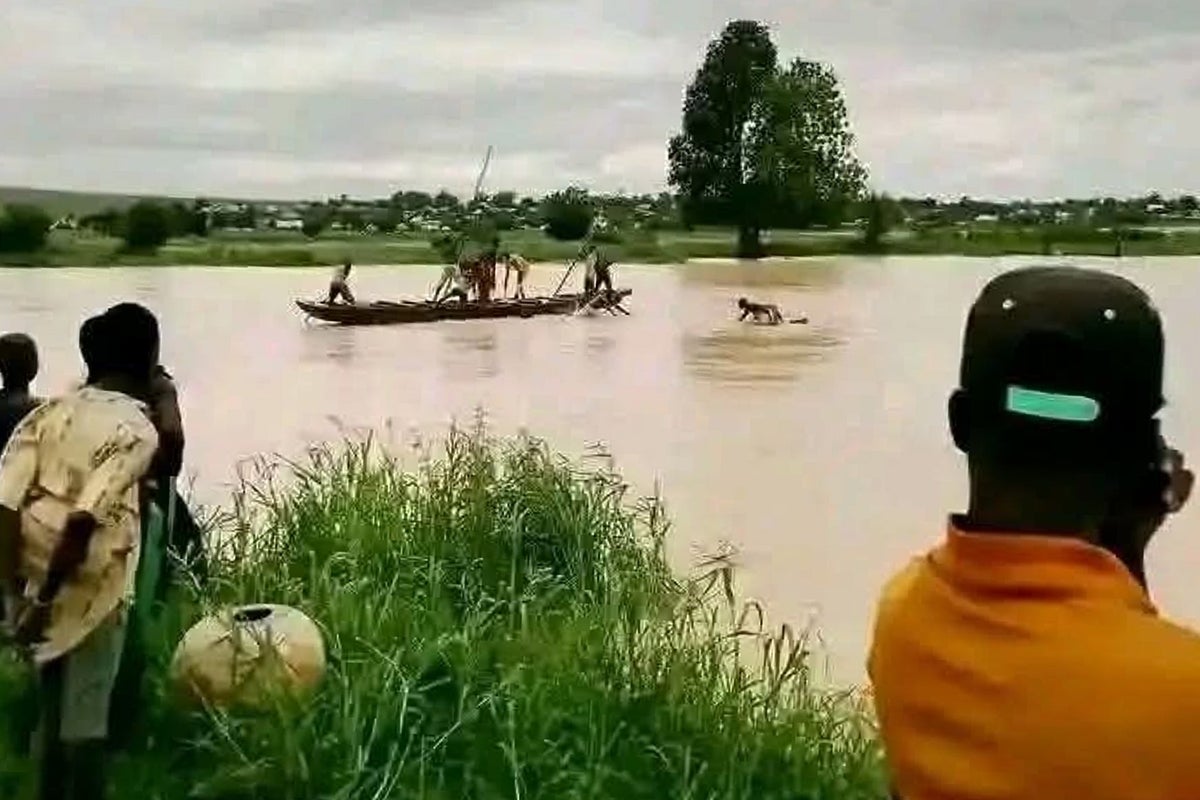
Every time a wooden vessel splits open and sinks in a murky West African waterway, the script writes itself. Officials stand before microphones, shake their heads, and point the finger at a single villain: overloading. They talk about too many passengers, missing lifejackets, and greedy operators cramming hulls beyond capacity.
It is a tidy explanation. It is also an absolute cop-out.
When dozens die after a boat capsizes in a Nigerian river, the standard narrative treats the disaster as a moral failing of reckless locals. This worldview lets maritime authorities and regional governments off the hook. It assumes that if everyone simply followed safety rules, the rivers would transform into tranquil highways.
That premise is entirely false. Focus on overloading, and you miss the structural rot keeping these wooden coffins afloat in the exact literal sense. The real crisis is not that boats carry too many people. The crisis is that a massive population has zero alternative choices.
The Geography of No Alternatives
Look at the topography of rural transport corridors along the Niger and Benue rivers. Road infrastructure outside major urban centers is often a cruel joke. Pavement gives way to washboard dirt tracks that turn into impassable swamps during the rainy season. Bridges are rare, poorly maintained, or non-existent for stretches spanning hundreds of miles.
When a community needs to move goods to market, reach a hospital, or visit family across the water, the river is not a recreational choice. It is the only vein connecting them to the modern economy.
Operators squeeze extra passengers onto these vessels because the economics of rural transit are brutal. Fuel prices have skyrocketed following subsidy removals, maintenance parts are priced in scarce foreign currencies, and profit margins are razor thin. If an operator limits a boat to an arbitrary, government-mandated capacity under current pricing realities, the trip becomes financially impossible. Passengers cannot afford a fare multiplied by three to satisfy safety ratios that make no economic sense.
Blaming the boat driver for carrying fifty people instead of twenty-five ignores the systemic poverty forcing those fifty people onto a single plank of wood in the first place.
The Safety Gear Delusion
Another favorite talking point of conventional reporting is the lack of lifejackets. Journalists arrive at the riverbank, count the bodies, and lament that nobody was wearing bright orange flotation foam.
Let us be brutally honest about maritime safety equipment in developing markets. A cheap, substandard plastic vest bought from a roadside vendor offers marginal protection in a churning, debris-filled river current. More importantly, enforcing lifejacket mandates without fixing the underlying vessel architecture is security theater.
If a poorly constructed, un-compartmentalized wooden canoe hits a submerged tree trunk and splits down the middle, a lifejacket buys you twenty minutes of floating before you succumb to hypothermia, exhaustion, or sweep-away currents miles from the nearest shore.
I have spoken with regional marine transport operators who laugh at imported safety mandates. They operate in an environment where basic vessel registry is a corrupt bureaucratic hurdle rather than an engineering audit. The wood used to build these boats is often unseasoned, local timber prone to rotting from the inside out. Structural integrity is measured by eye, not by naval architecture standards.
Fixing this problem requires capital investment in modern, multi-hulled transit ferries with sealed compartments. It requires state-backed micro-loans for operators to upgrade their fleets. Handing out fifty lifejackets to a captain steering a decaying timber log is like putting a band-aid on a severed artery.
Dismantling the Enforcement Myth
The policy response from regulators is always the same: crackdown. Deploy naval patrols, arrest operators, impound wooden canoes, and ban night navigation.
This approach fails every single time for a simple economic reason. Prohibition without substitution creates a black market. When authorities blockade official jetties, passengers and operators simply shift operations to unmonitored riverbanks five miles downstream. They travel at night to avoid patrols, making rescues even less likely when disaster strikes.
You cannot police your way out of a logistical vacuum. If the state wants to stop river capsizing, it has to flood the zone with safe, subsidized public ferries and build the roads that draw traffic away from the water. Until the state takes responsibility for basic infrastructure, private citizens will continue to calculate that the risk of drowning is better than the certainty of isolation.
The next time a river tragedy makes international headlines, look past the easy outrage over passenger manifests. Ask why a nation blessed with billions in oil wealth still forces its citizens to gamble their lives on hollowed-out logs just to cross a river.
Stop pretending this is a behavior problem. It is a infrastructure failure, and counting lifejackets will never change that math.