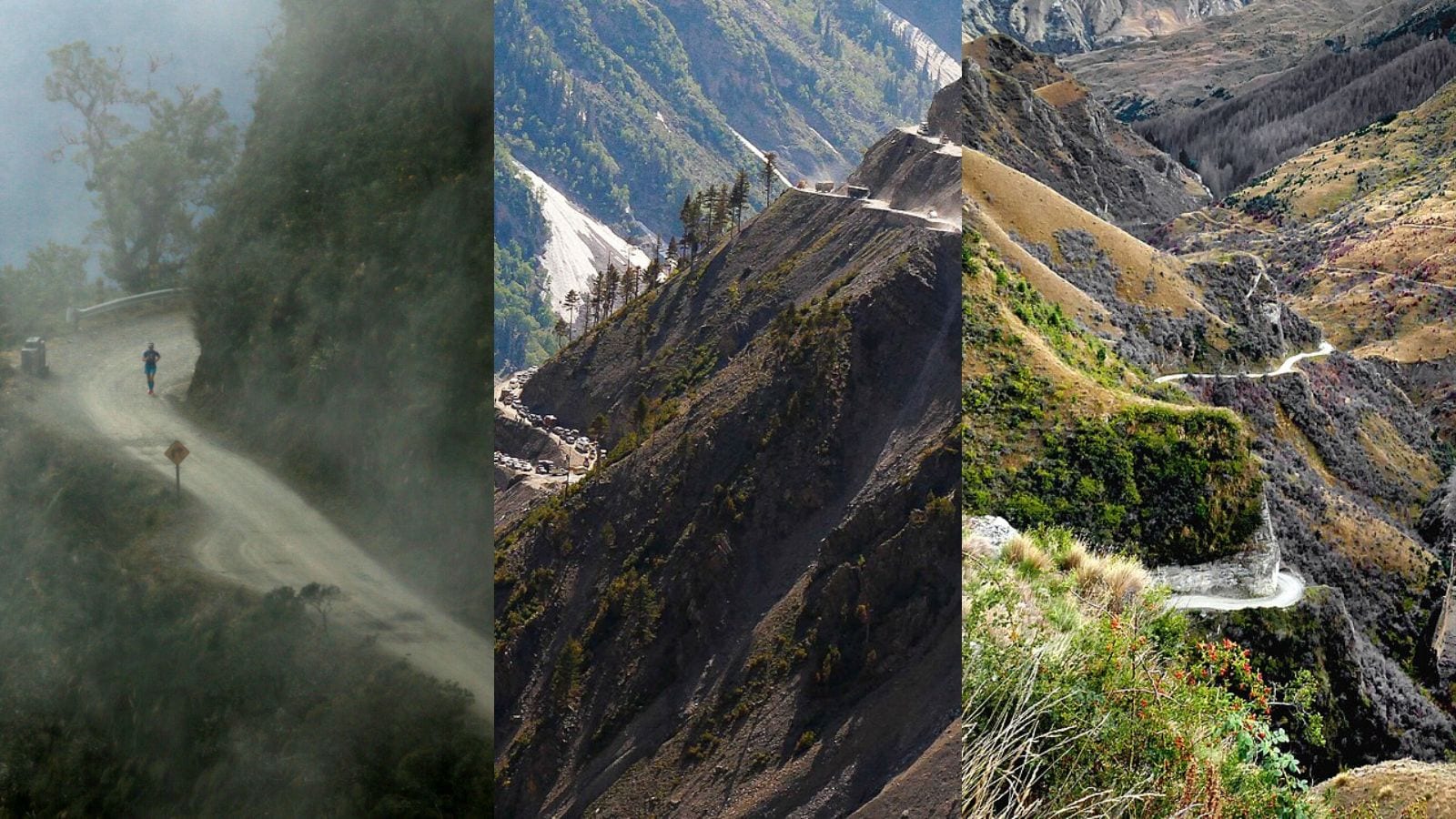
The global obsession with ranking the world dangerous roads usually boils down to a cheap thrill. Tourism blogs and sensationalized lists serve up high-altitude curves and crumbling cliffside passes as ultimate tests of human grit, framing them like extreme sports venues. But this perspective misses the grim reality. These routes are not amusement park rides for adrenaline junkies. They are failing pieces of infrastructure, economic choke points, and active hazard zones where thousands of locals lose their lives every year.
To truly understand the danger of these routes, you have to look past the dramatic photos and examine the systemic failures in engineering, geography, and governance that keep them lethal. The peril is rarely just about sharp turns. It is a toxic mix of extreme weather, complete lack of regulatory oversight, and the desperate economic necessity that forces overloaded trucks onto surfaces never designed to hold them.
The structural trap of the Yungas Road
Bolivia’s North Yungas Road is the undisputed poster child for perilous transit. For decades, it earned a terrifying moniker for claiming hundreds of lives annually along its narrow, single-lane stretch connecting La Paz to the Amazon rainforest.
The geography is a nightmare. The road drops roughly 11,500 feet in less than 40 miles, moving from chilly Andean peaks to humid jungle terrain. Warm, wet air from the Amazon basin hits the cold mountain walls, creating a near-permanent blanket of thick fog and unpredictable downpours. The rock beneath is highly unstable slate and shale. When the rain hits, the cliffs literally dissolve, sending mud and boulders cascading onto a ledge that is often no wider than ten feet.
But the real killer was an unwritten rule born out of desperation. Drivers heading downhill were required by law and custom to navigate on the left-hand outer edge. This allowed them to see their front wheel’s proximity to the sheer 2,000-foot drop, but it also meant they had to yield right-of-way to ascending vehicles.
Imagine maneuvering a rusted, 15-ton cargo truck with failing air brakes down a muddy slope during a tropical storm, while hugging a cliff edge with zero guardrails. It was engineering negligence on a grand scale. While a newer, bypassed route completed in 2006 diverted the bulk of heavy commercial traffic, the old road remains an active hazard for local farmers and cyclists who underestimate the fragile terrain.
The engineering oversight on the Karakoram Highway
Cutting through the collision zone of the Indian and Eurasian tectonic plates, the Karakoram Highway stands as a monument to political willpower and geological defiance. Connecting Pakistan and China across the Karakoram mountain range, it reaches an elevation of over 15,000 feet.
The danger here is not an absence of asphalt, but rather the active mountain range itself. This is one of the most seismically active zones on Earth. The mountains are rising, which means they are constantly fracturing.
- Landslides occur without warning, triggered by minor tremors or seasonal snowmelt.
- Flash floods wash away entire bridges in minutes.
- Rockfalls smash through vehicles like artillery shells.
The core issue is that the highway was built along unstable talus slopes. Every time engineers blast away rock to widen or repair a section, they destabilize the fragile equilibrium of the mountain above it. In 2010, a massive landslide completely blocked the Hunza River, burying villages and submerging a huge section of the highway under a newly formed lake.
Drivers on the Karakoram do not just face tight corners. They face a mountain range that actively tries to erase the road from existence. It is a war of attrition between concrete and geology, and geology is winning.
When extreme altitude meets underfunded infrastructure
Further north in India, the Zojila Pass serves as the sole lifeline between Kashmir and Ladakh. Sitting at 11,575 feet, it is a narrow, unpaved ledge cut directly into the rockface.
Here, the enemy is the winter weather. The pass is choked by heavy snowfall and vicious winds for up to six months a year, cutting off entire regions from the rest of the country. When it is open, the chaos is dictated by a lack of basic traffic management.
There are no guardrails because the heavy snow-clearing equipment would tear them up every spring. The surface is a mix of thick mud and loose gravel, churned up by hundreds of military convoys and commercial buses. When two large vehicles meet on a section barely wide enough for one, someone has to back up along a blind, icy curve with a sheer drop on one side. The human error factor is magnified by hypoxia; the thin air at this altitude slows driver reaction times and blurs judgment, making every split-second decision a gamble.
The myth of the skilled driver
Media coverage loves to focus on the skill of the drivers navigating these routes, spinning tales of heroic truckers beating the odds. This narrative is a dangerous myth. No level of driving experience can compensate for mechanical failure caused by systemic economic pressures.
In developing regions, the vehicles tackling these passes are frequently falling apart. Regulatory vehicle inspections are non-existent or bypassed through corruption.
Consider the typical long-haul truck operating in the Andes or the Himalayas. It is often decades old, running on bald tires, and carrying twice its legal weight capacity because thin profit margins demand maximum cargo size. When these vehicles descend thousands of feet of continuous, steep gradients, their brakes overheat and fail.
Once a brake system loses pressure on a 15-degree incline of loose gravel, the driver is no longer operating a vehicle. They are piloting a multi-ton unguided missile. The disaster is baked into the economics of the supply chain long before the truck ever starts its engine.
The modern death traps hiding in plain sight
We often look to remote, exotic locales for danger, but some of the most treacherous roads are modern, high-speed corridors. The Dalton Highway in Alaska is a prime example.
Built as a supply route for the Prudhoe Bay oil fields, this 414-mile stretch of dirt and gravel crosses the Arctic Circle. It features no medical facilities, no cell service, and only a few isolated outposts. The hazard here is a combination of extreme isolation and environmental severity.
During the arctic winter, temperatures drop below minus 40 degrees. Whiteouts reduce visibility to zero, and the road surface turns into sheet ice. The danger is magnified by the sheer scale of the commercial trucks moving at high speeds. They kick up massive clouds of dust in the summer and blinding snow plumes in the winter, completely obscuring the view for anyone trying to pass. If a vehicle breaks down or slides off the road, help is hours—sometimes days—away. Hypothermia can set in within minutes.
On the other side of the world, the Guoliang Tunnel in China presents a entirely different structural hazard. Bored through the side of a Taihang mountain cliff by thirteen local villagers in the 1970s, the tunnel features crude, uneven walls and unpredictable geometry.
The problem shifted when the route became a global tourist sensation. A narrow passage created for local foot and cart traffic is now choked with tour buses, pedestrians, and cars. The tunnel lacks proper lighting, ventilation, and lane division. The makeshift "windows" carved into the cliff face offer stunning views, but they also create drastic shifts between blinding sunlight and pitch darkness, temporarily blinding drivers as they navigate a tight, low-ceilinged cavern.
The failure of the tourism narrative
Promoting these deadly corridors as bucket-list destinations for thrill-seekers ignores the human toll. When an adventure tourist travels to Bolivia or India to challenge a dangerous road, they do so with high-end gear, travel insurance, and the luxury of choice. They can turn back if the weather turns foul.
The locals do not have that option. For the minibus driver transporting school children, the farmer moving produce to market, or the supply trucker keeping a remote village alive, these roads are a daily gauntlet. The lack of investment in proper tunnels, retaining walls, and asphalt coating is a direct reflection of economic inequality.
Fixing these roads requires immense capital. It demands advanced geological surveying, heavy retaining structures, and constant maintenance that poor regional governments simply cannot afford. Until we stop viewing these infrastructure failures through the lens of adventure travel and start seeing them as humanitarian crises, the body count along the world's most dangerous ledges will continue to rise.


