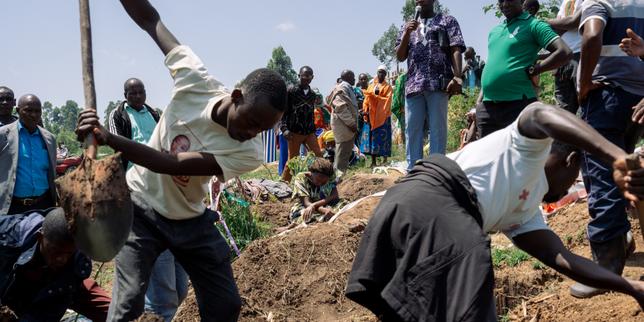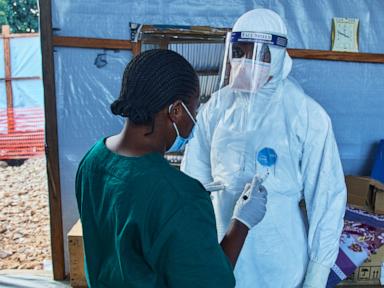
The death toll from the latest Ebola outbreak in the Democratic Republic of the Congo has officially reached 600. This is not merely a statistical marker of transmission. It is a testament to the persistent inability of international health systems to bridge the gap between clinical intent and local reality. Reports of new suspected cases appearing in previously unaffected territories confirm the worst fears of epidemiologists: the virus has bypassed established containment zones and is accelerating into areas ill-equipped to identify, let alone treat, the pathogen. The infection is moving faster than the containment.
The numbers provide a cold anatomy of the crisis. When the mortality rate pushes toward the current levels, it indicates that the virus has been circulating within communities far longer than surveillance data suggests. Official counts often lag behind the actual epidemiological situation, leaving a dangerous vacuum where the infection spreads unchecked. Each death represents not just a loss of life, but a breakdown in the contact tracing protocols that are supposed to act as the primary firewall against an uncontrolled epidemic.
The Mathematics Of Misery
Containment of Ebola is a game of probability. Every infected individual who enters a community without quarantine protocols becomes an independent variable capable of starting a new chain of transmission. When health organizations rely on centralized surveillance in a region characterized by limited infrastructure and immense geographical scale, they invite failure.
In the eastern regions of the Congo, the environment itself is a barrier. Dense vegetation and a lack of reliable road networks make the physical act of getting a team to a remote village an ordeal of logistics. But the real failure lies in the disconnect between the centralized response and the decentralized nature of the outbreak. By the time a report reaches a regional health office, the initial cluster of transmission has often moved on.
Consider the surveillance model. It relies on the assumption that a local population will report symptoms to officials they have little reason to trust. In a region marked by decades of political instability and conflict, the presence of uniformed, foreign-led response teams is often viewed with deep suspicion. When a person displays symptoms, the family faces a choice: report the case and lose their loved one to an isolation center where they cannot be buried according to custom, or hide the illness.
Many choose to hide it. This is not a failure of education, as some international observers might assume. It is a rational decision based on a history of exploitation. The result is a steady, quiet accumulation of deaths that never make it into the official tally until the situation is already catastrophic.
War Zones And Viral Vectors
The conflict in the Congo is the silent partner of the virus. Armed groups operate in the same territories where containment teams attempt to build clinics and conduct vaccination drives. These groups do not just pose a direct security threat; they disrupt the movement of supplies and personnel.
When a clinic is attacked, the response is often to retreat. This leaves a vacuum that the virus fills immediately. The movement of refugees, fleeing violence or forced recruitment, acts as a transport mechanism for the pathogen. People on the move do not carry medical records. They carry what they can hold, and if they are infected, they carry the virus across provincial borders into areas where the health system is effectively dormant.
Vaccine rollout in these conditions is an exercise in futility. Standard protocols require maintaining a cold chain for vaccines that are highly sensitive to temperature. Providing this in an urban center is difficult. Providing this in a conflict-ridden, jungle-proximate region where electricity is unreliable and transport routes are subject to militia checkpoints is nearly impossible. Every failed attempt to deliver these resources reinforces the local perception that the international response is disorganized and ineffective.
The Trust Deficit
Public health is fundamentally a social contract. It requires a population to believe that the system intends to help them. In this region, that contract has been broken repeatedly. Historical trauma—colonialism, civil war, and the heavy-handed approach of past humanitarian interventions—has created a wall of silence.
International response teams often operate as if they are solving a technical puzzle. They focus on the biological parameters: the incubation period of the virus, the rate of transmission, the efficacy of the vaccine. They ignore the cultural landscape of the people they are treating. When local burial rites involve washing the body, and medical teams arrive to seize the corpse for "safe burial," they are not just performing a clinical act. They are committing a profound cultural violation.
This is the point where the professional distance of the analyst must reckon with the reality on the ground. You cannot fight a disease if the community views you as a greater threat than the sickness itself. If the response teams are accompanied by armed security, they look like an invading force. The population responds by isolating themselves, effectively hiding the disease in their homes and ensuring the virus continues to circulate.
The strategy of coercion—forcing people into treatment centers or imposing movement restrictions without local buy-in—is a strategy of containment failure. It forces the outbreak underground.
The Failure Of The External Model
There is a recurring flaw in how international health organizations approach these crises. They arrive with a top-down structure, expecting the local population to adapt to their methods. They bring in external experts who rotate out every few weeks. This prevents the formation of the deep, long-term relationships necessary to build trust in a crisis.
Local health workers, who know the geography, the language, and the social structures, are often relegated to secondary roles or treated as simple labor. This is an organizational disaster. The people who are best positioned to manage the outbreak are the ones who are least empowered to make decisions.
We see this pattern every time an outbreak gains traction. The external teams focus on building large, centralized treatment centers that become symbols of the disease. People go there to die. The message to the community is clear: if you go to the clinic, you do not return. The clinic becomes a place of fear, not a place of healing.
Instead of investing in community-based care—identifying the sick in their homes, providing supportive care in the community, and training local families on how to protect themselves while caring for their own—the system pours resources into these massive, high-profile structures. It is a design for visibility, not for effectiveness. It serves the needs of the donors and the reputation of the agencies, but it does little to stop the viral spread in the hidden corners of the forest.
Endemic Risk
The reality is that we are likely seeing a shift in the nature of these outbreaks. The virus is moving into regions that lack even the most basic healthcare infrastructure. We are moving away from the era of periodic, isolated outbreaks toward a scenario where the pathogen becomes endemic in certain zones.
If the current containment strategy does not change, these numbers will continue to rise. We will continue to see waves of infection that expand from the epicenters into the hinterlands. The current methods are failing because they are designed to fight a battle that ended years ago. They are built for a static environment, not one in constant flux.
The surveillance systems are too slow. The logistical chains are too rigid. The relationship with the local population is too antagonistic. Fixing this does not require a new scientific discovery or a more potent vaccine. It requires a fundamental shift in how the response is organized. It requires moving the power from the central office to the village level.
It requires recognizing that the people living in these regions are not obstacles to containment but the only possible solution. Without them, the international teams are just spectators to a catastrophe. The virus does not care about the geopolitical complications or the failures of the international community. It only cares about the next host. And right now, the system is handing it opportunities with remarkable consistency.
The path forward is not found in more, but in different. It is found in the quiet, unglamorous work of building local capacity and treating the population as partners, not as variables in an equation. Every day spent relying on the old, broken model is a day that the virus wins. The death count is already at 600. Without a radical shift, that number will be viewed not as a peak, but as a beginning. The containment, as it currently stands, is a performative act that hides the rot beneath. Real action starts when the response teams stop trying to command the situation and start asking the local people what they actually need to stop the spread. That is the only way to turn the tide. If that change does not happen, the next report will only be worse.