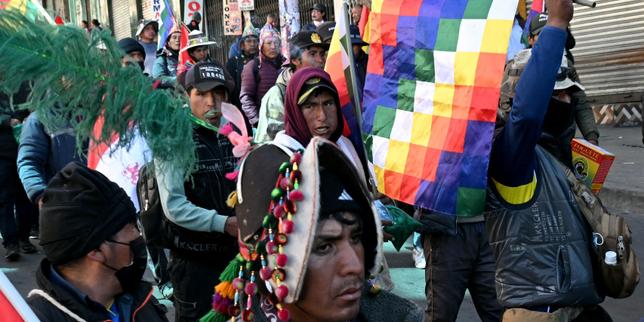
Bolivia is stuck. Over a month into a punishing national chokehold, the country is facing more than just another political gridlock. It’s an economic heart attack. Highways are blocked by boulders, burning tires, and thousands of mobilized citizens. Six out of nine departments are isolated. Food prices are soaring in La Paz, fuel stations are dry, and essential medicines can’t cross the blockades.
When President Rodrigo Paz took office in November 2025 on a platform of sharp economic reform, he promised stability. Instead, his six-month-old administration is watching the streets slip entirely out of control. Desperate to break the siege, the government is now relying on police force, attempting to punch through the blockades with tear gas to open temporary humanitarian corridors.
It’s not working. The blockades simply close up again the moment the police trucks roll away. What started as local complaints over bad fuel and land laws has transformed into a sweeping national demand for the president’s resignation. If you think this is just standard Bolivian political noise, you’re missing the real story. The entire structural foundation of how the country is governed is breaking down.
The Illusion of the Evo Morales Scapegoat
Listen to any government official on television, and they'll tell you the exact same thing. They claim the unrest is a artificial crisis cooked up by former president Evo Morales. They point to his ongoing legal troubles, his retreat to his stronghold in the Chapare region, and his desire to force his way back into power.
It's a convenient narrative. It’s also completely incomplete.
While Morales-aligned groups are absolutely on the highways, blaming the chaos entirely on him ignores the sheer breadth of the mobilization. The people blocking the roads aren't just hardcore political loyalists. We are seeing a massive, spontaneous convergence of sectors that usually don't get along.
The Central Obrera Boliviana (COB), the country’s largest trade union, has thrown its weight behind the movement. Industrial workers, rural teachers, transport unions, and informal sector merchants are all on the asphalt. When you see neighborhood councils in El Alto coordinating with cooperative miners wielding sticks and dynamite, you aren't looking at a puppet show run by a exiled politician. You're looking at deep, structural anger.
The immediate trigger was a double-headed policy disaster. First came the outrage over Law 1720, a highly controversial agrarian reform measure that rural communities saw as a direct threat to their land rights. Second was an economic blunder that hit the transport sector directly. Truckers discovered that a surge of cheap, low-quality imported gasoline was destroying their engines. When the government ignored their technical complaints and failed to produce promised impact studies, the transport sector did what it does best. They parked their rigs across the main arteries of the nation.
When Outsider Politics Hits the Wall
To understand why the government's response has been so clumsy, you have to look at how Rodrigo Paz won power in the first place. His victory was built on a fragile, anti-establishment alliance that started fracturing before he even took the oath of office.
Paz lacked a real territorial political machine. To win, he allied with his vice-presidential running mate, Edman Lara—a former police captain who built a massive following on TikTok by filming himself exposing police corruption. Lara brought a viral, aggressive, anti-caste energy heavily inspired by El Salvador's Nayib Bukele and Argentina's Javier Milei. It worked at the ballot box. It failed completely in office.
Paz and Lara don't even speak anymore. The administration has spent more energy trying to neutralize its own vice president than managing the economy. Paz went so far as to sign Supreme Decree 5515, a law specifically tailored to let him govern remotely from abroad so Lara could never take temporary control of the executive branch. He slashed the vice president's budget. This internal warfare left a massive power vacuum, leaving the administration completely unequipped to negotiate with the country's highly organized social movements.
Why the Force Option is Failing
With dialogue completely broken down, the administration has resorted to the police. The Ministry of Government has turned to tactical operations to clear roads, leading to violent clashes in La Paz and strategic highway junctions like Oruro.
Over a hundred protestors have been arrested, including key union leaders like Mario Argollo, who now faces terrorism and incitation charges. The violence has already turned fatal, with protestors falling to their deaths in highway ditches during chaotic police charges. Demonstrators have responded by marching directly on Plaza Murillo, using firecrackers and improvised explosives against lines of riot police.
But you can't clear an economic crisis with tear gas. Bolivia's social movements are built on decades of historical muscle memory. They know how to self-organize, stockpile supplies, and rotate blockaders to keep a highway shut indefinitely. Forcing open a six-hour "humanitarian corridor" is a temporary band-aid on an open wound. The moment the police leave to clear the next town, the boulders go right back into the road.
The economic cost is devastating. This isn't just about delayed travel. We are looking at the worst economic crisis the country has experienced in forty years. The removal of fuel subsidies earlier this year sent living costs through the roof. Now, with the supply chains severed, the scarcity is compounding.
The Reality of What Happens Next
The government is trying to buy time by floating the idea of a new Economic and Social Council to bring leaders to the table. They’ve also hinted at a major cabinet reshuffle to throw some ministers to the wolves. It’s likely too little, too late. The demands have moved past specific tweaks to Law 1720 or compensation for ruined truck engines. The movement has become explicitly political.
If you're watching Bolivia from the outside, stop looking for a quick settlement or a sudden return to normal. The country has entered a cycle of attrition. The government doesn't have the political legitimacy to enforce its laws through consent, and it doesn't have a large enough security apparatus to enforce them through raw power.
For ordinary citizens and businesses trapped in the middle, surviving this crisis means adjusting to a fragmented reality. Cities will have to rely on localized supply chains, businesses must brace for prolonged fuel rationing, and international observers should prepare for an administration that may have to choose between a humiliating policy retreat or an total collapse of governance. The blockades aren't shifting anytime soon, because the fundamental political structure holding the country together has already cracked.