The rain in Manchester doesn’t just fall; it seeps into the brickwork, the tarmac, and the dreams of every kid kicking a deflated ball against a garage door. On one particular Tuesday night, the air inside Old Trafford was heavy with that familiar Northern dampness. The stadium was a cauldron of eighty thousand people, a blurring sea of red shirts, shouting voices, and the collective nervous energy of a fanbase that demands perfection.
Among them sat an elderly man from Lahore, his hands trembling slightly, not from the English chill, but from an overwhelming sense of disbelief. He was watching his grandson warm up on the touchline.
For decades, South Asian communities in the United Kingdom viewed elite football the way one might view the dark side of the moon: distant, beautiful, and utterly inaccessible. The pitches of the Premier League were occupied by heroes, but none of those heroes shared their skin tone, their heritage, or their names. Football belonged to everyone else. Until a young man named Zidane Iqbal stepped onto the pitch, bucked a century of sporting history, and inadvertently handed a cricket-mad nation of over two hundred million people its first genuine World Cup moment.
This isn’t a story about a tactical masterclass or a multi-million-pound transfer saga. It is a story about what happens when a single human being carries the invisible hopes of a diaspora on his shoulders, and how a sport that often ignores South Asia suddenly found its heartbeat in a kid from Whalley Range.
The Concrete Fields of Whalley Range
To understand the weight of Zidane Iqbal’s journey, you have to understand the geography of British Asian football. It exists in the shadows. Walk through the parks of Birmingham, Bradford, or Greater Manchester on a Sunday morning, and you will see incredible talent. You will see kids with breathtaking vision, playing in worn-out sneakers on concrete pitches, dodging broken glass and uneven paving stones.
Yet, for generations, that talent vanished when it came to the professional academies.
There was a persistent, toxic myth whispered in scout meetings and coaching clinics for years. “South Asians don’t have the physique for the English game.” “Their families value education over sports.” “Their diet isn’t right for elite athletics.” These weren’t just misconceptions; they were a systemic firewall. They ignored the reality of young players who lived and breathed the game just as intensely as any kid from Liverpool or London.
Enter a four-year-old Zidane, turning up at Sale United.
He didn't look like a revolutionary. He was small, quick-footed, and possessed an obsession with the ball that bordered on the fanatical. His father, Aamar Iqbal, an avid football fan of Pakistani descent, and his mother, who is Iraqi, didn’t set out to break societal barriers. They just wanted their son to play. But Manchester United’s local scouts saw something that defied the prevailing scouting dogmas of the early 2000s. They saw a rare, instinctual spatial awareness.
They signed him to the academy at age nine.
Think about the sheer statistical improbability of that achievement. Out of the millions of boys playing youth football in England, only a fraction of one percent ever make it into a Premier League academy. For a British Pakistani kid, those odds weren't just stacked; they were practically nonexistent. Zidane entered a system designed to grind players down, a brutal meritocracy where friendship ends at the white line and every year brings a new cull of broken dreams.
The Language of the Ball
Imagine being the only person in a room who looks like you, carries a name like yours, and bears the unspoken expectations of millions who are waiting for you to fail just to prove their cynicism right.
Zidane didn't talk much about it. He let his feet do the talking.
In the United youth ranks, he developed into a creative midfielder, a traditional "number ten" who could operate in tight spaces. Watching him play was like watching someone solve a Rubik’s cube in his head while sprinting. He possessed a drop of the shoulder that could send a defender flying the wrong way, a subtle shift of body weight that opened up passing lanes that shouldn't have existed.
It was a style of play that felt distinctly global—fusing the physical intensity of the English youth game with the fluid, technical elegance of continental European and Middle Eastern football.
Then came December 8, 2021.
A Champions League match against Young Boys. The game itself was largely a formality for Manchester United, who had already qualified for the knockout stages. But for a community, it was the Super Bowl, the World Cup final, and the moon landing wrapped into one.
In the 89th minute, Ralf Rangnick turned to the bench. The number 73 flashed on the fourth official’s board in glowing green numbers. Jesse Lingard walked off, and Zidane Iqbal walked on.
It was only a few minutes of stoppage time. He touched the ball a handful of times. He didn't score a hat-trick; he didn't provide a viral assist. But as his boots touched the turf of Old Trafford, a seismic shockwave traveled across the globe. Twitter erupted in the UK, Pakistan, Iraq, and across the Middle East.
Consider the profound psychological shift of that moment. A generation of British Asian children looked at the television screen and saw a kid with a fade haircut and the name Iqbal printed across the back of a Manchester United shirt. The myth was dead. The firewall had breached.
The Invisible Bridge to Lahore
While Iraq claimed him internationally—Zidane ultimately choosing to represent his mother’s homeland on the senior international stage—his impact on Pakistan's footballing psyche remains an extraordinary, unintended phenomenon.
Pakistan is a country where cricket is a religion. The green shirts of the national cricket team evoke a fervor that borders on the spiritual. Football, by contrast, has long been treated as an afterthought by administrative bodies, plagued by political infighting, a lack of infrastructure, and a devastating absence of domestic funding. The national team routinely struggled to find pitches that met international standards.
Yet, the passion for European football in cities like Karachi, Islamabad, and Lahore is ferocious. Millions of young Pakistanis stay up into the early hours of the morning to watch the Premier League and the Champions League. They wore jerseys of players who lived thousands of miles away, heroes with whom they shared no cultural connection.
Zidane changed that dynamic permanently.
When he made his debut, he didn't just represent Manchester United; he became a bridge. He proved that the genetic and cultural makeup of a South Asian was fully capable of performing at the absolute zenith of global sport. He became a living blueprint.
Shortly after his breakthrough, Pakistan’s football federation began looking more aggressively at the diaspora. If a kid from Manchester with Pakistani roots could play for Manchester United, who else was out there? The search yielded results. Players from the English lower leagues, from academies across Europe, began looking at their heritage not as a footnote, but as an opportunity.
When Pakistan secured their historic first-ever World Cup qualifying round victory against Cambodia in 2023, the squad was a tapestry of domestic talent and diaspora players who had seen what was possible. The emotional catalyst for that entire movement can be traced directly back to that rainy night in Manchester when the boy with the number 73 shirt stepped onto the pitch. He gave a country permission to dream about a sport that had discarded them for decades.
The Heavy Gift of Being the First
Being a trailblazer is a romantic concept in retrospect, but it is a exhausting reality to live through. Every mistake is magnified. Every poor performance is seized upon by critics as proof that the experiment failed.
When Zidane made the difficult decision to leave Manchester United in 2023 for FC Utrecht in the Dutch Eredivisie, many casual observers viewed it as a step backward. They saw a player leaving the glitz of the Premier League for a less glamorous league.
But look closer at the reality of a footballer’s development. The bench at Old Trafford is a comfortable place to stagnate. The pitch in the Netherlands is where raw talent is forged into elite competence. It takes immense courage to walk away from the biggest club in the world to ensure that your career becomes a sustained reality rather than a trivia answer.
In Utrecht, away from the intense British media circus, he began the grueling, unglamorous work of becoming a regular first-team professional. He dealt with injuries, adapted to a new country, and learned the tactical rigors of a league famous for its technical demands.
Through it all, the messages kept coming.
They come via Instagram DMs from kids in Birmingham who are being told they aren't strong enough. They come from fathers in Lahore who bought their sons a football instead of a cricket bat because of him. They come from young British Asian players who now walk into trials with their heads held a little higher, knowing that the scouts in the stands can no longer use the old excuses.
The Echo in the Street
Go back to those concrete pitches in the rainy cities of the English North.
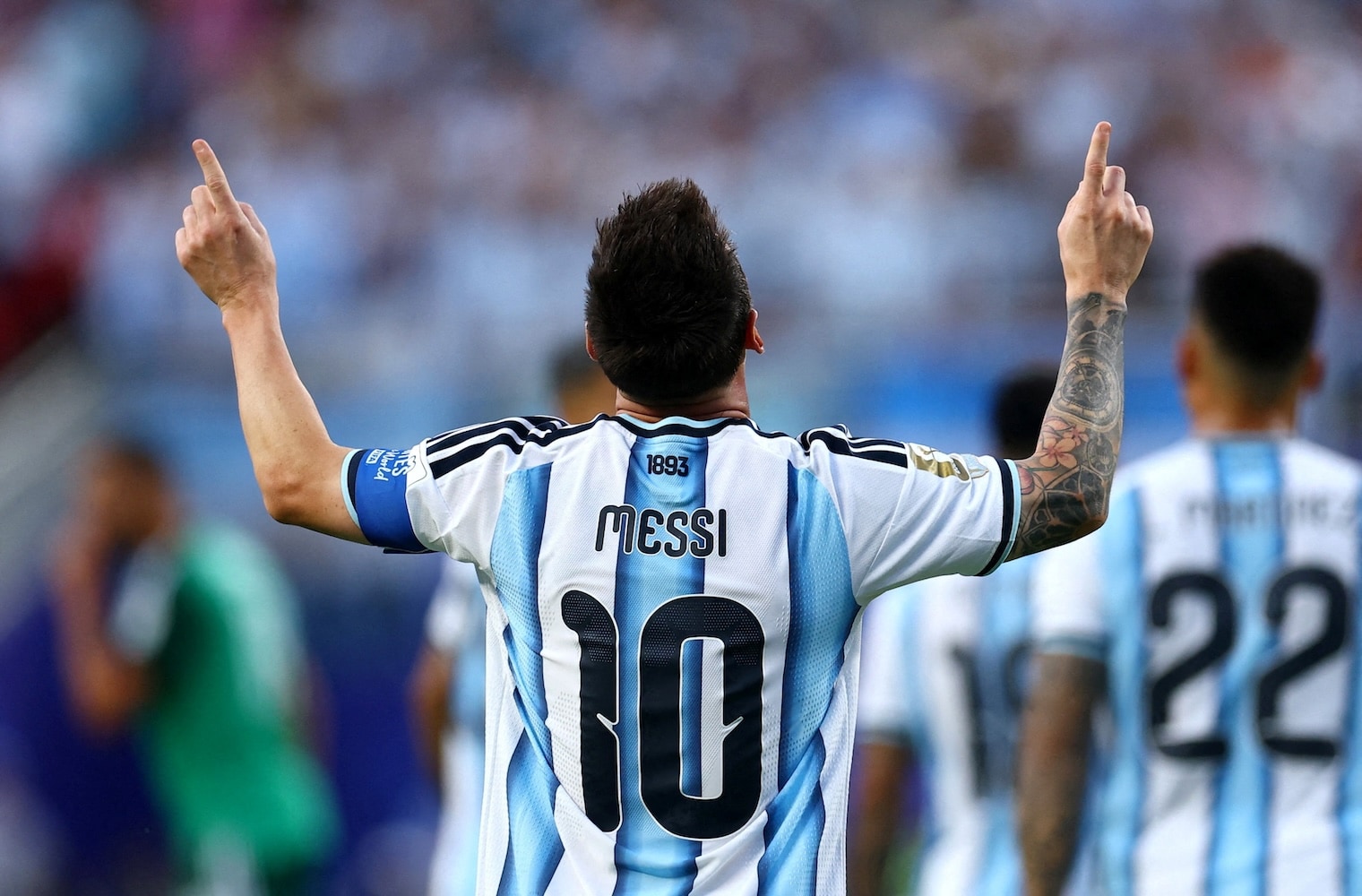
The kids playing there today aren't just copying Cristiano Ronaldo’s celebration or trying to mimic Lionel Messi’s dribbling. Some of them are practicing that subtle, graceful turn that Zidane Iqbal used to escape world-class defenders in the Champions League.
The true measure of his impact isn’t found in a trophy room or a statistics database. It is found in the erasure of doubt. He took a heavy, historical narrative of exclusion and rewrote it with a few touches of a football.
The boy from Whalley Range didn't just play a game. He carried a continent onto the grandest stage in the world, and in doing so, ensured that the next kid who looks like him won't have to carry the weight of being the first. They will just have to play.