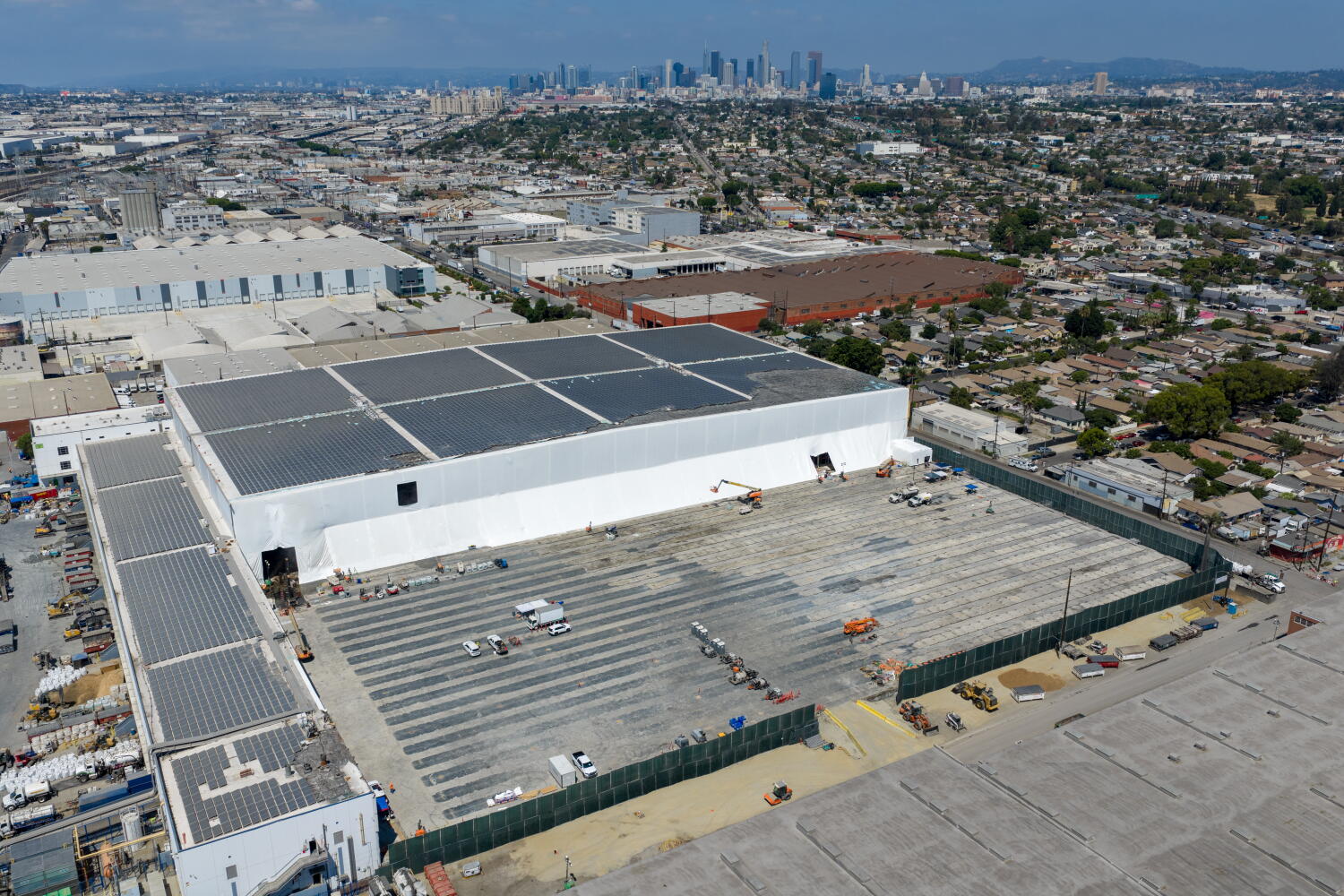
Millions of pounds of rotting food sitting in a burned-out Boyle Heights warehouse for months sounds like a dystopian horror story designed to enrage taxpayers. That is precisely why local media and outraged neighborhood councils ate it up. The narrative practically writes itself: negligent property owners, suffering residents, dragging municipal bureaucracy, and a mountain of spoiled organic waste festering under the Los Angeles sun.
It is also a profound misunderstanding of how industrial logistics, insurance litigation, and environmental remediation actually operate in the real world.
I have watched companies burn through seven-figure remediation budgets while municipal agencies played jurisdictional hot potato. Everyone wants to scream about public health hazards, but nobody wants to talk about the brutal physics of insured catastrophe cleanup.
The lazy consensus in every report about the Boyle Heights incident is that local authorities dropped the ball because of sheer incompetence. The reality is far more cynical and structural. When a warehouse full of perishable inventory goes up in flames, you do not simply call a hauling company and clear the floor by Tuesday. You enter a multi-month purgatory of forensic accounting, structural engineering assessments, hazardous material classification, and legal warfare between commercial insurers who would rather burn down twice than pay out a single contested claim.
Let us dismantle the outrage.
The Economics of a Burned Potato
When a standard distribution center catches fire, the inventory inside stops being food and instantly transforms into a complex chemical cocktail. Millions of pounds of organic matter do not just rot; they liquefy, mix with fire-retardant foams, bond with melted plastic packaging, and infiltrate porous concrete foundations.
If you rush in with a standard fleet of dump trucks to haul away the mess before the structural engineers sign off, you violate OSHA regulations, compromise forensic evidence required for arson or electrical fault investigations, and potentially trigger massive EPA fines for dumping toxic runoff into municipal storm drains.
The delay was not a failure of will. It was a hostage negotiation between liability lawyers.
Property owners face a brutal financial equation after a disaster of this scale. The cost of environmental testing, specialized biohazard extraction, and continuous air monitoring often rivals the replacement value of the building itself. When a warehouse sits abandoned with rotting cargo, it is usually because the insurer and the insured are locked in a courtroom battle over who foots the seven-figure bill for the remediation contractor.
Public officials howling at press conferences about delayed cleanups know this. They also know that blaming bureaucratic gridlock deflects from the fact that municipal zoning and code enforcement codes are fundamentally unequipped to handle modern high-density supply chain failures.
Why the Neighborhood Outrage Misses the Target
Residents of Boyle Heights had every right to be furious about the stench and the perceived threat to public health. No one wants a literal mountain of decaying calories baking in their backyard. But directing that anger entirely at the speed of the removal process misses the deeper structural rot in how modern logistics hubs operate within urban cores.
We have crammed massive, hyper-dense cold storage and distribution facilities into residential and working-class neighborhoods because the real estate math demands it. When those facilities fail, the disaster is localized, but the supply chain networks they feed are global.
The standard public health response relies on reactive containment. A warehouse burns, people complain, politicians demand action, contractors bill at triple-time rates, and the waste gets hauled to a landfill where it adds to the methane ledger.
Nobody asks the systemic question: Why are we storing millions of pounds of perishable inventory in aging urban facilities with outdated fire suppression infrastructure in the first place?
The answer is simple. Just-in-time logistics combined with soaring industrial land values in Los Angeles create a perverse incentive to squeeze maximum volume into sub-optimal footprints. Property owners defer maintenance on electrical grids and cooling systems because the margins on warehousing are razor-thin unless you are operating at maximum capacity.
When the inevitable fire happens, the system shatters, and the public is left holding a foul-smelling bag of regulatory excuses.
The Real Cost of Administrative Theater
The triumphant announcements that the warehouse has finally been cleared miss the broader indictment. Celebrating the removal of rotting food after months of bureaucratic stalling is like throwing a parade because the fire department finally showed up after the house burned to the foundation.
Clearing the site is not a victory. It is the bare minimum legal requirement of property ownership.
By framing these cleanups as heroic feats of municipal governance, we normalize a system where disaster remediation takes an eternity because no single entity wants to accept liability until every legal shield is polished. We accept a status quo where public health is held hostage by insurance adjusters and civil litigation timelines.
If we want to stop warehouses from turning into biological time bombs in densely populated neighborhoods, we need to stop treating these events as anomalies and start treating them as predictable failures of asset neglect.
Stop blaming the timeline of the cleanup. Start auditing the conditions that let the warehouse get packed to the rafters with perishables backed by inadequate risk management.
Until municipal authorities start attaching criminal liability and immediate asset seizure to owners who abandon hazardous, post-disaster inventory, the next Boyle Heights is already loading its pallets.


