The ground does not care about trade deficits. It does not look at balance sheets, nor does it pause to consider the delicate mathematics of an executive order signed three thousand miles away. When the earth split open beneath the Colombian mountains, it brought down stone, tile, and the fragile architecture of everyday survival. Dust settled over streets where families had gathered just moments before. In the immediate aftermath, the inventory of catastrophe was measured in sirens, shattered glass, and the quiet, frantic search for breathing bodies beneath the rubble.
But survival has a second act. Always.
To understand what happened next, you have to look past the epicenter, past the trembling earth, and look straight into the machinery of international trade. A new leader had just stepped into the presidential office in Bogotá. He inherited a nation nursing its bruises, a country whose economic arteries were already strained. Then came the tremor. Houses needed rebuilding. Hospitals needed supplies. Cement, steel, timber—these were no longer mere commodities on a spreadsheet; they were the absolute prerequisites for human dignity.
And standing at the edge of this crisis was an unexpected gatekeeper: Donald Trump.
Tariffs.
The word sounds sterile. Clinical. It belongs in air-conditioned rooms where men in tailored suits speak in acronyms. But on the ground, tariffs are physical weights. They are invisible bricks added to every pallet of rebuilding material crossing the border. When a state relies on foreign trade to patch its broken bones, a tariff is not a policy debate. It is a toll collector standing over a mass grave, demanding extra coin for the privilege of healing.
Consider what happens next in a quiet port town. A cargo ship arrives loaded with heavy machinery desperately required to clear blocked mountain passes. Under normal circumstances, the cost is high. Under the weight of newly minted protectionist tariffs, the price spikes past the breaking point. Local municipalities, already bled dry by emergency response efforts, stare at invoices they cannot pay. The bureaucratic gear grinds to a halt. Not because the tools do not exist, but because the paperwork has been weaponized against the injured.
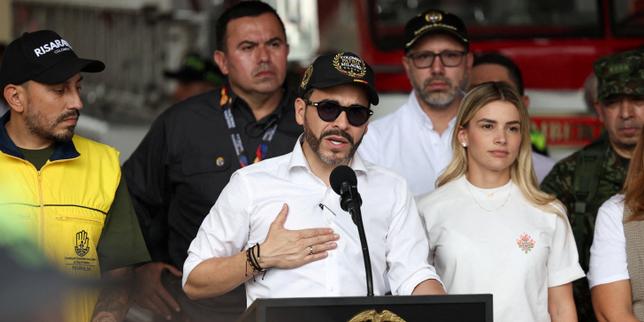
The newly elected Colombian president understood this brutal calculus instantly. Leaders are rarely forged in quiet lecture halls; they are baptized in the sudden, violent interruptions of history. He did not issue a standard diplomatic memo filled with polite footnotes. He made a direct, public appeal to his powerful northern ally.
Suspend the duties. Just stop.
It was a gamble. Diplomacy between a hemispheric giant and a mid-sized Latin American republic is rarely an egalitarian conversation. It is a dance of leverage, pressure, and historical grievances. By asking for a tariff suspension in the wake of a natural disaster, the Colombian administration was testing a fundamental question: Is international trade policy completely devoid of human empathy, or can catastrophe still pierce the armor of realpolitik?
Think of a hypothetical small-business owner in Medellín, a man named Mateo. Mateo owns a modest warehouse distributing roofing tin and structural support beams. Before the quake, his business was a modest engine of middle-class stability. After the quake, his phone rang incessantly. Contractors, schools, and frantic homeowners begged for materials. Mateo wanted to help. He loaded his trucks, but when he checked the customs ledger for imported steel reinforcements, the new tariff rates stared back at him like a wall. To sell the steel at a price people could afford meant bankruptcy for his family. To pass the tariff cost onto the victims meant pricing them out of a roof over their heads.
Mateo represents the invisible middle of this entire ordeal. Macroeconomics loves to talk about nations as monolithic blocks, but nations are just millions of Mateos trying to figure out how to pay for tomorrow morning's bread while the ground beneath their feet is still settling.
When the Colombian president picked up the phone—metaphorically and literally, through the megaphone of global media—he was speaking for every Mateo in the country. He was arguing that protectionist walls, no matter how politically popular they might be in domestic rallies abroad, become literal barriers to survival when an earthquake tears through a developing economy.
Markets hate uncertainty. But disasters hate delay even more.
Every hour spent debating tariff exemptions is an hour spent sleeping under plastic sheets in the Andean chill. The logic of the appeal was disarmingly simple. Commerce cannot function effectively when one trading partner is bleeding. If Colombia's economy seizes up under the dual weight of seismic destruction and punitive import duties, the ripple effects will travel north. Supply chains are not one-way streets; they are closed loops. A market that cannot buy is a market that cannot sell.
Yet, policy changes do not happen because they make moral sense. They happen because the cost of refusing them becomes too high to ignore.
The political theater of the moment was thick with tension. On one side stood an administration defined by America First trade doctrines, where every import tax is viewed as a victory for domestic manufacturing. On the other side stood a shattered Andean landscape demanding an immediate exception to the rule. How do you tell a protectionist machine to stand down for humanitarian reasons without creating a precedent that every other trading partner will exploit?
That was the tightrope.
The Colombian leader walked it by stripping the argument down to its bare, undeniable bones. This was not about renegotiating a sweeping free trade agreement. This was about a momentary pause. A temporary reprieve to let the ambulances through the bureaucratic checkpoints.
History is filled with moments where rigid systems either bend or snap. We have watched global supply chains buckle under pandemics, wars, and climate anomalies. The modern economic consensus is obsessed with resilience, yet resilience is often tested not by grand strategies, but by how quickly a government can stop taxing rubble.
If you walk through the affected neighborhoods weeks after the initial shock, the human story changes shape. The dust has been swept into piles. Makeshift kitchens are operating on street corners. The immediate panic has given way to the slow, grinding exhaustion of rebuilding. People are measuring their lives in bags of cement and corrugated iron sheets.
They do not know what a tariff is. They only know that things cost more than they used to, and that the houses are still unbuilt.
This is where the political appeal transcends news headlines. It becomes a litmus test for how modern superpowers interact with the human collateral of their economic policies. When a president asks for mercy from a trade partner after a natural disaster, he is exposing the raw nerve of global capitalism. He is asking whether trade laws possess a soul, or if they are simply cold equations calculated in boardrooms far removed from the dust of the Global South.
The response from Washington, whether delivered through silence, negotiation, or sudden executive waiver, sets a tone that lingers long after the aftershocks fade. It defines the character of an alliance. It answers the question of whether partnership means standing shoulder-to-shoulder when the earth breaks, or stepping back to count the cost of the bricks.
The mountain air in the Andes is thin, sharp, and unforgiving. Up there, a mistake can cost you your footing. Down in the valleys, the margin for error is just as narrow. The seismic lines running beneath Colombia have been there for millennia, indifferent to human borders, currency exchanges, or political doctrines. They will move again. They always do.
The only question is whether the systems we build above ground will be flexible enough to absorb the shock, or if we will insist on keeping the heavy doors locked while the house is falling down.


