The key turns in the lock with a dry, metallic resistance. Dust motes hang suspended in the shaft of weak Santiago sunlight, dancing lazily above floorboards that once absorbed the heavy, measured tread of a president.
Stand here for a moment. Listen.
If you strain past the distant, grinding roar of modern traffic on Avenida Garcés, you can almost hear the low murmur of political strategy. You can smell the sharp bite of tobacco smoke, the rich aroma of black coffee, and the quiet tension of men and women who genuinely believed they could bend the arc of Chilean history toward justice.
This was the home of Salvador Allende.
Or, more accurately, this was meant to be his sanctuary. Today, it stands as something far more fragile. A monument caught in administrative limbo, a physical manifestation of a nation still wrestling with ghosts it refuses to bury or embrace.
History rarely ends with a clean period. More often, it stutters.
To understand what happened to this house, you have to wind the clock back past the smoke of the Moneda Palace, past the boots of the military junta, and deep into the domestic reality of a man who loved books, family, and the messy theater of democratic socialism. Allende was not just a historical abstraction pinned to a textbook page. He was a neighbor. He was a father who walked these rooms, arguing about poetry, economics, and the future of South America over plates of simple food.
When the tanks rolled on September 11, 1973, they did not just shatter a government. They shattered domesticity. They broke the delicate contract between a public figure and his private life.
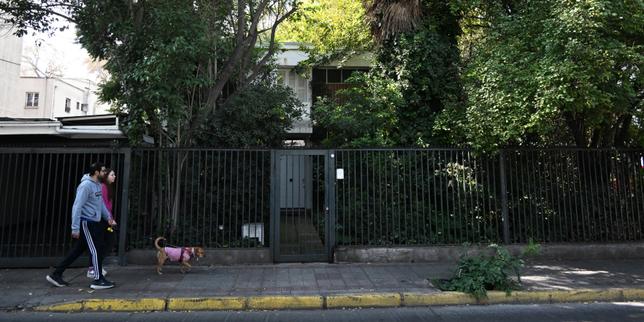
The house on Guardia Vieja street—and the broader narrative of Allende's intended residential legacy—became a battleground of symbols. For years, the physical properties tied to his memory have faced an agonizing bureaucratic friction. Preservation orders clash with property rights. Political nostalgia collides with real estate pragmatism.
(Note: When I speak of the friction between memory and property, I am using it as a mirror for Chile's broader, ongoing reconciliation with its twentieth-century trauma.)
Consider what happens next in any society attempting to institutionalize a painful past. You get committees. You get endless debates over zoning laws. You get funding that evaporates just as the paintbrushes arrive.
The tragic irony of Allende’s residential legacy is that the man who wanted to house the working poor has left his own historical footprint homeless in plain sight.
Walk through the neighborhood today. The trees have grown older, thicker, casting long shadows over the pavement. Neighbors remember. Or their parents remember. They talk about the security details, the sudden influx of journalists, the sudden, terrifying silence that followed the coup. Memory in Chile is not stored in marble museums; it is baked into the mortar of residential walls.
Yet, the formal transformation of these spaces into vibrant centers of historical education or public archive has been notoriously sluggish. It is a slow-motion tragedy of red tape.
Why does this matter?
Because buildings are the anchors of our collective consciousness. Without them, history becomes a rumor. When we fail to preserve the physical spaces where monumental shifts occurred, we invite amnesia. We allow the sharp edges of historical truth to blunt into comfortable myths.
Allende's vision was deeply flawed, intensely debated, and ultimately terminated by brutal violence. Nobody denies the economic chaos of his final months in power. The empty grocery shelves, the soaring inflation, the polarization that tore families down the middle—these are matters of public record. But erasing the physical spaces of his life does not solve the riddle of his presidency. It only deepens the mystery.
We crave closure. History refuses to grant it.
Instead, we are left with locked doors and peeling wallpaper. We are left with descendants and historians fighting quiet, exhausting battles in municipal offices to secure plaques, permits, and protections.
Imagine walking into that house today. The air is still. The furniture, where it remains, looks staged, drained of vitality. It is a theater set waiting for an audience that never quite arrives. The curators try their best, but they are fighting a tide of political fatigue.
The truth is, modern Chile is tired. It has spent decades negotiating its transition to democracy, rewriting its constitution, compensating victims, and arguing over monuments. Every statue is a vote. Every street name is a referendum.
In that climate, an old house becomes a political football.
One side sees a shrine to a martyr of social democracy. The other sees a monument to economic ruin. Trapped between these two absolutisms, the actual building sits in decay.
History demands nuance. Brick and mortar demand maintenance.
When we look at the stalled fate of Allende's residential legacy, we are looking at our own discomfort with the past. We want our heroes simple and our villains clear-cut. Reality spits on that neat division. Allende was a complex, contradictory figure—a man of privilege who championed the dispossessed, a constitutionalist who pushed the boundaries of the legal order, a leader who died by his own hand rather than surrender.
His home should reflect that complexity. It should be a place of debate, of workshops, of restless inquiry.
Instead, it waits.
The key stays in the drawer. The dust settles. And the city outside rushes forward, desperate to outrun the ghosts it built.