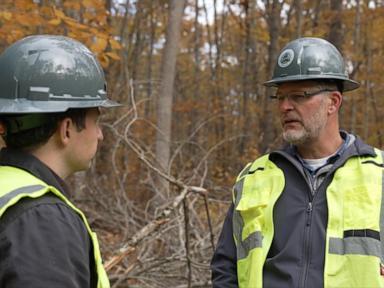
Maine’s loggers and fishermen are trapped in a brutal economic vise where escalating trade tariffs and surging diesel costs collide with thin operating margins. A harvesters’ head or a boat’s fuel tank does not care about geopolitical slogans in Washington or Ottawa. Every extra dollar spent at the pump or at the customs border comes straight out of crew wages, maintenance reserves, and survival.
For decades, I have watched extractive industries in the Northeast absorb shocks that would sink ordinary businesses. Weather ruins a season. Markets swing wildly. Equipment breaks in the middle of nowhere. Yet the current squeeze hits differently because two external pressures—cross-border tariff escalations and elevated diesel prices tied to global conflict—are attacking working waterfronts and timberlands at the exact same time.
Surface-level coverage tends to treat this story as a two-minute television clip or a talking point in a Senate race. Political campaigns love a tidy villain. Real industry analysis requires looking at balance sheets, supply chains, and the quiet mechanics that determine whether a small contractor or a boat captain can afford to put gear in the woods or traps in the water next year.
Why Diesel Hits Harder Than Sticker Shock
Fuel is not a discretionary expense for a logging crew or a coastal fisherman. It is the oxygen of the job.
A skidding tractor idling in cold northern timberland burns fuel before a single log moves to the landing. A lobster boat steaming out past the headlands burns fuel before the first haul comes over the rail. When diesel rises, operators cannot simply decide to use less of it without cutting productivity or risking safety in rough sea conditions.
Consider a hypothetical example to see how tight the math becomes. Imagine a coastal fisherman running a mid-sized boat who budgets $600 a day for diesel during peak season and brings in $1,500 worth of catch on a solid trip. A 25% jump in fuel costs adds $150 to that single day’s burn—an extra $750 across five days out on the water. If dockside prices are soft or landing volumes dip, that extra fuel bill wipes out the entire net margin of the trip.
When fuel spikes while market prices stagnate, working crews subsidize the gap with deferred maintenance and unpaid hours.
The same arithmetic applies in the woods. Timber haulers and mechanical harvesting crews run heavy machinery on tight schedules set by mills and trucking brokers. Diesel prices that have climbed alongside geopolitical tensions—including supply jitters linked to the conflict involving Iran—push up not only what the harvester drinks on site, but also what it costs to haul timber out and bring replacement parts in.
Even when Washington rolls out targeted relief or federal assistance programs aimed at offsetting elevated fuel costs for farmers and fishermen, money on paper moves slowly. Bills at the marine fueling dock or the bulk fuel supplier come due every week.
The Hidden Cross-Border Web in Timber and Gear
Tariffs are often discussed as if trade flows in neat, separate lanes: American goods going north, Canadian goods coming south. Maine’s economy does not work like that.
Northern and western Maine share deep operational ties with New Brunswick and Quebec. Timber crosses borders for processing. Specialized forestry machinery, replacement components, and industrial inputs move back and forth across a porous, historically cooperative region. When the United States imposes steep tariffs on Canadian imports and Ottawa answers with retaliatory duties on hundreds of American products, the shockwaves ripple through supply chains that were built for frictionless regional trade.
Loggers feel this acutely through capital costs and equipment friction. Modern forestry equipment is expensive before a single tax is added. Tariffs on imported machinery or parts raise the cost of keeping fleets running or replacing worn-out iron, squeezing contractors who already face tight financing and slim per-ton margins.
Fishermen face a different set of trade angles. At times, seafood and fish products have been spared or carved out of specific tariff lists, and policymakers have pointed to exemptions for critical materials like road salt and cement. Yet exemptions on paper do not insulate a boat owner from broader inflation, higher costs for gear and packaging, or retaliatory pressures that unsettle buyers and distributors.
| Cost Pressure | Primary Channel | Direct Impact on Operators | Gray Area or Caveat |
|---|---|---|---|
| Higher Diesel Prices | Global oil and conflict supply jitters | Immediate jump in daily operating burn for boats, skidders, harvesters, and trucks | Partial federal relief may help some operators, but timing and eligibility vary |
| Tariff Escalation | U.S.-Canada trade duties and retaliation | Higher costs for imported machinery, parts, and cross-border supply friction | Specific items like seafood or road salt may see exemptions or shifts |
| Soft Market Prices | Dockside and commodity pricing pressure | Less ability to pass higher costs downstream without losing buyers | Strong local demand or niche marketing helps some, not all |
Overlooked Pressures Beneath the Headlines
Focusing solely on tariffs and fuel misses how fragile the underlying operating model has become.
First, debt and capital costs punish mistakes. A contractor carrying heavy equipment loans or a skipper paying off a hull cannot easily park an asset for six months and wait out bad economics. Fixed payments keep arriving regardless of fuel prices or trade disputes.
Second, labor and succession are quietly eroding. Logging and commercial fishing demand grueling physical work, long hours, and real danger. When margins shrink to the point where experienced hands wonder if the grind still pays, younger workers look elsewhere. Losing a seasoned operator or mechanic is far harder to fix than replacing a hydraulic hose.
Third, trust and predictability matter just as much as tax rates. Business owners can plan around a known cost if it stays steady. Sudden tariff announcements, retaliatory lists, and shifting rules make long-term planning feel like guesswork.
What Policy Fixes Get Right and Where They Fall Short
Politicians and trade advocates routinely offer competing diagnoses. One camp argues tariffs defend domestic producers and press trading partners to the table. Another insists broad duties act as a tax on working families and domestic businesses that rely on integrated supply chains.
Both sides oversimplify reality on the ground. A tariff might protect one narrow segment while raising input costs for another. A fuel subsidy or grant program can cushion a rough quarter, yet it does nothing to fix structural margin compression if market prices stay depressed or input inflation keeps climbing across groceries, insurance, and repairs.
Practical Steps for Operators Watching Their Margins
Operators cannot control global crude markets or trade negotiations in distant capitals. They can control how tightly they run their own numbers.
- Audit fuel burn per unit of output: Track gallons burned per cord, ton, or trip rather than looking only at total weekly fuel bills, and spot inefficiencies in idling, routing, or maintenance early.
- Lock in parts and maintenance buffers: Avoid running critical machinery or vessels right up to failure when tariff-affected components or supply delays could strand a crew during peak season.
- Stress-test cash flow against flat prices: Model operating budgets assuming dockside or mill prices do not rise to cover higher input costs, ensuring cash reserves can handle a slow stretch.
- Verify relief programs early: Check eligibility rules, documentation deadlines, and payout timelines for any state or federal fuel or business assistance before cash tightens to a breaking point.
In the end, Maine’s loggers and fishermen are not asking for sympathy; they are trying to keep viable businesses alive in a high-cost environment where every gallon burned and every border fee tests whether the work still pencils out.
Maine's loggers and fishermen speak up about tariffs and higher diesel costs on YouTube provides direct footage of Maine loggers, fishermen, and political figures discussing how imported machinery tariffs and elevated diesel prices are affecting their livelihoods.