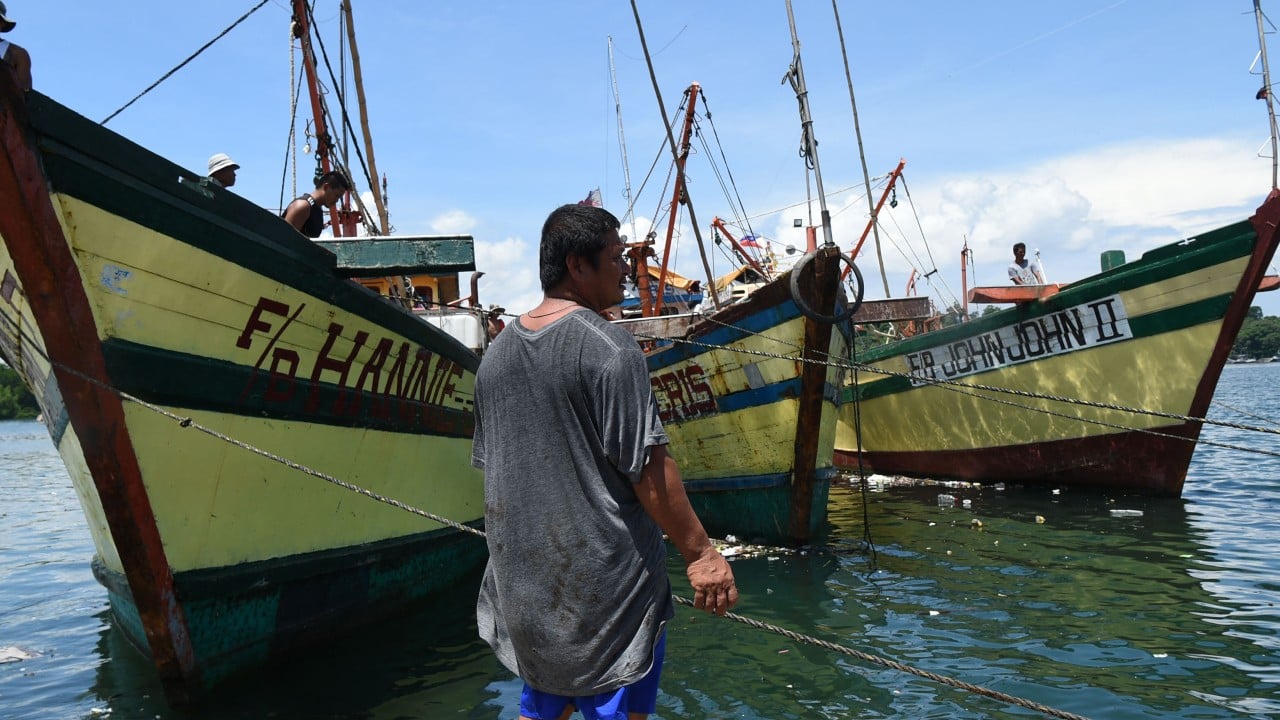
A decade after a landmark international tribunal invalidated Beijing's expansive maritime claims, the small-scale fishing crews of Masinloc and surrounding Philippine coastal towns find themselves on the losing side of a quiet attrition war. While geopolitical analysts dissect gray-zone tactics and naval positioning in the South China Sea, the human cost is measured in empty holds, severed mooring anchors, and families abandoning generations of maritime heritage for land-based odd jobs.
The core crisis for Filipino fishers is not merely political abstraction. It is an everyday economic chokehold. Traditional fishing grounds inside the Philippine exclusive economic zone, particularly around Scarborough Shoal, remain effectively under the physical control of foreign maritime forces. When boats venture near these historical commons, crews report being intercepted, chased by water cannons, or subjected to tactics that physically damage their gear.
To understand why diplomatic wins in The Hague have failed to translate into safety at sea, one must look closely at the mechanics of enforcement. Legal victories establish rights, but physical presence dictates reality. The tribunal ruling of 2016 delivered a clear legal verdict against expansive historical assertions. Yet, enforcement requires capabilities that a developing coastal nation cannot easily project in contested waters without risking catastrophic escalation. Consequently, state-backed coast guard cutters and maritime militia vessels operate as an unyielding wall, turning open ocean into an exclusion zone for those who have fished those waters for generations.
The downstream economic consequences ripple far beyond the immediate coastline. A typical fishing expedition from Zambales province used to sustain a household for weeks, yielding high-value catch that fed local markets and funded children's education. Today, many veterans of these voyages have parked their outriggers permanently. In hypothetical terms, imagine spending a month's savings on fuel, ice, and provisions, only to be turned back a hundred miles offshore by vessels three times the size of your boat. Repeat that financial loss twice, and the choice is no longer about tradition; it is about survival. Many former captains now drive auto-rickshaws or take manual labor jobs onshore, watching the price of imported fish climb in local markets where their own catch used to be abundant.
Public sentiment in the Philippines has evolved alongside these pressures. Modern polling indicates that a significant majority of the population supports a firm national stance and maritime modernization. Yet, domestic political backing and international legal frameworks offer cold comfort to a crew staring down a high-pressure water jet miles from the nearest port. State agencies pitch the defense of maritime entitlements as a long-term strategic marathon. For individual families whose vessels are sitting idle on the beach, the timeline of diplomacy moves far too slowly against the immediate urgency of daily debt.
The tension leaves Manila walking a narrow tightrope. Diplomatic channels remain active, with bilateral talks attempting to carve out provisional arrangements or reduce friction points without formally surrendering sovereign claims. At the same time, civilian supply missions and regular coast guard patrols seek to assert a continuous presence in the face of persistent obstruction. Each diplomatic communiqué promises stability, but actual maritime conditions on the water dictate whether a fisherman can cast a net without risking his boat.
The quiet emptying of coastal communities points to a stark reality. Sovereignty is ultimately sustained by people living and working upon the land and water in question. If the economic cost of presence becomes too high to bear, the communities that give substance to national claims will simply disappear, replaced by a de facto status quo written in wake-water and steel.