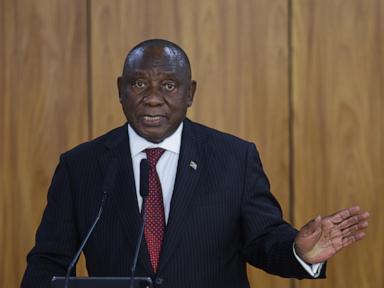
South African President Cyril Ramaphosa has secured a temporary legal shield, as a high court order halts the parliamentary impeachment inquiry tied to the infamous 2020 cash heist at his Phala Phala wildlife ranch. The Western Cape High Court issued an interim interdict preventing Parliament's Section 89 committee from proceeding with public hearings while the president challenges the foundational findings of an independent judicial panel that accused him of potential constitutional breaches. This sudden judicial pause buys the beleaguered executive critical breathing room until a full court review commences in September, freezing an accountability process that threatens to upend the country's fragile political coalition.
Anatomy of a Sofa Stash
The origins of this political crisis trace back to an underground burglary at a private game farm in Limpopo province. Intruders discovered roughly five hundred and eighty thousand dollars in cash stuffed inside furniture upholstery.
President Ramaphosa maintained that the foreign currency originated from legitimate game sales. Critics raised sharp questions regarding why such massive sums of foreign cash remained hidden away rather than deposited through normal banking channels. Furthermore, the failure to log an immediate formal police report sparked accusations of obstruction and potential money laundering.
An independent advisory panel concluded in late 2022 that prima facie evidence existed indicating the president may have committed serious misconduct. That panel report became the anchor for opposition parties demanding total accountability.
The Mechanics of Judicial Intervention
When a court issues an interim interdict, it does not rule on absolute innocence or guilt. It freezes active proceedings to prevent irreversible damage while underlying legal challenges are adjudicated.
Judges André le Grange, Matthew Francis, and Diane Davis delivered a split two-to-one decision granting the pause. The ruling halts public parliamentary hearings, though it does permit technical behind-the-scenes committee preparation.
For Ramaphosa, the strategy relies on knocking out the foundational panel report itself. If the high court invalidates the original panel findings during the September hearings, the entire architectural basis for the impeachment motion collapses.
Political Fallout and Coalition Realities
The timing of this legal battle intersects awkwardly with South Africa's evolving political landscape. The African National Congress no longer commands an outright parliamentary majority alone. It relies on a complex coalition arrangement, notably alongside the Democratic Alliance.
While coalition partners demand transparency and swift resolution, opposing factions have weaponized the scandal to erode public trust. Ramaphosa has weathered numerous political storms since taking office in 2018, often presenting himself as an anti-corruption reformer. The irony of defending a hidden stash of foreign currency has provided endless ammunition for political rivals across the ideological spectrum.
Yet, the legal system moves at its own deliberate rhythm. September will determine whether the executive can permanently dismantle the inquiry or if Parliament will ultimately be unleashed to interrogate the head of state under the harsh glare of public television cameras.