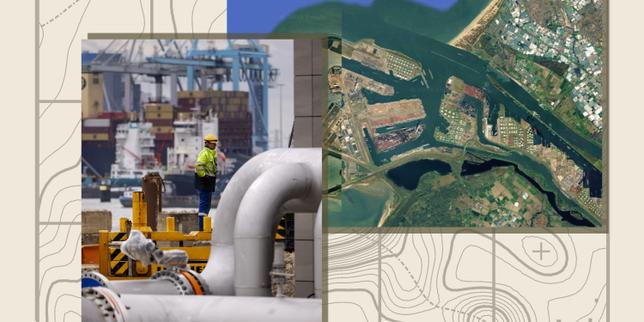
Rotterdam handles over 400 million metric tons of cargo every year, acting as the primary beating heart of industrial Europe. Yet behind its sprawling terminals and roaring refineries, Europe’s largest seaport is caught in a massive structural trap. The port authority has publicly committed to achieving carbon neutrality by 2050, but its business model remains deeply entwined with fossil fuels. Crude oil, refined petroleum products, and coal still account for nearly half of its total throughput. Replacing those revenue streams while keeping regional heavy industry alive presents an immense challenge that rhetoric alone cannot solve.
The Massive Scale of the Decarbonization Trap
Decarbonizing a gateway of this magnitude requires more than installing solar panels on warehouses or running electric tugboats in the harbor. Rotterdam functions as a heavy industrial cluster, hosting five oil refineries, thousands of kilometers of pipelines, and a dense network of chemical plants. These facilities do not merely handle energy; they consume massive quantities of high-heat power and rely on fossil inputs as basic chemical feedstocks.
Transitioning this infrastructure demands astronomical amounts of clean energy that Europe currently cannot produce. To completely replace fossil fuel imports with green hydrogen, the region would need thousands of gigawatts of dedicated offshore wind capacity. Building that supply line takes decades, vast capital investments, and unprecedented regulatory coordination.
Meanwhile, existing energy assets generate steady dividends and keep industrial supply chains operational. Shifting away from them too quickly threatens the economic stability of the entire region. The port authority must walk a delicate tightrope: aggressively invest in net-zero infrastructure while ensuring fossil fuel revenues remain steady enough to finance the pivot.
Hydrogen Promises Face Harsh Market Realities
Green hydrogen forms the cornerstone of the port's long-term survival plan. The ambition is clear—transform Rotterdam into the primary import hub for hydrogen across Northern Europe. Yet the current economic math paints a much tougher picture.
Creating green hydrogen requires running clean electricity through massive electrolyzers to split water into hydrogen and oxygen. Current production costs remain significantly higher than those of traditional natural gas-derived grey hydrogen. Major energy companies are hesitant to sign long-term off-take agreements without guaranteed government subsidies or a clear price signal on carbon emissions.
- Cost Gap: Green hydrogen costs remain substantially higher per kilogram compared to fossil-derived equivalents.
- Storage and Transport: Converting hydrogen into carriers like ammonia or liquid organic hydrogen carriers (LOHC) adds expensive processing steps and energy losses.
- Infrastructure Deadlocks: Terminal developers are reluctant to construct specialized import capacity until chemical plants and steelworks guarantee long-term purchase contracts.
Without a rapid drop in renewable energy costs or a sharp increase in mandatory carbon prices across the European Union, green hydrogen risks remaining an expensive niche rather than a bulk commodity.
Carbon Capture as a Temporary Shield
To bridge the gap while green fuels scale up, Rotterdam is banking heavily on carbon capture and storage (CCS). Projects like Porthos aim to collect emissions from industrial plants along the harbor, compress the carbon dioxide, and transport it via seabed pipelines into depleted offshore gas fields.
CCS offers a pragmatic solution for hard-to-abate sectors like refining and chemical manufacturing. It allows existing facilities to reduce their net emissions footprint without requiring immediate, radical redesigns of their core manufacturing processes.
Capturing carbon at the source prevents immediate environmental damage, but it also creates an expensive secondary infrastructure layer that does not generate intrinsic commercial value.
The strategy carries inherent risks. Critics argue that relying heavily on carbon capture extends the operational shelf life of fossil fuel infrastructure rather than replacing it. From a pure capital allocation standpoint, billions spent on carbon capture hardware are billions not spent directly on renewable manufacturing or alternative feedstocks.
Geopolitical Friction and Port Competition
Rotterdam does not operate in a vacuum. It competes directly with neighboring European ports like Antwerp-Bruges and Hamburg, as well as emerging energy hubs in the Middle East and North Africa.
If strict European environmental regulations drive up industrial operational costs in the Netherlands too quickly, energy-intensive businesses may relocate out of the bloc entirely. This concept, known as carbon leakage, would destroy local industrial employment without reducing global emissions.
Furthermore, international supply chains are fragmenting. Global trade tensions and shifting geopolitical alliances mean energy security now frequently overrides pure sustainability goals. When regional energy crises hit, coal and liquefied natural gas (LNG) imports spike immediately, driving record throughput at fossil terminals regardless of long-term climate plans.
The port authority faces a paradox. It must maintain massive fossil fuel infrastructure to guarantee immediate regional energy security, even as it spends heavily to build the zero-carbon alternative meant to replace it.
The Financial Clock Is Ticking
The timeline for this transformation is remarkably tight. European Union climate mandates demand a 55% reduction in net emissions by 2030 compared to 1990 levels. For a facility responsible for a significant fraction of Dutch national emissions, meeting those targets requires immediate structural shifts.
Capital allocation decisions made right now will dictate the harbor's economic viability for the next thirty years. Refineries cannot simply be retrofitted overnight, and building new heavy infrastructure requires years of environmental permitting, engineering, and public consultations.
Rotterdam’s journey reveals the true cost of the global energy transition. It is not a straightforward swap of clean technology for dirty technology. It is a messy, capital-intensive restructuring of global trade, supply chains, and industrial geography, where legacy revenues must fund the very systems designed to render them obsolete.