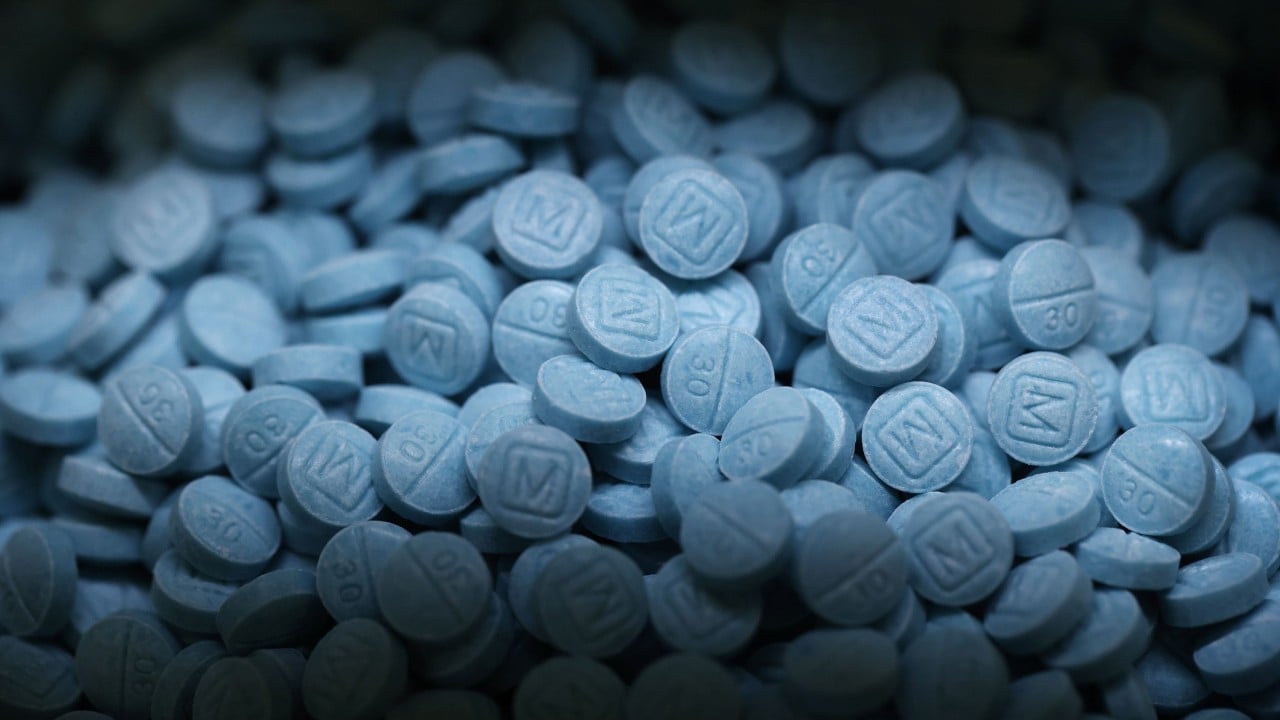
Donald Trump’s aggressive diplomatic and tariff-driven pressure campaign targeting China over fentanyl precursors has fundamentally reshaped international trade disputes, yet it continues to misdiagnose the structural mechanics of a global illicit supply chain. When Washington links punitive trade measures and summit negotiations directly to Beijing's regulation of precursor chemicals, it assumes a command-and-control economic model that no longer exists in the way Western policymakers imagine. The reality on the ground is infinitely more fractured, decentralized, and resistant to top-down state decrees than White House briefings care to admit.
For years, the narrative in Washington has rested on a clean, linear premise: if the United States applies enough economic leverage, Beijing can simply flick a switch, shut down its sprawling chemical manufacturing sector, and halt the export of the building blocks used to synthesize illicit opioids. This view misunderstands the transformation of China’s chemical industry. The sector is vast, highly decentralized, and characterized by thousands of independent small-to-medium enterprises producing dual-use compounds. These are legitimate industrial chemicals with essential applications in plastics, textiles, and pharmaceuticals that happen to double as precursor ingredients for synthetic narcotics.
When Beijing places a specific chemical compound under strict state licensing or export controls, the underground market does not simply surrender. It mutates. Chemical engineers and illicit brokers alter the molecular structure of the precursors just enough to bypass the newly minted regulatory definitions. They create designer precursors—unregulated analogs that serve the exact same chemical purpose in clandestine laboratories in Mexico and Central America but remain entirely legal to manufacture and ship until bureaucrats spend months or years catching up. This cat-and-mouse game of chemical modification renders static trade summits and fixed-list agreements obsolete almost before the ink is dry on the communique.
The diplomatic theater surrounding high-stakes summits often obscures this technical reality. Tariffs are raised, concessions are debated, and announcements are made regarding new scheduling controls or export licenses. Yet, enforcement remains deeply uneven. Local municipal authorities in China, often incentivized to protect regional employment and tax revenues generated by industrial manufacturers, frequently lack the resources or the political will to monitor every shipment leaving a provincial port. Meanwhile, transnational cartels exploit shell companies, cryptocurrency transactions, and deceptive freight descriptions to route these materials through third-party nations with weak customs oversight.
To understand why traditional pressure tactics fail to yield a permanent solution, one must look at the economics of the trade. The profit margins on fentanyl precursors are astronomical. As long as consumer demand inside the United States remains insatiable, the financial incentive to bypass border controls will outweigh the friction of trade penalties. Punitive tariffs can alter trade balances, but they cannot legislate away a chemical formula or deter a network of illicit brokers operating across multiple jurisdictions with impunity.
Washington's fixation on bilateral deals with Beijing also ignores the multi-polar nature of modern trafficking. While China remains a primary origin point for foundational chemical precursors, the final synthesis and distribution networks are globally dispersed. Shifting the blame entirely across the Pacific provides convenient political posturing, but it distracts from domestic failures in intelligence, port inspection infrastructure, and public health interventions. A container ship docking at a major American port undergoes physical inspection at a fraction of a percent due to the sheer volume of global commerce. Smugglers know these operational bottlenecks intimately.
True disruption requires moving past the illusion that a single summit or a temporary tariff adjustment can dismantle a global chemical assembly line. It demands real-time intelligence sharing, chemical tracking frameworks that anticipate molecular modifications before they hit the market, and an unvarnished recognition of how modern industrial chemistry outpaces diplomacy. Until policymakers confront the structural adaptability of the illicit supply chain, high-profile negotiations will remain cycles of theatrical leverage yielding temporary compliance and permanent circumvention.
This video provides additional context on the diplomatic talks and bilateral dynamics surrounding recent U.S.-China summits and drug enforcement negotiations.