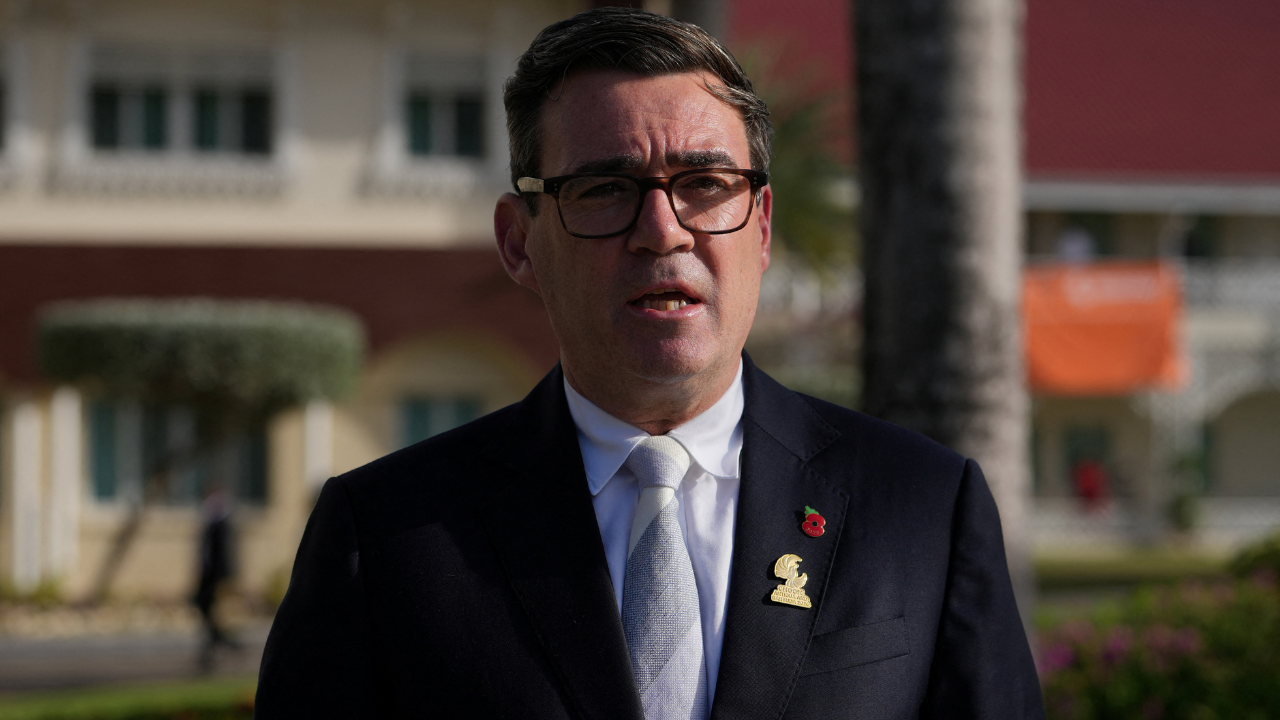
UK Prime Minister Andy Burnham has committed to publishing a comprehensive ten-year national strategy before Christmas, a direct response to Conservative leader Kemi Badenoch’s sustained parliamentary attacks accusing his administration of lacking a coherent governing vision. While the announcement quiets immediate backbench jitters over political drift, it locks Downing Street into an unforgiving timeline that demands hard fiscal choices—most notably around capital investment, regional devolution, and public sector productivity—before the parliamentary recess.
Westminster loves a deadline. It loves a dramatic pledge even more. Yet anyone who has watched British prime ministers over the past three decades knows that December policy launches are rarely born from calm, methodical statecraft. They are usually born from panic.
Badenoch’s line of attack is brutally simple because it requires no spreadsheets to land. At the dispatch box, she has systematically framed Burnham’s tenure not as malicious, but as aimless—a government reacting to headlines rather than steering the ship. In British politics, a reputation for drift is fatal. Once the public decides a leader has no destination in mind, every pothole, hospital waiting list, and delayed train becomes proof of incompetence rather than bad luck.
By promising a ten-year blueprint before the tinsel comes down, Burnham has attempted to flip the script. He is asking the country, the markets, and his own restless MPs to judge him on a decade-long horizon rather than a Tuesday afternoon in the Commons. It is a classic defensive maneuver disguised as bold leadership.
The Westminster Trap of Ten-Year Plans
Ten-year plans have a dismal track record in modern British governance. They suffer from a structural flaw that has broken more ambitious premiers than Burnham: the Treasury’s obsession with five-year fiscal cycles and the political reality of five-year election terms.
When a prime minister announces a decade-long vision, civil servants immediately reach for their dictionaries to look up the word aspirational. Without multi-year departmental settlements backed by hard cash, a ten-year strategy is little more than expensive stationery.
Consider the mechanics of Whitehall. The Treasury operates on a ruthless logic of short-term containment. Every pound committed to a ten-year infrastructure project or a long-term preventative health initiative is a pound that cannot be used to plug an immediate hole in local council budgets or settle a looming public sector pay dispute. Burnham spent years as Mayor of Greater Manchester arguing against this exact brand of short-termism. He built his national profile by demanding that central government let go of the purse strings and allow regional leaders to plan over decades rather than fiscal quarters.
Now he sits at the top of the machine he spent a decade critiquing. And the machine does not like being rewired.
To make a ten-year plan credible before Christmas, Burnham cannot simply publish a glossy brochure filled with targets for 2036. Institutional investors, bond markets, and opposition frontbenchers will tear it apart within forty-eight hours if the baseline numbers do not add up. They will look for three specific mechanisms:
- Capital allocation rules: How much borrowing is permitted for long-term physical assets versus day-to-day operational spending.
- Statutory devolution: Whether regional mayors and combined authorities get binding legal powers over transport, skills, and housing, or merely another round of competitive bidding pots.
- Planning reform teeth: Whether the government is willing to override local nimbyism to actually build the energy grids, reservoirs, and housing developments required to hit ten-year growth targets.
If any of those three pillars are missing when the document drops in December, Badenoch will not need to write new material. She will simply read Burnham’s own past speeches back to him across the chamber.
Why Badenoch’s Vision Critique Actually Hurts
Opposition leaders always accuse prime ministers of lacking vision. Usually, the charge bounces off. When a government is delivering tangible improvements in living standards, voters care very little about grand ideological narratives.
The danger for Burnham is that Badenoch’s jibe is landing in an environment of persistent economic sluggishness. Britain’s productivity puzzle—the stubborn refusal of economic output per hour worked to return to its pre-2008 trajectory—remains unresolved. Real wages have barely recovered lost ground, public infrastructure feels visibly worn down, and the tax burden sits at historic post-war highs.
In that climate, asking voters to be patient without explaining where the patience leads is political suicide.
Badenoch understands this instinctively. Her political style relies on sharp ideological contrast and the exposure of administrative fuzziness. By hammering the "no vision" theme, she forces Burnham onto territory where consensus-building—his greatest political asset in Greater Manchester—looks like indecisiveness. What works when negotiating transport subsidies with ten local council leaders in the North West can look fatally weak when standing at the dispatch box facing an opposition leader demanding clear ideological choices.
The Conservative strategy is clear. Force Burnham to define his priorities early. If he chooses aggressive public investment, attack him on borrowing, inflation, and tax rises. If he chooses fiscal restraint to appease the gilt markets, accuse him of betraying his own party’s base and offering nothing more than managed decline.
Burnham’s pre-Christmas deadline is an attempt to break out of this pincer movement by defining the terms of engagement himself. It is a high-wire act without a safety net.
The Hidden Friction Between Downing Street and the Treasury
Behind the closed doors of SW1, the real battle over this ten-year plan is not between Burnham and Badenoch. It is between Number 10 and Number 11 Downing Street.
Any seasoned observer of British politics knows that a prime minister’s grand strategic ambitions live or die by the willingness of the Chancellor of the Exchequer to fund them. Historically, when a prime minister announces a sudden deadline for a major policy overhaul, it signals that Downing Street is trying to bounce the Treasury into commitments it would otherwise drag out for months.
The Politics of the Spending Envelope
The Treasury’s primary institutional instinct is risk mitigation. Officials there have long memories of market turmoil triggered by unfunded spending pledges and sudden shifts in fiscal rules. If Burnham’s ten-year plan relies on altering how public debt is measured—for instance, by excluding certain types of productive investment from the headline debt-to-GDP ratio—the Treasury will demand ironclad institutional guardrails to prevent a spike in government borrowing costs.
Those guardrails usually take the form of independent oversight bodies, strict return-on-investment thresholds, and phased rollouts that push the actual spending years into the future. Which brings us right back to the original problem: a ten-year plan that does nothing visible for the first three years will not save a prime minister from mid-term electoral pain.
The Devolution Dilemma
Then there is the question of power. Burnham’s political brand is built on decentralisation. His core thesis has always been that Britain is absurdly over-centralised, with Whitehall officials making granular decisions about bus routes in Bolton or skills training in Sunderland.
Translating that philosophy into a national ten-year plan requires Whitehall departments to surrender control over tens of billions of pounds. Ministers in departments like Education, Transport, and Business rarely give up budget lines voluntarily. When a department loses control over a budget, its Secretary of State loses political leverage, media announcements, and influence over local MPs.
For Burnham to deliver a genuinely transformative blueprint before Christmas, he has to force his own Cabinet to give away their power to regional mayors and local authorities. Doing that in a matter of weeks, while managing daily parliamentary business, is an administrative nightmare.
What a Credible Blueprint Must Actually Contain
If Burnham wants this document to be remembered as a turning point rather than a panic-induced PR exercise, it has to survive contact with reality. Political journalists will judge it on the morning news cycle, but economists, business leaders, and civil servants will read the appendices.
A hypothetical example illustrates the difference between political fluff and operational reality. Suppose the ten-year plan promises to halve regional economic disparities by 2036. If the document achieves this through vague pledges to "encourage private sector partnerships" and "streamline regulatory frameworks," every serious analyst in London will write it off before lunch. However, if it commits to specific, ring-fenced multi-year capital transfers to regional transport authorities, tied to binding local housing delivery targets and backed by primary legislation to speed up compulsory purchase orders, the market will take notice.
That is the bar Burnham has set for himself. He cannot afford generalities.
To silence Badenoch and reassure his own party, the pre-Christmas launch must resolve three fundamental tensions in British economic policy:
- Energy security versus net-zero timelines: Britain pays some of the highest industrial electricity prices in the developed world. A ten-year plan must explain how the government will lower energy costs for manufacturers now while simultaneously funding the massive grid upgrades required for decarbonisation.
- Skills reform versus immigration controls: Every prime minister promises to train British workers to fill labour shortages, yet employer investment in training has declined for years. Without concrete tax incentives or levy reforms that force businesses to train domestic staff, reducing net migration will simply create acute bottlenecks in construction, engineering, and social care.
- NHS funding versus preventative reform: The National Health Service consumes an ever-growing share of day-to-day departmental spending, starving other public services of cash. A ten-year plan has to move beyond throwing emergency winter funding at acute hospitals and establish legally protected budgets for community care, mental health, and early intervention—even when hospitals are under pressure.
None of these problems can be solved with a clever speech. They require legislative muscle, institutional patience, and a willingness to antagonise powerful vested interests.
The Risk of Overpromising in December
There is a reason seasoned political operators avoid major strategic launches in the final weeks before Christmas. Attention spans are fractured, parliamentary scrutiny is compressed, and any flaw in the policy architecture becomes the sole topic of conversation over the festive break.
If the numbers in Burnham’s ten-year plan do not withstand scrutiny from the Institute for Fiscal Studies, or if key Cabinet ministers appear lukewarm during the media rollout, the narrative will harden instantly. Instead of projecting strength and direction, the government will look desperate—rushing out half-baked homework to appease a noisy opposition leader.
Badenoch will be waiting for that exact stumble. Her entire political operation is geared toward exploiting gaps between rhetoric and delivery. If Burnham hands her a massive, detailed policy document riddled with unfunded assumptions or watered-down compromises, she will spend the first three months of the new year dismantling it line by line at Prime Minister’s Questions.
Conversely, if Burnham pulls it off—if he manages to wrestle the Treasury into backing genuine long-term capital investment, forces Whitehall to cede real power to the regions, and lays out a ruthless, realistic sequence of reforms—the political dynamic changes overnight. Badenoch’s "no vision" attack evaporates, replaced by a substantive argument over two competing models of British capitalism.
Burnham has bought himself a few weeks of breathing room by setting the clock. Now the clock is ticking, and Westminster does not forgive leaders who miss their own deadlines.