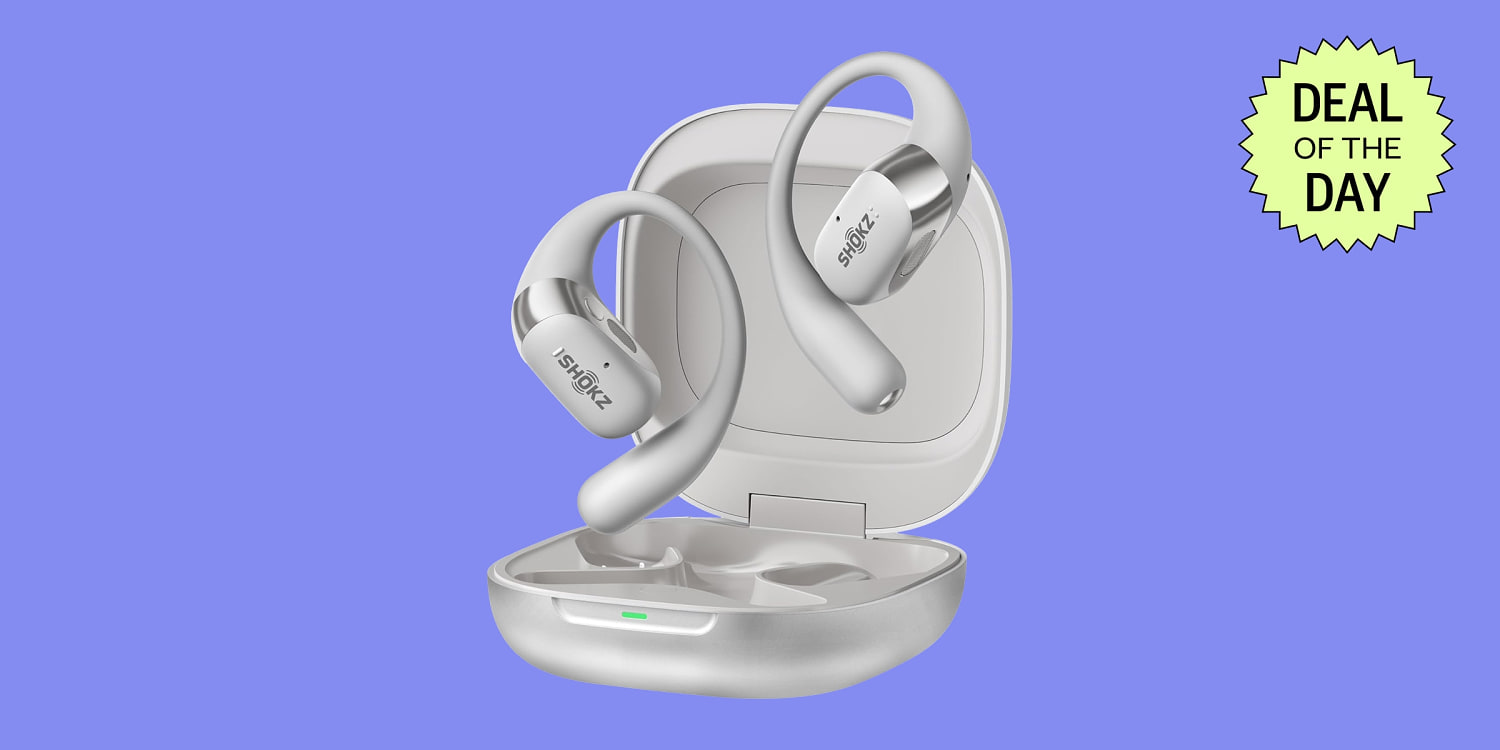
A 50% discount does not turn a compromised acoustic design into a bargain.
Every major tech blog is currently breathless over the Shokz OpenFit 2+ dropping to half price. The pitch is predictable. You get open-ear comfort, situational awareness, and a brand name synonymous with endurance sports, all for half the retail sticker. Click the affiliate link, feel smart about saving money, and move on. Don't miss our earlier article on this related article.
Except you are buying the wrong tool for the job.
After testing over a hundred pairs of wireless earbuds and watching millions of dollars in consumer electronics R&D get burned chasing trendy form factors, one truth stands out: open-ear air conduction earbuds occupy an awkward middle ground that rarely satisfies anyone. They lack the visceral audio fidelity of sealed in-ear monitors, yet they abandon the true mechanical advantages that made Shokz famous in the first place. To read more about the history of this, Ars Technica provides an in-depth breakdown.
Before you pull out your credit card because a price tracker flashed green, we need to dissect what you are actually paying for—and why that 50% markdown exists in the first place.
The Open-Ear Illusion and the Physics of Sound
To understand why the OpenFit 2+ struggles to justify even its discounted price, you have to look at basic acoustics.
Standard earbuds—the kind with silicone tips from Sony, Apple, or Bose—create an acoustic seal inside your ear canal. That seal traps air pressure. Trapped air pressure allows tiny 6mm to 11mm drivers to move air efficiently, reproducing sub-bass frequencies down to 20Hz without needing massive power or distortion-inducing excursion.
Open-ear earbuds like the Shokz OpenFit 2+ throw that seal in the trash. Instead, they rely on directional air conduction. Essentially, you are strapping miniature speakers just outside your ear canal and hoping the sound waves make it inside before dissipating into the atmosphere.
Physics is unforgiving here. Without a seal, low-end frequencies vanish instantly. Audio engineers try to compensate using aggressive Digital Signal Processing (DSP) and dynamic bass-boost algorithms—what Shokz markets under various proprietary acoustics labels. They push the small drivers harder to simulate thump.
The result? At low volumes in a quiet room, it sounds pleasant enough. Step onto a city sidewalk, get on a treadmill, or ride a bike into a 15-mph headwind, and the illusion collapses. Ambient noise swallows the bass entirely. You crank the volume to compensate, which triggers two immediate problems: severe audio distortion and massive sound leakage. Everyone standing within six feet of you in an elevator or on a train gets to listen to your podcast along with you.
Shokz Abandoned Its Own Superpower
The deepest irony of the OpenFit 2+ is that Shokz built an empire by solving this exact problem differently.
For years, Shokz (formerly AfterShokz) dominated the endurance athlete market using bone conduction technology. Devices like the OpenRun Pro bypass the outer and middle ear completely. Transducers sit on your cheekbones, sending mechanical vibrations directly through your skull to your cochlea.
Bone conduction has terrible bass response for music, no one disputes that. But for runners, cyclists, and swimmers, it is unmatched because your ear canals remain 100% unobstructed. You can even wear foam earplugs on an airplane or at a noisy gym and still hear your audio clearly through bone conduction.
The OpenFit 2+ is not bone conduction. It is a conventional speaker hovering over your ear hole.
Why did Shokz make this pivot? Market share. Bone conduction hits a hard ceiling in audio quality, so Shokz chased the casual lifestyle crowd who wanted better music playback without the "plugged-in" feeling of AirPods Pro. In doing so, they entered a knife fight against Bose (Ultra Open Earbuds), Sony (LinkBuds series), and dozens of budget challengers like Soundcore and Nothing, all using the exact same air-conduction physics.
When a category leader steps outside its core engineering moat to chase a broader trend, the resulting product is almost always a compromise. A 50% price drop is rarely an act of generosity from a manufacturer; it is inventory clearing in a hyper-saturated market where consumers are realizing that hovering speakers are a niche novelty.
Dismantling the "Situational Awareness" Myth
The primary selling point pushed by affiliate roundups for the OpenFit 2+ is safety. "Hear traffic while you run!" "Stay aware of your surroundings at the office!"
This sounds logical until you actually test it in the real world.
Imagine a scenario where you are running alongside a moderately busy four-lane road. Traffic noise sits around 70 to 75 decibels. Because the OpenFit 2+ does not block external noise, you must turn your audio up to roughly 80 decibels just to hear the vocals of a song or the host of a podcast.
At 80 decibels of direct audio competing with 75 decibels of tire roar, your brain experiences auditory masking. You are not achieving magical, dual-channel awareness where you crisp-clear hear both your music and an approaching electric vehicle. You are listening to a muddy, fatiguing wall of overlapping noise. Worse, you are subjecting your hearing to dangerously high cumulative decibel levels just to overcome the lack of passive isolation.
Now compare that to modern flagship earbuds equipped with high-end Transparency Mode (or Ambient Sound mode), such as the Apple AirPods Pro 2 or Sony WF-1000XM5.
These devices use external beamforming microphones to capture the outside world and pipe it into your ears with near-zero latency, while simultaneously attenuating sudden, damaging spikes in volume (like a siren or construction equipment). When you want to hear a car or talk to a barista, you get natural, amplified awareness. When you want to block out a crying baby on a flight or a loud gym soundtrack, you tap a stem and engage Active Noise Cancellation (ANC).
The OpenFit 2+ gives you zero versatility. It is permanently stuck in one acoustic state. You cannot turn off the outside world when you need to focus.
What People Are Actually Asking (And The Brutal Answers)
When deals like this hit the front page, buyers scramble to search engines with specific questions to justify the impulse purchase. Let's look at what people ask—and strip away the marketing spin.
Are the Shokz OpenFit 2+ good for the gym?
No. Commercial gyms blast terrible Top 40 music over overhead PA systems at 75+ decibels, mixed with the clanking of iron plates and the hum of twenty treadmills. Open-ear earbuds are practically useless in this environment. You will either hear nothing of your own workout playlist, or you will max out the volume to the point where the drivers clip and distort. Buy sweat-resistant in-ear buds with passive isolation instead.
Do open-ear earbuds hurt less than regular earbuds?
For a specific subset of people, yes. If you suffer from chronic ear canal infections, excessive earwax buildup, or unusually narrow ear canals that reject silicone and foam tips, ear-hook designs like the OpenFit 2+ offer genuine relief. Resting a lightweight, silicone-coated hook over the pinna eliminates internal canal pressure. However, if you wear glasses or sunglasses regularly, the ear hooks compete for the exact same real estate behind your ears, often creating painful pressure points after an hour of wear.
Is the call quality good on the OpenFit 2+?
In a quiet home office, the dual-microphone setup with AI noise reduction works fine. Your voice sounds slightly distant compared to a boom mic, which is expected, but intelligible. Step outside into light wind, and the open design works against you. Wind rushes directly past the exposed microphones and across your open ear canal, making it hard for the caller to hear you and even harder for you to hear them.
Should I buy the OpenFit 2+ at 50% off?
Only if your specific use case matches a very narrow profile: you work in a quiet-to-moderate office environment where you need to hear coworkers talking to you all day, you hate having anything inside your ear canal, and you do not care about rich bass or audio immersion. For everyone else, saving 50% on a product that only does 30% of what modern earbuds can do is still a net loss.
The Honest Trade-Offs of My Stance
If you reject the OpenFit 2+ and stick with traditional sealed earbuds with Transparency Mode, you are not getting a flawless experience either. Integrity in audio testing means admitting where the alternative falls short.
First, occlusion effect is real. Even with the best transparency modes on the market, running with sealed earbuds creates a rhythmic thump-thump-thump inside your head every time your heel strikes the pavement. Your own footsteps and heavy breathing echo internally. Open-ear designs eliminate occlusion completely. For runners who despise that internal booming sensation, an open design feels liberating.
Second, battery degradation and hygiene. Sealed earbuds trap moisture and sweat inside the ear canal, which can cause irritation during multi-hour marathon training sessions. Furthermore, relying on active microphones and DSP for transparency drains battery life faster than passive openness.
Third, situational trust. No matter how advanced Sony or Apple’s transparency algorithms become, trusting a digital microphone feed to alert you to a speeding cyclist behind you requires faith in electronics. An unobstructed ear relies on millions of years of human evolution and natural spatial hearing—knowing instantly not just that a sound happened, but the exact angle and elevation it came from.
What You Should Buy Instead
Stop letting arbitrary discount percentages dictate your tech purchases. A 50% off tag is a psychological trigger designed to make you compare the sale price to a bloated MSRP, rather than comparing the product's actual utility against its competitors.
If you want the best tool for the job, match your purchase to your actual environment:
- For Serious Runners and Cyclists: Buy the Shokz OpenRun Pro 2. If you want to give Shokz your money, buy the technology they actually pioneered. The wrap-around titanium band stays locked to your head during violent sprints, the IP55 rating shrugs off torrential rain and sweat, and the bone conduction + air hybrid setup gives you true open-canal safety without flapping ear hooks.
- For All-Day Office Wear and Commuting: Buy the Sony LinkBuds Fit or Apple AirPods Pro 2 (frequently discounted to competitive tiers). You get natural, low-latency ambient awareness when you need to interact with humans, and genuine noise cancellation the moment you step onto a train, plane, or noisy street.
- For Pure Open-Ear Audio Fidelity: If you are dead-set on the cuff/hook style because your ear canals simply cannot tolerate tips, look at the Bose Ultra Open Earbuds. They cost more, even when factoring in Shokz's sale, but Bose's cuff-style grip avoids interfering with eyeglasses, and their OpenAudio acoustic engineering handles vocal clarity and spatial separation noticeably better than Shokz's drivers.
Do not let a clearance sale trick you into buying a compromise. Identify the environment you spend 80% of your listening time in, buy the acoustic architecture built for that exact space, and let the bargain hunters fight over half-price compromises.