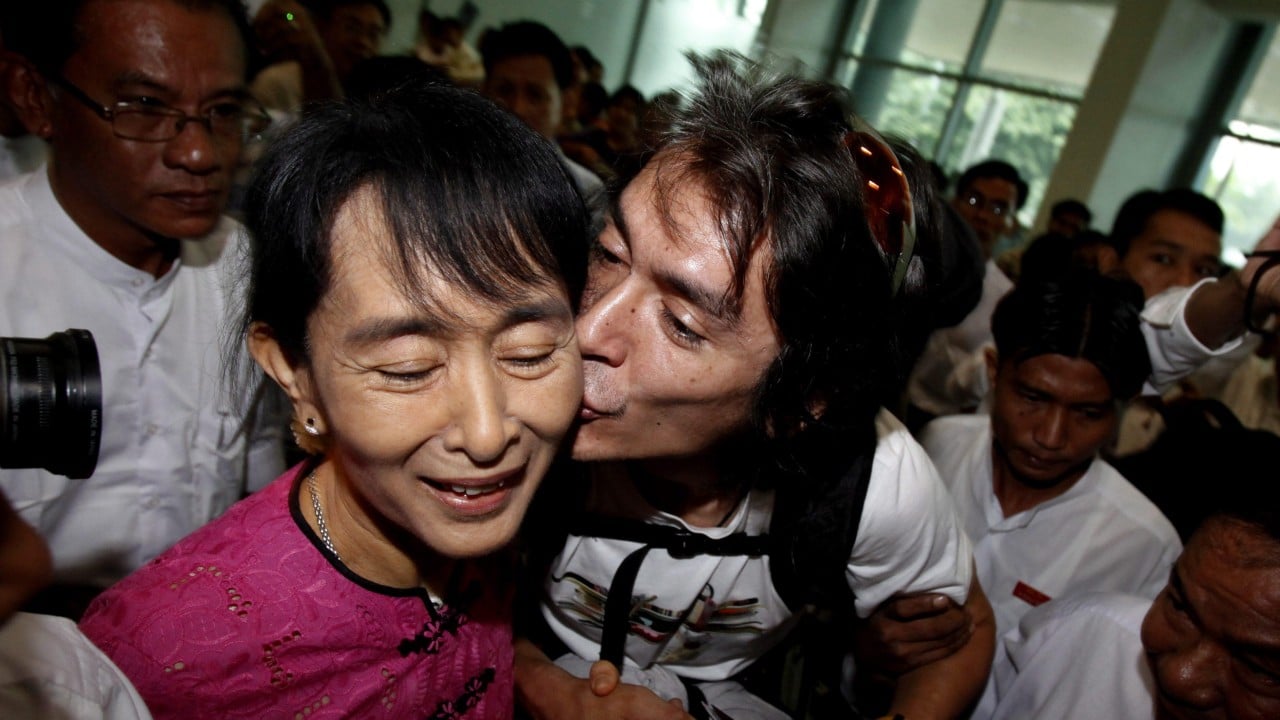
The milestone passed with the quietude of a state secret. June 19, 2025, marked the 80th birthday of Myanmar’s deposed civilian leader, Aung San Suu Kyi, and as she moves through her 81st year, her continued isolation under the military junta underscores a grim reality. Her son, Kim Aris, recently issued public statements honoring her unbroken spirit, noting that her resolve remains uncaged. Yet beneath the emotional resonance of a son’s tribute lies a harsh geopolitical stalemate. The military regime continues to use her total isolation as a psychological weapon against the resistance, while the international community has largely moved past the era of viewing her as the sole linchpin of Myanmar's democratic future.
The true crisis in Myanmar is no longer just about restoring the old civilian guard. It is about a fragmented nation fighting a brutal civil war where the younger generation of fighters has evolved beyond the iconic symbolism of "The Lady."
The Isolation Strategy as a Weapon of War
The military junta, led by Senior General Min Aung Hlaing, understands the power of a symbol. By keeping Suu Kyi cut off from medical personnel of her choice, legal counsel, and her family, the regime aims to create a vacuum. They want the public to forget the tangible reality of her leadership, reducing her to a ghost of the past.
She remains held in a custom-built compound in Naypyidaw. Information regarding her health fluctuates wildly, filtered through state-controlled channels or rare, heavily monitored legal briefings. This deliberate obscurity serves a dual purpose. For the junta, an invisible Suu Kyi prevents her from issuing statements that could unify the disparate rebel factions. For the resistance, every month of silence fuels anxiety but also forces a reliance on new, decentralized leadership structures.
The mechanism of her captivity is designed to break collective morale. The regime frequently dangles the prospect of clemency or house arrest during moments of intense international pressure or severe battlefield losses. It is a classic counter-insurgency tactic. By offering vague hints of leniency, the junta attempts to signal strength and benevolence from a position of systemic weakness.
A Fractured Resistance Moving Beyond the Icon
To understand the current conflict, one must look at the National Unity Government (NUG) and the People's Defense Forces (PDF). These entities were born out of the ashes of the 2021 coup. While they technically claim legitimacy based on the 2020 election results won by Suu Kyi’s National League for Democracy (NLD), the ground reality has shifted dramatically.
The young men and women fighting in the jungles of Sagaing region or the hills of Karen State are not merely fighting for a return to the pre-2021 status quo. Many felt disillusioned by the NLD's previous compromises with the military, particularly the defense of the military's actions against the Rohingya population at the International Court of Justice.
The current resistance is multi-ethnic and heavily militarized. Ethnic Armed Organizations (EAOs) like the Karen National Liberation Army and the Kachin Independence Army are training urban youth who fled the cities. These groups have historically distrusted the Bamar-majority NLD leadership. Consequently, the struggle has transformed from a top-down movement centered around one woman’s moral authority into a bottom-up war for federal autonomy.
- The Old Guard: Focused on constitutional amendments, legalistic transitions, and centralized authority under the NLD banner.
- The New Resistance: Focused on total military defeat of the junta, a completely rewritten federal constitution, and decentralized regional governance.
The Regional Balance of Power and Diplomatic Failure
The international response to Myanmar's crisis has been characterized by paralysis. Neighbors like Thailand, China, and India view the conflict through the lens of border stability and economic self-interest rather than human rights.
China, in particular, maintains a complex dual-track strategy. Beijing enjoyed a productive working relationship with Suu Kyi’s civilian government, which had signed onto massive infrastructure projects under the Belt and Road Initiative. However, China also shares a massive border with rebel-held territories and maintains ties with powerful EAOs. Beijing does not want a collapsed state on its southern flank. If the junta falls, China wants to ensure that whoever takes power will protect Chinese pipelines and deep-sea ports.
Meanwhile, the Association of Southeast Asian Nations (ASEAN) remains toothless. Its five-point consensus, formulated shortly after the coup, has been thoroughly ignored by the military regime. The policy of non-interference prevents neighboring countries from taking decisive action, leaving the civilian population to bear the brunt of airstrikes and economic collapse.
The Limitations of Symbolic Diplomacy
Western nations continue to issue statements demanding the immediate release of Suu Kyi and other political prisoners. While morally correct, these demands lack operational leverage. Sanctions on aviation fuel and military-owned enterprises have pinched the regime's finances, but they have not stopped the flow of state-sanctioned violence.
The focus on Suu Kyi’s personal plight, while compelling for global headlines, sometimes obscures the broader humanitarian catastrophe. Over two million people are internally displaced. The local currency, the kyat, has plummeted, destroying the middle class and plunging millions into absolute poverty. Medicine is scarce, and the education system has effectively ceased to function in conflict zones.
Relying on the moral authority of an octogenarian leader held in solitary confinement is an unsustainable strategy for a revolutionary movement. The resistance forces have recognized this, even if international diplomats have not. The battlefield victories of Operation 1027 in late 2023 and throughout 2024 proved that coordinated rebel offensives could seize major towns and military bases without a centralized command from Naypyidaw.
The fight for Myanmar is no longer a narrative of a captive democracy icon waiting for rescue. It is a grim, protracted war of attrition managed by a new generation that respects the sacrifices of the past but refuses to be bound by them.