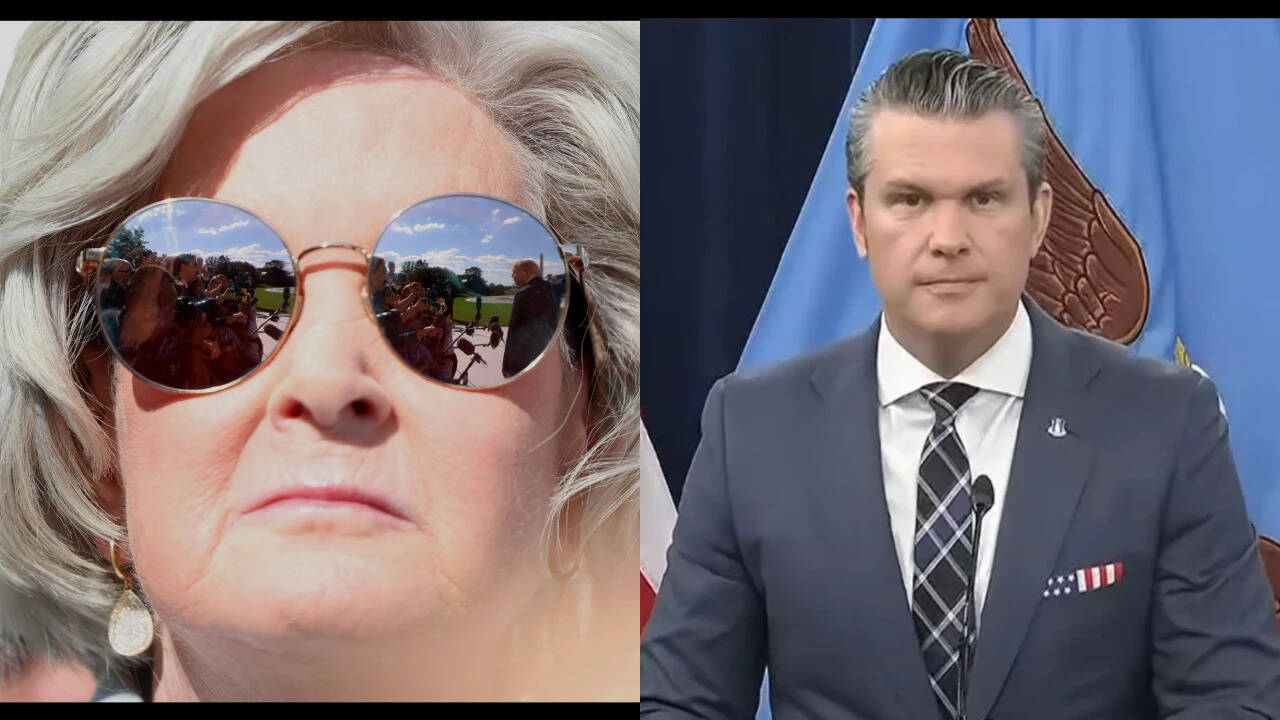
Political coverage often treats West Wing survival like a simple board game where one official sacrifices another to stay in power. Recent reporting—such as the headline suggesting White House Chief of Staff Susie Wiles plotted at Camp David to save her job by shifting blame onto Defense Secretary Pete Hegseth amid reports of President Donald Trump yelling—frames executive branch management as a personal soap opera.
While anonymous sources and dramatic accounts of presidential frustration make for compelling headlines, interpreting West Wing dynamics solely through the lens of personal survival misses how institutional power, crisis management, and political accountability actually function in modern presidencies. Meanwhile, you can explore similar developments here: The Mechanics of California Death Sentence Commutations and Penal System Restructuring.
The Limits of the "Palace Intrigue" Narrative
According to mainstream political reporting on the Camp David meeting, the central tension revolves around finger-pointing over administration missteps, with Wiles allegedly positioning Hegseth as a lightning rod to protect her own standing.
This interpretation relies on a familiar media trope: the beleaguered Chief of Staff orchestrating a behind-the-scenes coup to deflect presidential anger. However, political scientists and veteran White House staffers across multiple administrations have long noted that this framing oversimplifies how decisions are made at the top. To understand the bigger picture, we recommend the excellent report by BBC News.
In reality, a White House Chief of Staff does not survive by hiding behind a Cabinet secretary. A Chief of Staff’s primary currency is control over information, scheduling, and policy execution. If a Cabinet official—particularly the Secretary of Defense—becomes a political liability, the fallout inevitably reflects on the West Wing’s vetting and management operations. Attempting to shift all blame onto a high-profile appointee rarely insulates a Chief of Staff; instead, it often highlights breakdowns in the broader chain of command.
How Presidential Frustration Actually Operates
Accounts of President Trump yelling during high-stakes meetings are frequently cited as evidence of an impending firing or a collapse in trust. Yet historical records and memoirs from both Trump’s first term and earlier presidencies—including those of Lyndon B. Johnson, Richard Nixon, and Bill Clinton—show that vocal anger in the Oval Office or at Camp David is often a recurring management style rather than a definitive verdict on an aide's tenure.
- Venting vs. Firing: In high-pressure environments, presidents frequently use sharp rhetoric to demand urgency or express dissatisfaction with media coverage without intending to immediately overhaul their senior leadership.
- Institutional Buffers: Cabinet secretaries like Hegseth exist, in part, to absorb political heat on behalf of the administration's broader agenda. When controversies arise within the Department of Defense, directing scrutiny toward the Pentagon is standard political triage, not necessarily a covert plot invented at a weekend retreat.
- The Role of Camp David: Historically, retreats at Camp David are structured to force alignment among competing factions of an administration. When senior aides gather away from Washington, the objective is typically to synchronize messaging and policy priorities rather than execute a unilateral ambush.
Reframing the Core Questions
When evaluating reports of internal White House conflict, observers often focus on who is winning or losing favor in the moment. A more accurate assessment requires looking at structural incentives.
Does blaming a Cabinet official protect a Chief of Staff?
Rarely. As former Chiefs of Staff from James Baker to Leon Panetta have documented, the West Wing is ultimately held responsible for the overall discipline of the executive branch. If a Cabinet department struggles, the Chief of Staff is expected to fix the operational breakdown, not merely point at the department head.
What do leaks about internal yelling actually signal?
Leaks describing heated arguments inside closed-door meetings usually indicate competing factions using the press to gain tactical advantages. Staffers aligned with different policy wings or personal networks often feed selective accounts to reporters to shape the public narrative before final decisions are made. Treating a single leaked account as the definitive truth overlooks the fact that the leak itself is a political maneuver.
Why does the "scapegoat" theory persist?
Conflict-driven storytelling is easier to summarize than bureaucratic mechanics. Explaining disagreements over defense policy, personnel vetting, or interagency coordination requires granular detail, whereas a narrative centered on personal rivalry and presidential anger immediately captures public attention.
The Structural Reality of West Wing Accountability
To understand what happens at gatherings like the Camp David retreat, it helps to examine the competing pressures facing both Wiles and Hegseth:
| Factor | Chief of Staff (Susie Wiles) | Defense Secretary (Pete Hegseth) |
|---|---|---|
| Primary Mandate | Maintain West Wing discipline, manage presidential time, and coordinate interagency policy. | Lead the Department of Defense, execute national security directives, and manage Pentagon operations. |
| Source of Vulnerability | Perceived loss of control over staff leaks, messaging chaos, or unvetted surprises. | Confirmation controversies, policy missteps, or friction with senior military leadership. |
| Institutional Leverage | Direct daily access to the President and gatekeeping authority over the Oval Office. | Statutory authority over the military apparatus and direct Senate-confirmed standing. |
Because their roles carry distinct responsibilities, friction between the West Wing and the Pentagon is a structural feature of almost every modern presidency, not an anomaly unique to one meeting. Presidents routinely demand that their Chiefs of Staff rein in Cabinet departments when public controversies distract from the White House's core legislative or political goals.
Assessing the Evidence
Analyzing these events requires separating verified facts from anonymous spin. While multiple outlets have reported on tensions surrounding the administration's internal management and heated discussions involving President Trump, attributing a singular, Machiavellian motive to one participant relies heavily on unverified characterizations of private conversations.
At the same time, dismissing reports of internal friction entirely would be equally inaccurate. High-stakes political environments inevitably generate sharp disagreements over accountability, especially when public scrutiny intensifies. Recognizing that both operational friction and self-serving leaks coexist allows for a clearer, more grounded reading of Washington dynamics than any single dramatic headline can provide.