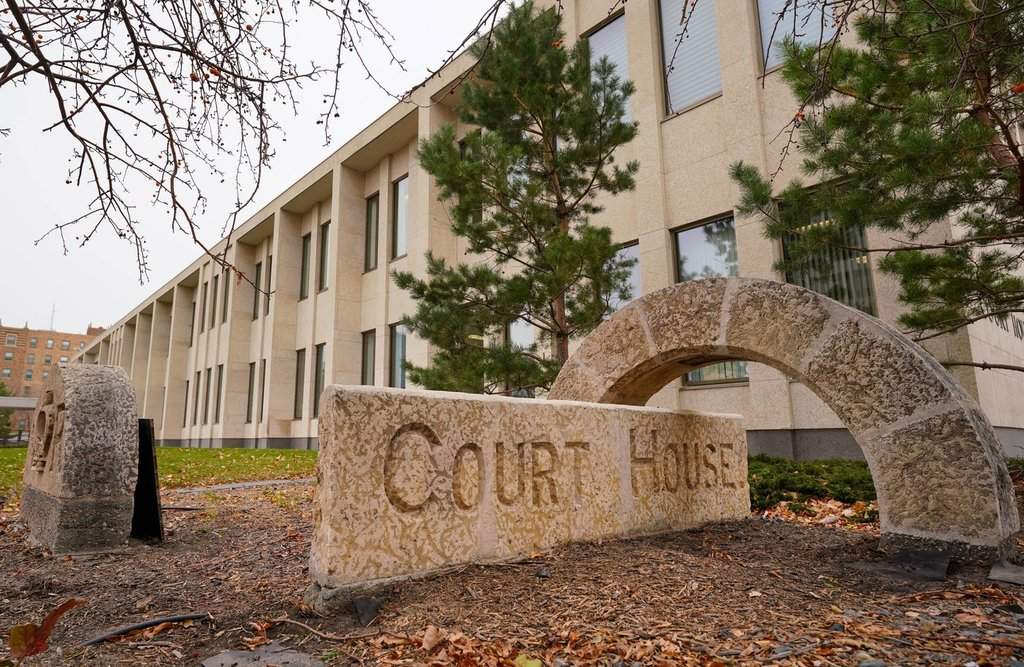
A 37-year-old man walks into a federal prison to start a seven-year sentence for second-degree murder. Yet, you will never know his name. The public will never see his mugshot. To the eyes of the Canadian justice system, he is legally viewed through the lens of a teenager.
The case of Misha Pavelick has weighed heavily on Saskatchewan for two decades. On May 21, 2006, 19-year-old Pavelick was fatally stabbed in the chest during a chaotic, alcohol-fueled high school graduation party at the Kinookimaw Campground near Regina Beach. For 17 years, the trail went cold. Nobody was charged until the RCMP finally made an arrest in 2023. A 12-person jury convicted the unnamed suspect in November 2025. Don't forget to check out our earlier article on this related article.
Then came the decision that left a Regina courtroom reeling. Court of King's Bench Justice Catherine Dawson ruled that the killer, despite being nearly 40 years old today, must receive a youth sentence.
It sounds absurd to the casual observer. How does a grown man with a lengthy criminal record get treated like a child? The reality comes down to the strict boundaries of Canadian law and a legal framework that prioritizes the age of the offender at the exact millisecond the crime occurred, not how many years have passed since. To read more about the background here, Reuters provides an informative breakdown.
The Ironclad Presumption of the Youth Criminal Justice Act
The outrage circulating around this verdict is completely understandable. The victim's family has carried a brutal burden for 20 years. Meanwhile, the killer spent his twenties and thirties accumulating eight youth and 17 adult convictions. He didn't turn his life around. He didn't show remorse. In fact, he even skipped out on his preliminary hearing in 2024 and allegedly assaulted a peace officer during his subsequent arrest.
So why did the judge hand him a youth sentence? Because under Canada's Youth Criminal Justice Act (YCJA), the law is obsessed with one specific detail: the offender was 17 years old on that long weekend in 2006.
The YCJA operates on a foundational rule. Anyone under 18 is presumed to have "diminished moral blameworthiness." The law argues that teenage brains are impulsive, highly vulnerable to peer pressure, and lack adult maturity. If the Crown wants an adult sentence, the prosecutor bears a massive legal burden. They must prove beyond a reasonable doubt that the 17-year-old version of the killer possessed adult-like independence and moral judgment at the time of the offense.
Justice Dawson made it clear that her hands were tied. She explicitly noted that the evidence from 2006 painted a picture of an immature teenager who was heavily influenced by his peers and still relied on his parents. The Crown couldn't prove adult maturity back then, so his subsequent 17 adult convictions simply didn't matter to the equation. The law forced the judge's hand.
The Reality of a 20 Year Legal Time Warp
To see how the sentencing models diverge, look at the stark contrast between what the Crown wanted and what the law actually allowed.
| Sentencing Element | Adult Sentence Seeks | Actual Youth Sentence Imposed |
|---|---|---|
| Maximum Penalty | Life imprisonment | 7 years total |
| Incarceration Term | No parole eligibility for 7 to 10 years | 4 years in secure custody |
| Community Term | Lifetime parole supervision | 3 years under community supervision |
| Identity Protection | Full public disclosure of name and face | Strict, permanent publication ban |
| Pre-Trial Custody Credit | Standard 1.5 days credit for each day served | Zero credit allowed by judge |
Justice Dawson didn't let him off easy within the boundaries of the youth framework. She handed down the absolute maximum youth sentence available for second-degree murder: seven years.
Recognizing the severe depravity of the crime, Dawson refused to grant the killer any credit for the 20 months he already spent sitting in pre-sentence custody. He will serve the full four years behind bars, followed by three years of strict supervision in the community. He faces a 10-year weapon ban after his release and a mandatory DNA order.
Where the System Stretches but Doesn't Break
The most bizarre twist in this legal saga is the logistics of the punishment. A youth sentence usually means a youth facility. But shipping a 37-year-old man to a juvenile detention center to mix with 15-year-olds is a safety nightmare.
The system adapts here. Corrections officials confirmed that because the offender is well over 20, he will serve his four-year custodial sentence entirely within a federal adult penitentiary. He won't have any contact with the youth corrections system. He gets the shorter youth timeline, but he serves it in a real adult prison.
For the community and the Pavelick family, this feels like an empty victory. Crown prosecutor Adam Breker expressed relief that someone was finally held accountable after two decades, but acknowledged that the family's pain doesn't end with a court order.
If you want to keep tabs on how this case evolves, look to the defense. Defense lawyer Andrew Hitchcock noted that they are actively weighing whether to launch an appeal within the 30-day window. Keep an eye on local Saskatchewan court dockets over the next month to see if this legal battle stretches even deeper into the decade.