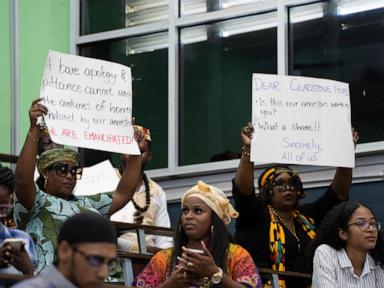
Handshakes and royal wave-bys don't pay off centuries of extracted wealth. Across the Caribbean, leaders and everyday citizens are making one thing painfully clear before King Charles III sets foot in the region for the Commonwealth Heads of Government Meeting in Antigua and Barbuda. They want cash, formal apologies, and an end to British royal rule.
For decades, royal tours to the West Indies followed a predictable script. Red carpets rolled out, steel drums played, and British monarchs smiled for cameras while poverty and climate vulnerability lingered just beyond the palace gates. That era is dead. The push for Caribbean reparations and the dismantling of the monarchy isn't a fringe protest anymore—it's official state policy backed by regional alliances and growing public impatience. Also making waves in related news: What Most People Get Wrong About the Tehran Diplomatic Talks and Red Sea Escalation.
What Sparked the Current Caribbean Reparations Push
You can't separate King Charles's travel itinerary from the cold financial math of the transatlantic slave trade. Britain transported roughly 3.1 million enslaved Africans across the Atlantic, building the industrial backbone of the United Kingdom on sugar, rum, and unpaid human labor. When Britain finally abolished slavery in 1833, it didn't pay a single penny to the people who survived bondage. Instead, the British government borrowed £20 million—about 40% of its national budget at the time—to compensate the slave owners for their "lost property."
British taxpayers didn't finish paying off that debt until 2015. Think about that for a second. Living British citizens, including descendants of enslaved people living in London, spent their tax money paying off the loans used to enrich 19th-century plantation owners. Meanwhile, the nations where those plantations stood inherited underfunded schools, fragile healthcare systems, and economies designed solely to export raw goods. Further details into this topic are covered by NBC News.
The CARICOM Reparations Commission, established in 2013 by the 15-member Caribbean Community, formalized this grievance into a structured legal and moral demand. Chaired by Sir Hilary Beckles, Vice-Chancellor of the University of the West Indies, the commission isn't asking for charity or foreign aid packages with strings attached. They're demanding reparatory justice based on the precedent of other historical compensations, like Germany's payments to Holocaust survivors or the United States' reparations to Japanese Americans interned during World War II.
The CARICOM Ten-Point Action Plan
When people hear the word "reparations," they often assume it just means cutting a massive check to individuals. CARICOM's strategy is much more targeted and institutional. Their Ten-Point Action Plan lays out concrete mechanisms for rebuilding the region:
- Full Formal Apology. Not a statement of "deep sorrow" or "regret," which British royals have carefully used to avoid legal liability. Caribbean leaders want an explicit apology that accepts moral and legal responsibility.
- Repatriation Programs. Funding and legal pathways for descendants of enslaved Africans who wish to return to Africa, particularly supporting Rastafarian communities who have advocated for this for generations.
- Indigenous Peoples Development. Addressing the near-total genocide of the Kalinago, Taino, and Garifuna populations who lived on these islands before European arrival.
- Cultural Institutions and Museums. Building archives and research centers in the Caribbean so citizens don't have to fly to London to read their own historical records.
- Public Health Crisis Intervention. Addressing chronic conditions like hypertension and type 2 diabetes, which medical researchers link directly to centuries of nutritional deprivation and generational trauma.
- Illiteracy Eradication. Massive investment in primary and higher education across former colonies where Britain left behind abysmal literacy rates at independence.
- African Knowledge Programs. Rebuilding cultural, linguistic, and educational bridges between the Caribbean and West Africa.
- Psychological Rehabilitation. Mental health infrastructure designed to treat the long-term social fractures caused by colonial caste systems.
- Technology Transfer. Giving Caribbean nations access to modern science and green technology rather than locking them into dependency on imported equipment.
- Debt Cancellation. Wiping out the crippling national debts that force Caribbean governments to spend more on interest payments to Western banks than on hospitals or hurricane defenses.
Why the British Monarchy Is Losing Its Grip on the Region
Keeping King Charles as head of state feels increasingly absurd to younger generations across the islands. Right now, eight independent Caribbean nations—Antigua and Barbuda, The Bahamas, Belize, Grenada, Jamaica, Saint Kitts and Nevis, Saint Lucia, and Saint Vincent and the Grenadines—still have the British monarch as their sovereign.
In 2021, Barbados showed everyone how easy it actually is to cut the cord. The island removed Queen Elizabeth II as head of state, transitioned into a parliamentary republic, and swore in Dame Sandra Mason as its first president. Nobody invaded. Tourism didn't collapse. Trade kept flowing. Barbados simply stopped pretending that a hereditary ruler living 4,000 miles away in Buckingham Palace represented its democratic values.
Jamaica is aggressively moving down the exact same path, though constitutional hurdles make the process slower. Prime Minister Andrew Holness has repeatedly stated that Jamaica intends to become a republic, and the government established a Constitutional Reform Committee to guide the transition. Unlike Barbados, which only needed a two-thirds parliamentary vote, Jamaica requires a national referendum to ditch the Crown. Polling consistently shows that a solid majority of Jamaicans support removing King Charles, though debates over whether to adopt an executive presidency or a ceremonial one have slowed down the timeline.
Antigua and Barbuda Prime Minister Gaston Browne made headlines immediately after Queen Elizabeth's death in 2022 by announcing plans for a referendum on becoming a republic within a few years. Hosting King Charles in Antigua puts Browne in a delicate diplomatic spot. He has to welcome the King as the ceremonial head of the Commonwealth while openly campaigning to strip him of his domestic constitutional role.
The PR Disaster of 2022 Changed Everything
If Buckingham Palace thought Caribbean loyalty was unshakable, the 2022 tour by Prince William and Kate Middleton shattered that illusion. Honestly, whoever planned that itinerary didn't read the room at all.
Images of the royal couple shaking hands with Jamaican children through a chain-link fence in Trench Town went viral for all the wrong reasons. Days later, William and Kate stood in the back of an open-top Land Rover wearing crisp white military uniforms—a visual carbon copy of Queen Elizabeth and Prince Philip's 1953 colonial tour. The optics were terrible. Protesters in Belize forced the couple to cancel a visit to a cacao farm over land disputes with a British conservation charity, and Jamaica's Prime Minister bluntly told the royal couple to their faces that his country was "moving on."
King Charles knows he can't repeat those mistakes. He has openly acknowledged the "appalling atrocity of slavery" in speeches to Commonwealth leaders and even granted researchers access to the Royal Archives to investigate the monarchy's historical ties to the Royal African Company. Yet words don't satisfy critics when the Crown itself sits on vast private wealth—including the Duchy of Lancaster and Duchy of Cornwall—whose historical growth intertwined with imperial expansion.
The Financial Reality Behind the Debate
Critics of reparations in the UK always ask the same question. Why should people alive today pay for crimes committed two hundred years ago?
Economists and legal scholars point out that institutions don't die when individuals do. The Bank of England, Lloyd's of London, Barclays, and major British universities still exist today, and many of them have publicly admitted to profiting directly from the slave trade. When an institution accumulates capital through forced labor and passes that wealth down through centuries of compound interest, the beneficiaries are still collecting dividends.
Consider the Brattle Group report published in 2023, which included work by Judge Patrick Robinson of the International Court of Justice. The analysis estimated that Britain owes roughly $24 trillion in reparations for its role in transatlantic chattel slavery across 14 Caribbean nations. That number makes politicians in London flinch, which is precisely why Downing Street refuses to even put reparations on the official agenda at Commonwealth summits.
Prime Minister Keir Starmer's government has maintained the same line as previous Conservative administrations. Britain won't pay financial reparations and won't offer a formal apology that could trigger legal claims in international courts. Instead, British officials push for "forward-looking" partnerships focused on climate finance and trade.
Caribbean leaders aren't buying that deflection anymore. Islands like Dominica, Barbuda, and Grenada sit on the front lines of climate change, getting battered by Category 5 hurricanes fueled by carbon emissions from industrialized nations—the very nations that industrialized using Caribbean slave labor. To leaders in Bridgetown and Kingston, climate justice and reparatory justice are two sides of the same coin.
What Actually Happens Next in the Caribbean
You don't need to guess where this momentum is heading because the legal and political groundwork is already underway. Several concrete shifts are unfolding right now across the region:
- Bypassing Westminster for Direct Institutional Settlements. Since the British government refuses to budge, Caribbean advocates are targeting private corporations, banks, and wealthy aristocratic families directly. Some British families, like the Trevelyans—who owned plantations in Grenada—have already apologized and established small educational funds. These symbolic gestures are being used as leverage to pressure massive financial institutions into much larger settlements.
- Turning the Commonwealth Into a Conditional Alliance. The Commonwealth used to be viewed as a cozy club held together by British royal prestige. Today, Caribbean nations treat it strictly as a platform for collective bargaining. If King Charles wants to preserve the Commonwealth's relevance, he has to preside over an organization where former colonies openly challenge British foreign policy.
- Accelerating Republican Referendums. Expect Jamaica, Antigua and Barbuda, and Belize to push forward with constitutional reforms regardless of how warm King Charles's reception looks on television. Royal visits used to delay republican sentiment by sparking temporary nostalgia; now, every royal tour accelerates the push to cut ties.
- Leveraging International Courts. Legal teams advised by human rights lawyers are actively exploring ways to bring reparatory claims before international bodies, shifting the conversation from moral persuasion to binding legal precedent.
King Charles can walk across any tarmac in the Caribbean, inspect honor guards, and deliver carefully vetted speeches about shared history. None of it changes the ledger. The nations of the Caribbean have moved past asking politely for recognition, and no amount of royal pageantry is going to put the republican or reparations movements back in the bottle.


