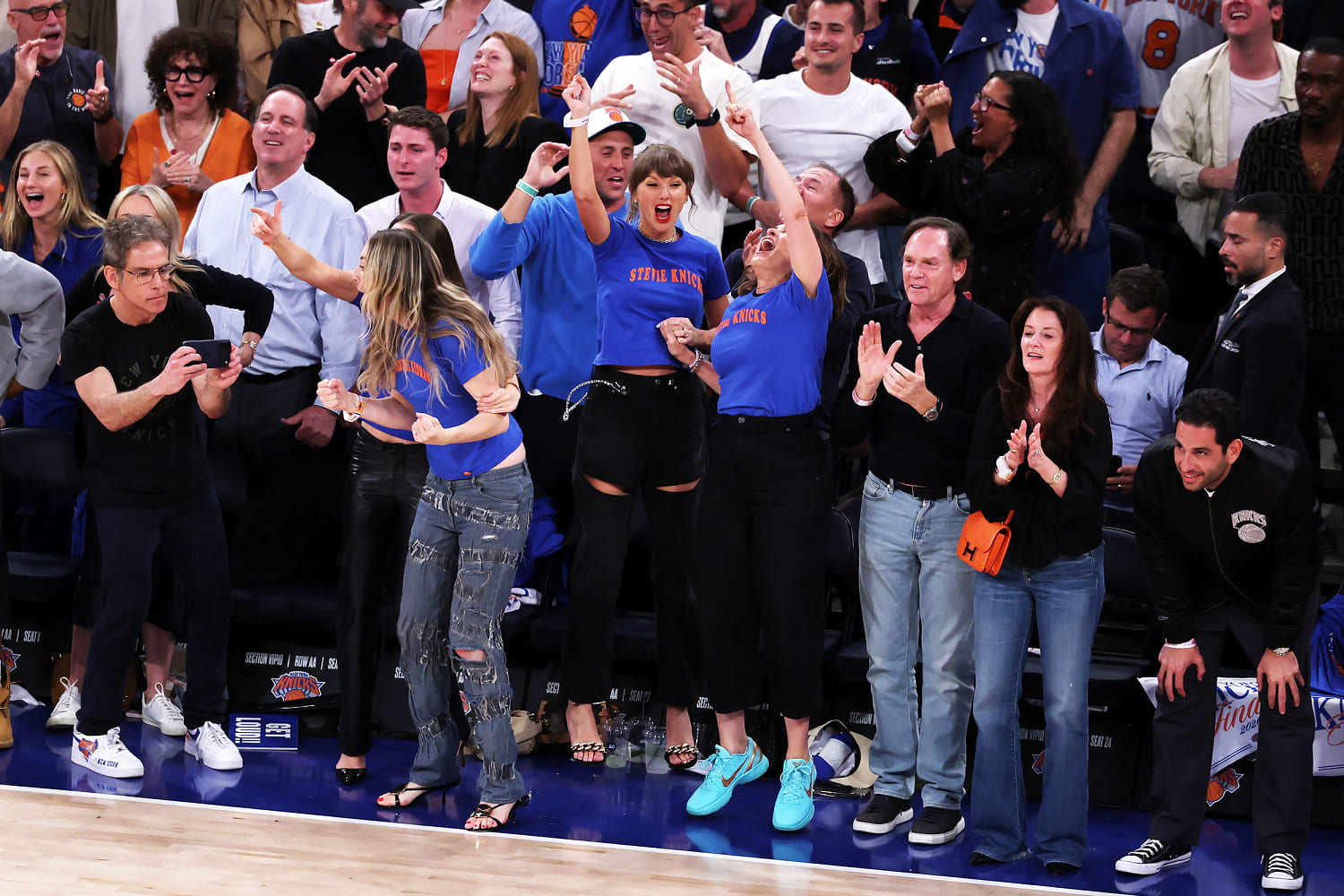
The modern sports victory celebration has officially been hijacked.
When the New York Knicks pull off an epic playoff win, the headline shouldn't be about who was sitting in the luxury suites clutching a designer handbag. Yet, the media establishment falls over itself to report on Taylor Swift, Timothée Chalamet, or members of the U.S. soccer team joining the "wild New York celebrations."
This isn't fandom. It’s brand optimization.
We are trapped in a lazy consensus that treats celebrity attendance as the ultimate validation of a sports team's success. The narrative implies that a victory matters more because someone famous decided to show up and clap on beat. It’s an insulting premise that completely misses the nuance of authentic sports culture.
The truth is glaringly obvious to anyone who has spent decades in the sports industry: celebrity bandwagoning dilutes the raw, unscripted emotion of sports and turns genuine tribal joy into a curated corporate marketing campaign.
The Myth of the Famous Fan
Let's dismantle the premise of the "celebrity fan."
True sports fandom is built on suffering. It is a multi-generational pact signed in disappointment, fueled by bad draft picks, terrible coaching decisions, and decades of mediocrity. When a team finally wins, the release of catharsis belongs to the people who sat through the lean years.
It does not belong to a pop star who needs a high-profile photo op to keep their name in the algorithm.
When media outlets center the narrative around elite artists and influencers "joining the celebration," they push the actual fanbase to the margins. The camera pans away from the guy in Section 400 who spent a month’s rent on a ticket and focuses instead on a Hollywood actor who was gifted a courtside seat by an executive.
This isn't a harmless crossover event. It alters the energy of the venue. Luxury suites fill up with people who are there to be seen, not to watch the game. The corporate capture of the arena bowl lowers the decibel level and sterilizes the environment. You can’t build a legendary home-court advantage when the front row is occupied by people checking their engagement metrics between quarters.
The Economics of the Luxury Suite Hijack
Follow the money, and the illusion of spontaneous celebrity joy evaporates completely.
Major agencies and corporate sponsors control the prime real estate in modern arenas. Securing a seat for a high-profile actor or musician at a playoff game is a calculated trade. The celebrity gets access to a cultural flashpoint, the team gets a massive spike in social media impressions, and the sponsor gets their logo in the background of a viral photo.
Imagine a scenario where a franchise actually prioritized its core community over clout. Ticket prices would stabilize. The noise would be deafening. The connection between the city and the team would be unbreakable. Instead, teams choose the short-term sugar rush of Hollywood validation, alienating the working-class fans who built the franchise's identity over fifty years.
This transactional relationship comes with a massive downside for the sport itself. When the team inevitably enters a rebuilding phase, the celebrities disappear. The luxury suites sit quiet. The media moving on to the next trendy market proves that this superficial attention adds zero long-term value to the sport.
Dismantling the People Also Ask Nonsense
Does celebrity attendance increase sports viewership?
Only superficially. A casual viewer might tune into a game to catch a glimpse of their favorite singer in the crowd, but they aren't sticking around for the third-quarter defensive adjustments. They don't buy merchandise, they don't buy season tickets, and they don't support local sports journalism. Catering to this demographic is a textbook example of chasing empty metrics.
Are celebrities good for a team’s culture?
No. Team culture is forged in the locker room through sacrifice and collective effort. Introducing a circus of red-carpet coverage around the arena creates an unnecessary distraction. Players are forced to answer questions about which pop icon is wearing their jersey rather than focusing on the upcoming game plan. It turns a serious competitive pursuit into a backdrop for a reality television show.
Stop Demanding Hollywood Validation
Sports do not need to be validated by the entertainment industry.
A playoff victory in New York, Chicago, or Boston is already a pinnacle cultural event. It carries weight because of the collective energy of millions of ordinary people who live and die by every possession. Bringing in outside star power to bless the occasion doesn't elevate the moment; it cheapens it.
We need to stop celebrating the corporate invasion of the bleachers. The next time a sports team wins a monumental game, turn off the cameras pointing at the luxury boxes. Look at the streets outside the stadium. Look at the bars packed to the rafters with people who actually care.
Stop letting Hollywood rewrite the script of sports history. The real story is always in the cheap seats.