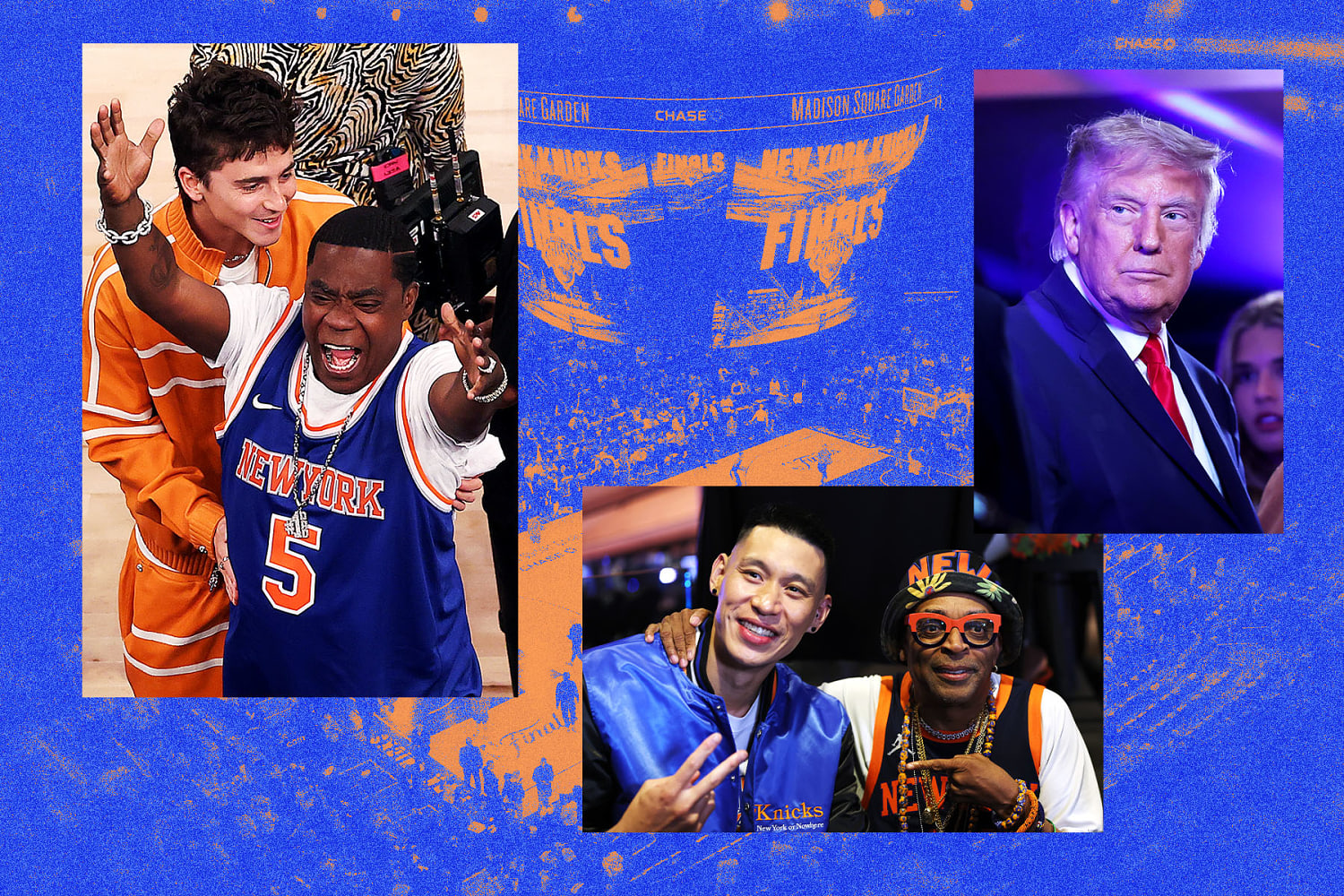
The camera pans to courtside. The broadcast cuts to a Grammy-winning musician chatting with an Oscar-winning director. The commentators gush about the "star power" illuminating Madison Square Garden for Game 3 between the Knicks and the Spurs. The traditional sports media falls over itself to catalog the outfits, the handshakes, and the proximity of Hollywood royalty to the hardwood.
They are covering the wrong event.
The lazy consensus in sports journalism treats the courtside celebrity row as a glamorous testament to a franchise's cultural relevance. Writers treat these high-profile attendees as the ultimate validation of a team's brand power. This perspective completely misses the underlying economic and psychological reality of modern sports entertainment.
Celebrity row is not an asset. It is a lagging indicator of a bloated entertainment market, a distraction from the actual product on the floor, and a terrible metric for measuring a franchise's true cultural capital.
The Myth of the Star Power Premium
Every major media outlet covering the Knicks-Spurs matchup ran some variation of the same story: look at the glitz, look at the glamour, look how important this game is because famous people are sitting near the bench.
This narrative assumes that celebrities add value to the broadcast and the live experience. In reality, the relationship is entirely parasitic. The modern sports franchise does not gain prestige from the actor sitting courtside; the actor is extracting cultural relevance from the authentic passion of the fan base.
Decades of analyzing sports marketing and fan engagement trends reveal a clear pattern. The moment a sporting event becomes more about who is watching the game than who is playing it, the core product begins to erode. True sports culture is built on tribal loyalty, historical narrative, and raw athletic stakes. Celebrity row turns an arena into a red carpet, transforming a high-stakes athletic competition into a passive backdrop for personal branding.
Consider the actual data on viewer engagement. Audiences tune in to see historic rivalries, elite tactical matchups, and generational talents like Victor Wembanyama facing a grueling New York defense. They do not tune in to see a five-second cutaway of a reality TV star eating popcorn. Yet, broadcasts continue to prioritize these cutaways, alienating the core demographic that drives sustained merchandise sales, local television ratings, and lifelong franchise loyalty.
The Misallocation of Arena Real Estate
Let's talk about the physical space. The front row of an NBA arena represents the most valuable real estate in sports. It is a unique sensory experience where the line between participant and spectator completely blurs.
When a franchise gifts these seats to corporate partners or Hollywood talent agencies to hand out as perks, they are committing a massive opportunity cost error.
- The Fan Energy Deficit: Celebrities rarely scream until their vocal cords bleed. They do not lead chants. They do not create the hostile environment that gives a home team a genuine competitive advantage. They sit, they observe, and they leave at halftime to beat the traffic.
- The Pricing Out of Authenticity: By treating courtside seats as status symbols for the ultra-wealthy and famous, franchises justify astronomical ticket price hikes throughout the entire arena. The real fans—the ones who create the deafening noise that rattles opposing players—are pushed further into the upper decks or out of the building entirely.
- The Sterilization of the Game: A quiet, polite front row changes the energy of the entire building. It creates a sterile corporate theater rather than a raucous, intimidating sports venue.
I have spent years watching franchises chase the high society crowd, only to wonder why their home-court advantage vanished during the playoffs. You cannot build a fortress out of people who are only there to be seen.
Dismantling the People Also Ask Fallacies
Whenever a marquee game draws a massive crowd of influencers and stars, public interest metrics spike around specific, flawed questions. Let's address them with zero sugarcoating.
Do celebrities pay for courtside seats?
Almost never the ones you see on camera. The vast majority of those high-profile courtside seats are owned by corporations, talent agencies, or the arena's ownership group itself. They are handed out as promotional favors, barter chips, or talent retention perks. The implication that these stars are passionate consumers investing their own capital into supporting the team is a carefully manufactured marketing illusion.
Does a star-studded crowd help recruitment?
Players do not sign free-agent contracts to play in front of famous actors. They sign contracts based on maximum salary cap space, organizational stability, coaching staff quality, and the chance to win a championship. The idea that a player will take a discount to sign with New York or Los Angeles just because they might get a nod from a famous director mid-game is an archaic fantasy from the 1990s. Modern players are their own global brands; they do not need a secondary rub from courtside spectators.
The True Value Metric: The Upper Deck Gauge
If you want to measure the health, relevance, and future viability of a sports franchise, stop looking at the floor. Look at the nosebleeds.
The true cultural capital of a team is found in the sections where people sacrificed a significant portion of their disposable income just to be in the building. The intensity of the fans in the highest rows dictates the actual energy of the arena. When the upper deck is electric, that energy cascades down to the floor, impacting the players, the referees, and the overall quality of the product.
A contrarian approach to sports franchise management would turn the entire hospitality model on its head. Instead of reserving the best seats for the least engaged attendees, imagine a scenario where the loudest, most dedicated fan clubs were systematically rewarded with courtside access. The resulting home-court advantage would be worth far more in postseason revenue than the short-term public relations hit of losing a few celebrity photo opportunities.
The downside to this approach is obvious: corporate sponsors complain, luxury suites become harder to sell at premium rates, and the immediate social media buzz surrounding a game might dip. But the long-term payoff is an unshakeable, authentic brand identity that cannot be disrupted by changing entertainment trends or temporary losing streaks.
The Inevitable Decay of the Glamour Model
The reliance on celebrity row as a marketing tool is a lazy strategy utilized by organizations that lack the vision to market the sport itself. It treats basketball as a secondary component of a broader lifestyle brand, rather than a premier athletic competition.
When the media focuses on who is sitting courtside during a crucial Game 3, they are admitting that the game itself isn't compelling enough to hold the audience's attention. It is a subversion of sports journalism, trading tactical analysis and athletic narrative for cheap lifestyle reporting.
The franchises that survive the fracturing media environment will not be the ones that attracted the most famous influencers to their games. They will be the ones that preserved the raw, unfiltered, hostile environment of traditional sports. They will be the organizations that realized a stadium should be a colosseum, not a VIP lounge.
Stop looking at the front row. The real story is always happening at the top of the arena, where the real fans are trying to shake the foundations of the building.