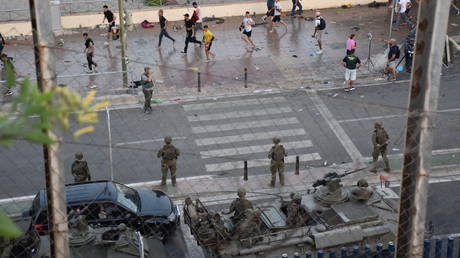
The Spanish enclave of Ceuta is currently in the grip of a massive border crisis. Thousands of people have surged across the maritime and land boundaries from Morocco in just a few hours. This isn't a random event. It's a calculated pressure point that exposes the fragile reality of Europe's only land border with Africa.
If you’ve been watching the news, you’ve seen the videos. Crowds of people walking around the Tarajal breakwater, others scaling the high perimeter fences, and local residents filming the chaos from the shore. The Spanish government has officially deployed the military to assist the Civil Guard in restoring order. But sending in the troops is a temporary band-aid on a structural wound.
The Trigger Behind the Chaos
Why now? Many observers point toward a recent Spanish Supreme Court ruling. This decision effectively barred authorities from the long-standing practice of "rejection at the border" for those arriving by sea. In simple terms, the court ruled that the special legal regime used to push back migrants at the land fence cannot be applied to those swimming around it.
That distinction matters. It created a legal loophole that many people interpreted as an open door. While the ruling didn't technically grant a right to stay, it signaled a shift in how Spain handles maritime arrivals. The result was an immediate explosion in attempts. It started as a trickle of individuals testing the waters and turned into a full-scale surge on Thursday, July 30, 2026.
Geopolitics disguised as migration
It’s impossible to view these events without considering the strained relationship between Rabat and Madrid. History shows that whenever tensions flare between Spain and Morocco, the border at Ceuta and Melilla tends to become a focal point for diplomatic friction.
Analysts often suggest that Moroccan authorities have the capacity to control these flows when they choose to. When thousands arrive all at once, it’s rarely a spontaneous act. It’s a message. Whether it’s tied to Western Sahara disputes or other regional disagreements, the border is a lever.
The Spanish government is in a tough spot. Prime Minister Pedro Sánchez has pushed for more inclusive immigration policies, including a program to regularize hundreds of thousands of undocumented residents. This stance makes him a target for domestic critics who argue that the border is now a sieve. Conservative opposition leaders are already calling this a total national security failure.
The Human Cost of Policy Gaps
Beyond the politics, there’s a human element that gets lost in the noise. At least nine people died during the chaos on Thursday. That’s a tragedy that happens far too often at these boundaries. When you create a system that relies on physical barriers but provides no safe, legal pathway for those seeking work or asylum, you essentially guarantee that people will take fatal risks.
The reception centers in Ceuta were already at a breaking point before this latest surge. Hundreds were sleeping on the streets. Adding thousands more creates a humanitarian nightmare. The local government has rightfully demanded that Madrid declare a state of emergency. They are managing a population influx that would overwhelm almost any city of 85,000 people.
What Real Security Looks Like
Deploying troops is a reactive measure. It stops the immediate breach, but it doesn't solve the underlying problem. If Spain wants to secure Ceuta, it needs to address three things immediately:
- Clarify the Legal Framework: The Supreme Court ruling has created a gray zone. If the state wants to prevent sea-based crossings, it needs a legal structure that doesn't just rely on "pushbacks" but also upholds international rights.
- Diplomatic Engagement: The border is a diplomatic instrument for Morocco. Unless Spain and Morocco find a stable way to manage their bilateral tensions, these surges will continue to happen.
- Infrastructure and Processing: You can't just seal a border in the 21st century. The enclaves need better, more efficient processing centers that can handle surges without turning local streets into living quarters for thousands.
Honestly, the situation isn't going to get easier. As long as the economic gap between the two sides of the Mediterranean remains this wide, people will keep trying to cross. It’s a basic fact of human migration. Politicians can argue about walls and military deployments, but until they fix the policy, they’re just waiting for the next surge to begin.
If you are following this for business or security reasons, keep an eye on the diplomatic wires between Rabat and Madrid over the next few weeks. The real story isn't the number of people who crossed; it's the political negotiations happening in the background that will decide whether this border stays open or shuts down again.