Two in the morning in a forward operating base feels like the bottom of a well. The air tastes like diesel exhaust and powdered dust, and the generator hums at a frequency that rattles your teeth if you lean your head against the plywood wall. You are nineteen, or maybe twenty-two, staring at a green phosphor screen, waiting for a voice on a headset to tell you whether the shadows moving three clicks east are farmers tending an irrigation ditch or men carrying mortars.
In that moment, you do not care about cable news chyrons. You do not care about fundraising emails, book tours, or which party holds a slim majority in the House of Representatives. You care about one thing: that the person sitting at the top of the pyramid in Washington is steady, sober, and entirely focused on keeping you alive.
Trust is the invisible currency of the American military. It runs uphill from the foxhole to the Pentagon, and it flows back down as clarity, discipline, and restraint. When that trust cracks at the very top, the fracture doesn't stay contained inside the E-Ring of the Pentagon. It vibrates all the way down to the dirt.
That vibration is what finally forced House Minority Leader Hakeem Jeffries to draw a hard, unmistakable line in the sand. Speaking with the measured cadence of a former litigator who knows the weight of every syllable, Jeffries threw his full weight behind the push to impeach Defense Secretary Pete Hegseth. Four words cut through the usual Washington static: "He has got to go."
To understand why those four words land like a heavy boot on concrete, you have to strip away the partisan theater that normally surrounds the word impeachment. In modern politics, impeachment has been treated like a fire alarm pulled during a boring Tuesday—a predictable spectacle that ends in a party-line vote and a fundraising spike. Yet when the leader of the House Democrats backs removing the civilian head of the world's most lethal fighting force, the mechanics of the crisis are fundamentally different. This is not about a policy disagreement over procurement budgets or troop rotations in Europe. It is an alarm bell ringing over basic competence, temperament, and the safety of three million service members and civilian personnel.
The Anatomy of a Reckoning
Consider a hypothetical scenario to see how fragile the machinery of national defense actually is. Picture a young naval officer—let’s call her Lieutenant Miller—standing watch on the bridge of a guided-missile destroyer in the Red Sea. Radar tracks are blooming across her console. Drones are inbound, moving low and fast over the water. She has less than ninety seconds to decide whether to expend a two-million-dollar interceptor missile or hold fire, knowing that a miscalculation either gets her shipmates killed or ignites a regional war.
Lieutenant Miller relies on rules of engagement written, reviewed, and authorized by the Secretary of Defense. Those rules are supposed to be forged in quiet, grueling rooms by people who read every intelligence brief, listen to combatant commanders, and weigh second- and third-order consequences before putting pen to paper.
Now ask yourself: What happens to Lieutenant Miller’s confidence if the person signing those orders treats the Pentagon like a television studio?
Since Pete Hegseth’s controversial ascent from Fox News host to the twenty-ninth Secretary of Defense—a confirmation that required Vice President JD Vance to break a dramatic fifty-fifty tie in the Senate—the building across the Potomac has been locked in a state of low-grade, relentless whiplash. The concerns that nearly sank his nomination in early 2025 didn't evaporate once he took the oath of office; they metastasized into operational crises.
Critics inside and outside the building point to a pattern of erratic decision-making, ideological purges of seasoned flag officers, and staggering lapses in operational security. The breaking point for many lawmakers arrived when reports surfaced detailing sensitive military strike plans being discussed over unsecure commercial messaging apps, alongside a string of abrupt firings that gutted the Pentagon’s senior leadership ranks without clear strategic rationale. For a building built on predictability and institutional memory, the chaos has been suffocating.
When Hakeem Jeffries stepped up to the microphones and declared that Hegseth "has got to go," he wasn't merely echoing the progressive wing of his caucus. Jeffries is famous—sometimes even criticized by his own allies—for his caution. He calculates the math before he moves. His endorsement of impeachment signals that the private whispers from retired generals, distressed intelligence officials, and nervous rank-and-file service members have reached a critical mass that can no longer be ignored.
Why Impeachment Isn't Just a Political Weapon
People often ask what the point of an impeachment push is when the arithmetic in Congress makes conviction in the Senate a steep climb. In a narrowly divided House, where Republicans hold the gavel and the Senate remains in GOP hands, can Hakeem Jeffries actually remove Pete Hegseth from office?
Mathematically, removal requires a simple majority in the House to impeach and a two-thirds supermajority in the Senate to convict. Under current partisan alignments, getting sixty-seven senators to vote against a sitting cabinet secretary is an uphill battle of historic proportions. Only one cabinet secretary in American history has ever been impeached: William Belknap, the Secretary of War under Ulysses S. Grant, who resigned in 1876 minutes before the House voted on charges of rampant corruption.
Yet viewing impeachment strictly through the lens of final removal misses the entire constitutional design of the tool.
Think of the Constitution’s impeachment clause not as a guillotine, but as an emergency brake on a runaway locomotive. Even if the brake pads smoke and scream without bringing the train to an instant dead stop, pulling that lever forces everyone on board to acknowledge that the tracks ahead are washed out. It compels subpoena power. It forces sworn testimony under penalty of perjury. It drags internal memos, text logs, and firing justifications out of classified safes and into the harsh daylight of public scrutiny.
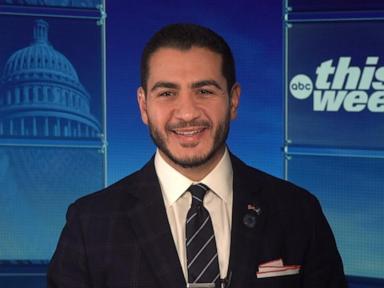
Jeffries understands this instinctively. By backing impeachment—aligning with articles introduced by Democrats like Shri Thanedar and backed by senior members of the Armed Services and Intelligence committees—Jeffries is shifting the burden of proof onto every Republican member representing a district with a military base.
Walk through Fayetteville, North Carolina, outside Fort Liberty. Drive past the strip malls outside Joint Base Lewis-McChord in Washington, or Naval Station Norfolk in Virginia. In those communities, national defense isn't an abstract talking point; it is the family business. When a congressman from a military district has to go home for the weekend and explain to Gold Star parents or active-duty spouses why he voted to shield a Defense Secretary accused of leaking operational plans in a group chat, the political math changes overnight.
The Ghost in the E-Ring
I remember walking the long, carpeted corridors of the Pentagon years ago, past the glass cases filled with tarnished medals and faded maps from wars that reshaped the globe. What strikes you first about the building isn't its size—though it is vast enough to swallow whole neighborhoods—it is the quiet. Even in moments of intense crisis, the culture demands a certain stoic discipline. You speak softly because the stakes are loud enough on their own.
That silence is built on an unwritten covenant between civilian leaders and the uniformed military. The military agrees to obey lawful civilian orders without question, subordinating immense lethal power to the will of elected democracy. In return, civilian leaders agree to be worthy of that obedience. They agree to do the homework, respect the law of armed conflict, protect classified secrets with their lives, and never, ever use the military as a prop for personal vendettas or partisan culture wars.
When that covenant breaks, a strange paralysis sets in.
Seasoned colonels and civilian deputies start keeping their heads down. Instead of offering candid, unvarnished military advice—the kind of tough truth a president or defense secretary desperately needs to hear before committing troops to harm’s way—staffers begin censoring themselves to survive the next loyalty test. Institutional knowledge walks out the door in cardboard boxes.
Consider what happens next when a real international crisis erupts in the Taiwan Strait, the Baltic states, or the Persian Gulf. Adversaries in Beijing, Moscow, and Tehran employ entire intelligence directorates dedicated to reading the psychological state of American leadership. They don't just count our aircraft carriers; they watch our dysfunction. When they see a Defense Secretary locked in a legitimacy crisis, publicly rebuked by the House Minority Leader, and besieged by leaks from his own building, they sense hesitation. And in geopolitics, perceived hesitation is an invitation to miscalculate.
The Weight of Accountability
It is fair to feel exhausted by the constant churn of Washington outrage. Many Americans, looking at the headlines from their kitchen tables, feel a dull ache of cynicism. We have watched so many norms shatter over the last decade that it becomes tempting to shrug and assume every battle on Capitol Hill is just another episode of political theater.
That fatigue is precisely what bad leadership counts on. Cynicism is an anesthetic; it numbs us to danger until the damage is irreversible.
Yet there is a profound difference between political noise and structural failure. You can argue endlessly about tax brackets, healthcare subsidies, or environmental regulations, and the Republic will absorb the friction and keep moving forward. The Department of Defense does not have that margin for error. There is no "undo" button on a botched military operation. There is no press release that can bring back a pilot lost because operational security was treated casually.
Hakeem Jeffries’s declaration—"He has got to go"—is an attempt to puncture that anesthetic. By putting the full institutional weight of the Democratic leadership behind impeachment, Jeffries is insisting that some standards are non-negotiable, regardless of how polarized the country has become. He is betting that enough Americans, and perhaps eventually enough lawmakers across the aisle, still believe that the person overseeing the nuclear triad and commanding our sons and daughters in uniform must meet a baseline of competence and character.
Whether this impeachment effort culminates in a formal House floor vote, forces a quiet resignation behind closed doors, or stalls against a partisan wall in the Senate remains uncertain. Washington is an unpredictable beast, and entrenched power rarely surrenders without a bruising fight.
Still, the line has been drawn in permanent ink. Somewhere tonight, thousands of miles from the marble staircases of Capitol Hill, a nineteen-year-old kid in dusty boots is adjusting a headset in the dark, listening for a voice from above to tell him what to do next. Everything happening in Washington right now comes down to a single, unadorned question: Does the voice on the other end of that line deserve his trust?