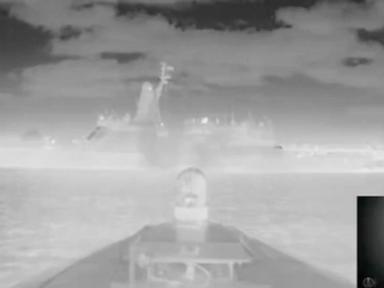
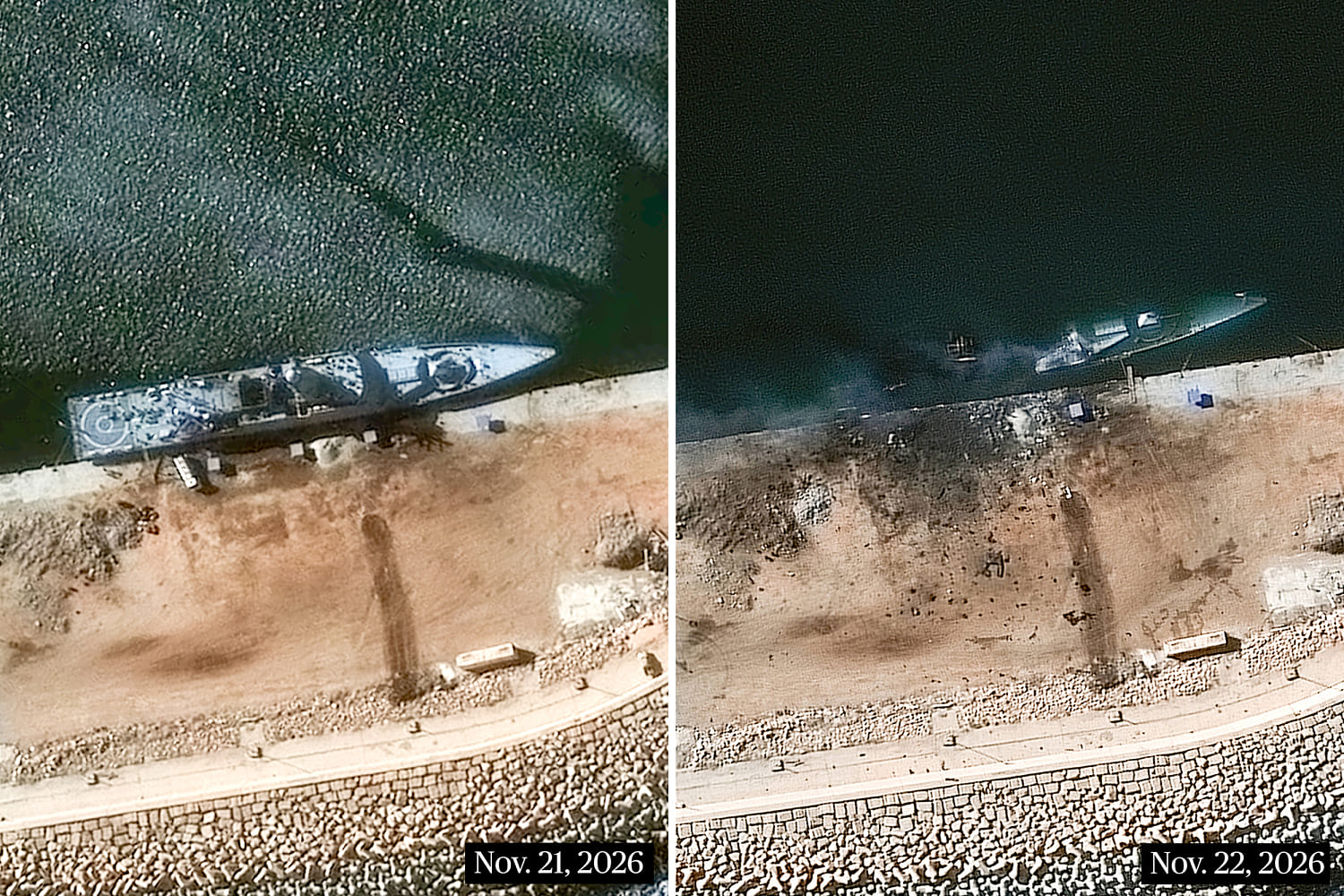
Everyone is popping champagne over cheap drones sinking billion-dollar warships. They shouldn't be.
When Ukrainian President Volodymyr Zelenskyy praised an "exemplary" drone strike that allegedly hit a Russian naval vessel inside a Libyan port, the defense pundit class immediately fell into its favorite lazy habit. They started writing breathless obituaries for the modern surface fleet. They celebrated asymmetric warfare. They marveled at how a fraction of a percent of a defense budget could humiliate a superpower's navy thousands of miles from the Black Sea. If you found value in this piece, you should read: this related article.
That reaction is naive, strategically myopic, and dangerously premature.
Celebrating long-range, extra-regional drone strikes on parked vessels in third-party ports isn't a victory lap for modern warfare. It is the opening bell for global maritime anarchy. If you think sinking a ship in North Africa proves that small states have cracked the code to defeating larger militaries, you are looking at the tactical scoreboard while ignoring the fact that the stadium is burning down. For another perspective on this development, refer to the recent update from Reuters.
The Myth of the Asymmetric Silver Bullet
Let's dismantle the primary delusion right now. Mainstream defense commentary loves a David-versus-Goliath narrative. The standard story goes like this: expensive, legacy military hardware is obsolete, and cheap, autonomous, long-range unmanned systems are the great equalizer.
That is a fundamental misreading of military history and naval doctrine.
First, hitting a stationary vessel moored in a permissive or semi-permissive foreign port is not the same thing as defeating a blue-water navy in contested waters. A ship tied to a pier in Libya is a sitting target. Its crew is often on reduced watch, its layered air defense radars may be powered down to avoid interfering with local civilian aviation, and its ability to maneuver—a warship's primary physical defense against sea-skimming or surface threats—is literally zero.
I have spent years analyzing maritime security operations and watching defense ministries burn through billions chasing silver-bullet technologies that look miraculous in controlled environments or against unprepared targets. In the real world, tactical surprise has a shelf life measured in weeks. Once an adversary realizes a port 2,000 miles from the front line is no longer a sanctuary, they adapt. They deploy electronic warfare suites, install physical boom barriers, harden port infrastructure, and establish acoustic and radar picket lines.
Second, calling an unmanned strike "exemplary" obscures the massive, hidden intelligence apparatus required to pull it off. A drone does not magically fly across the Mediterranean, identify a specific hull among dozens of commercial and military vessels, and strike a vulnerable magazine or engine room on its own. That requires real-time satellite reconnaissance, signals intelligence, human assets on the ground, and secure over-the-horizon communications.
When commentators credit "the drone," they are erasing the multi-billion-dollar intelligence, surveillance, and reconnaissance (ISR) architecture that made the strike possible. Cheap drones are merely the tip of an extraordinarily expensive spear. Pretending otherwise leads smaller nations to starve their intelligence and logistics budgets in favor of buying warehouses full of unmanned vehicles that will be blind the moment their satellite links are jammed.
The Precedent Nobody Wants to Own
Here is the nuance the cheerleaders completely missed: geography is a two-way street.
By extending kinetic operations into a Libyan port, the rules of engagement for regional conflicts just evaporated. For decades, even during the height of the Cold War, major powers maintained tacit boundaries around where proxy conflicts could spill over into direct kinetic strikes on sovereign infrastructure. Ports in third-party nations—especially fragmented, unstable ones like Libya—were generally treated as off-limits for direct strikes against major state assets because the blowback is uncontrollable.
Think about what happens when you normalize striking a rival's ships in neutral or contested third-party ports.
- Global Chokepoints Become Free-Fire Zones: If a Russian vessel is fair game in Tobruk or Benghazi, what protects Western commercial shipping, logistical support vessels, or naval auxiliaries anchored in Djibouti, Mombasa, or Fujairah?
- Plausible Deniability Cuts Both Ways: Asymmetric drone operations rely heavily on murky attribution. When a drone boat or long-range UAV strikes a target thousands of miles from an active warzone, the attacker gets to smile vaguely and praise "exemplary" work without formally claiming responsibility. Adversaries like Russia and Iran have spent twenty years perfecting gray-zone warfare. Teaching them that long-range, unattributed port strikes are an acceptable norm is like handing an arsonist a flamethrower and praising their fire-starting technique.
- Host-Nation Blowback: Libya is not a stable state; it is a fractured chessboard split between rival administrations, militias, and foreign mercenaries. Conducting kinetic strikes inside Libyan territory—regardless of who the target is—violates sovereignty and forces local warlords to choose sides or retaliate against Western assets operating in the region.
Naval theorist Julian Corbett famously argued that the primary purpose of naval warfare is not merely to sink enemy ships, but to secure command of the sea so you can control communications and commerce. Sinking a vessel in a foreign port does nothing to establish sea control. It is a punitive raid. And history shows that punitive raids against powers with global reach rarely force capitulation; instead, they incentivize horizontal escalation.
Why People Are Asking the Wrong Question
If you search online for analysis of this strike, the top queries follow a predictable, flawed pattern: "Are aircraft carriers and warships obsolete?" or "How did Ukraine get drones to Libya?"
Both questions miss the real story.
Are surface warships obsolete?
No. This is the exact same fallacy people fell into in the 1880s with the French Jeune École naval school, which claimed cheap torpedo boats would permanently wipe out expensive battleships. They were wrong then, and the drone maximalists are wrong now. Warships exist to project sustained power, carry heavy payloads, enforce blockades, and survive hits that would vaporize smaller craft. Drones can deny an adversary easy access to coastal waters—a concept known as sea denial—but a drone cannot rescue citizens from a collapsing embassy, escort a convoy of oil tankers across an ocean, or provide continuous air defense over a landing zone. Vulnerability is not obsolescence. Tanks are vulnerable to anti-tank missiles; infantry are vulnerable to artillery. Nobody suggests disbanding the army.
How did the drones reach Libya?
Asking about the drone's flight range is looking at the wrong end of the telescope. Whether the systems were launched from a covertly modified merchant vessel in the Mediterranean, smuggled in pieces through North African transit routes, or flown over international airspace with mid-route relay support, the hardware is the least interesting part. The real question is: Who provided the targeting package, and what happens when that same targeting data goes offline?
The Brutal Math of Attrition and Adaptation
Let's be honest about the downsides of my own argument. Skepticism toward drone warfare can easily curdle into institutional arrogance. Senior naval officers have a long, embarrassing history of dismissing new threats until their own flagships are resting on the seabed. The British Royal Navy dismissed the submarine threat before World War I; the US Navy underestimated Japanese torpedo tactics before Guadalcanal.
I am not arguing that navies can ignore unmanned threats. Surface fleets that fail to integrate directed-energy weapons, high-power microwaves, layered electronic warfare, and automated close-in weapon systems are committing institutional suicide.
However, the math of drone warfare is already shifting away from the attacker.
Right now, defense contractors and military labs are solving the counter-drone problem at breakneck speed. A high-energy laser or a microwave emitter costs millions to install, yes, but its cost-per-shot is measured in pennies of diesel fuel. Once those systems are bolted onto destroyers and port defenses at scale, the economic asymmetry flips overnight. Sending a $200,000 long-range drone against a ship equipped with a solid-state laser isn't asymmetric warfare anymore—it is just burning money.
Furthermore, imagine a scenario where global shipping insurers—specifically Lloyd's of London and the major maritime underwriters—decide that any port hosting sanctioned or contested vessels is now an active warzone. The moment war-risk insurance premiums spike across the southern and eastern Mediterranean, global supply chains choke. Food prices in North Africa and the Middle East skyrocket. Energy shipments reroute around the Cape of Good Hope, adding weeks and billions of dollars in transit costs.
When that happens, the local populations and neutral governments won't blame the target of the strike. They will blame whoever turned their commercial lifeline into a shooting gallery.
What Strategic Thinkers Should Actually Do
If you are an analyst, a policymaker, or an investor watching the defense sector, stop chasing the shiny object. Stop extrapolating a single tactical raid into a grand theory of modern warfare. Instead, apply three hard filters to every headline about unmanned strikes:
- Separate Sea Denial from Sea Control. Ask yourself whether the strike actually allowed the attacker to move their own ships freely through the contested area. If the answer is no, you are looking at a PR victory, not a strategic shift.
- Follow the ISR, Not the Airframe. Stop obsessing over drone specs, battery life, and payload weights. Look at who owns the low-Earth orbit satellite constellations, the synthetic aperture radar networks, and the undersea fiber-optic cables. Whoever controls the data transport layer controls the battlefield.
- Price in the Counter-Measure Cycle. Never evaluate an offensive weapon in a vacuum. Always ask what the defensive response looks like in 18 months. If a threat can be neutralized by software updates to existing radar arrays or basic physical port hardening, its strategic value is temporary.
Warfare is not a video game where unlocking a clever exploit wins the match. It is a brutal, adaptive ecosystem where every brilliant tactical innovation immediately triggers an equally ruthless counter-evolution.
Praising a drone strike in a Libyan port as a glimpse of a clean, clever future is pure fantasy. All it actually proves is that the buffer zones keeping regional wars from bleeding into the global economy are gone. Enjoy the headlines today, because tomorrow, every port on earth is in range.