Western media loves to paint China's anti-corruption campaigns as blunt instruments of political purges. Watch any major network or read any broadsheet analysis, and you get the same recycled narrative: an opaque, arbitrary system designed strictly to consolidate power for the top echelon by neutralizing political rivals.
That lazy consensus misses the operational reality entirely. In other developments, take a look at: The Succession Calculus Of Pyongyang A Structural Deconstruction Of The Kim Family Lineage.
If you view the Central Commission for Discipline Inspection through the lens of Western procedural jurisprudence, you are misreading the entire machine. You expect Miranda rights, adversarial courtroom drama, and public evidence discovery. When you do not find them, you cry foul. But treating China's internal discipline apparatus as a broken version of a Western criminal court is like critiquing a high-frequency trading algorithm because it lacks human floor traders shouting bids. They operate on entirely different metrics, entirely different risk models, and entirely different definitions of stability.
I have watched foreign multinationals spend millions on compliance consultants trying to decode Chinese regulatory enforcement using Western risk matrices. They fail because they treat an internal party disciplinary mechanism like a regular police blotter. TIME has analyzed this critical issue in great detail.
Let us dismantle the core misconceptions piece by piece and look at the brutal mechanics of how these investigations actually function.
The Myth of Arbitrary Chaos
The primary fallacy propagated by outside observers is that investigation procedures are completely unpredictable, leaving officials and executives guessing who is next on the chopping block.
The opposite is true. The framework is codified, hyper-bureaucratic, and institutionalized.
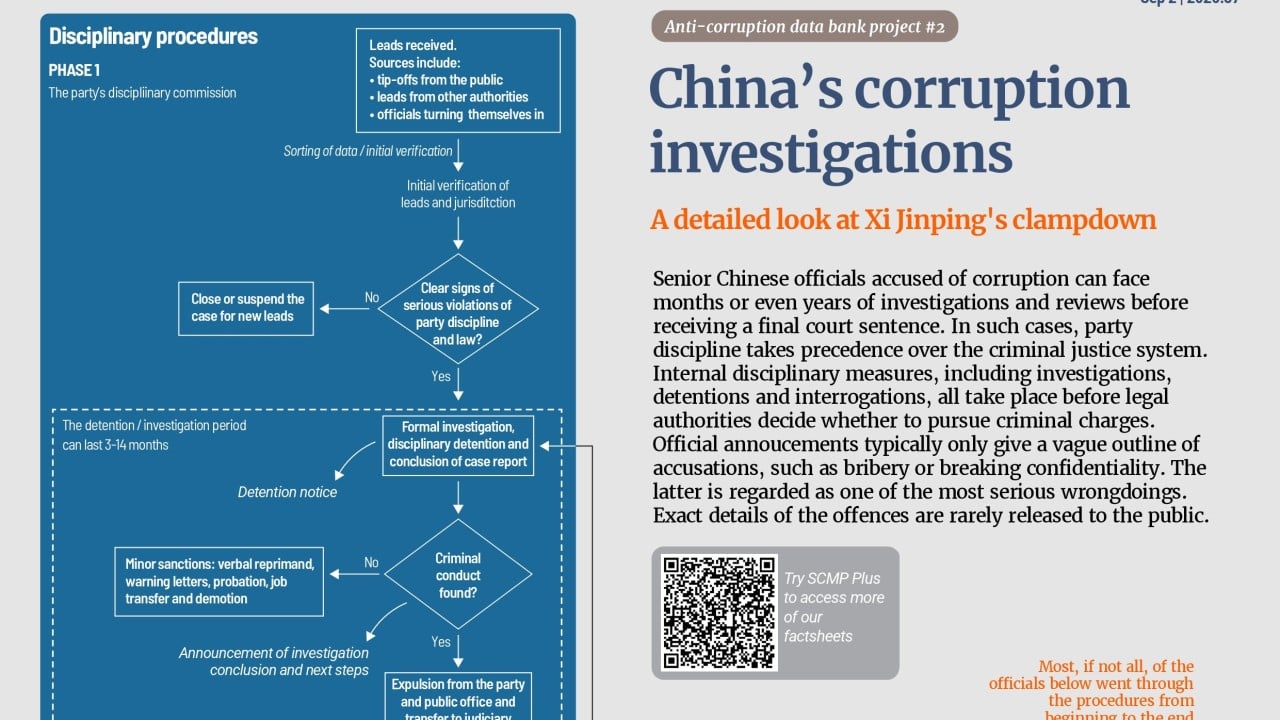
When people hear about internal party detention systems like liuzhi, they imagine secret midnight raids with no oversight. They ignore the structural shift that happened when the National Supervisory Commission absorbed and expanded the functions of the old anti-corruption machinery. This wasn't just a rebranding exercise; it was an expansion of jurisdictional reach over every single person exercising public power, whether they held a Communist Party card or not.
The process follows a strict hierarchy of internal evidence gathering, asset tracing, and administrative interrogation long before any file ever crosses a prosecutor's desk. The system is designed with a terrifying degree of internal predictability for those inside the apparatus, even if it remains opaque to outsiders.
Think of it like an internal corporate audit on a national scale. When a Fortune 500 company suspects executive malfeasance, it does not hold an open public trial while the stock tanks. It locks down the servers, brings in forensic accountants, conducts closed-door interviews under threat of termination, and settles accounts internally. Scale that up to a state managing a multi-trillion-dollar economy with severe wealth inequality, and you start to understand the functional rationale.
Why Western Compliance Models Fail in Beijing
Foreign companies operating in mainland markets consistently make the fatal error of relying on boilerplate anti-bribery policies drafted in London or New York. They think a local whistleblower hotline and an annual ethics training module shield them from liability.
They are bringing a knife to an artillery duel.
The Chinese state does not care about your corporate compliance theater. It cares about systemic risk, capital flight, and operational loyalty. When an executive gets caught up in a sweep, the investigation does not pivot on whether a specific gift crossed a statutory dollar threshold. It pivots on network mapping.
The investigation procedures rely heavily on co-opting associates, tracing digital transactions through closed financial networks, and mapping relational debts. The goal is not merely to punish an individual actor; it is to sever an entire illicit ecosystem before it metastasizes into a threat to economic stability.
If your local partner or regional director gets detained under liuzhi or related supervisory measures, your corporate headquarters will usually find out through a sudden blackout in communication followed by asset freezes. Standard Western legal playbook advice tells you to demand immediate access, retain high-priced local counsel, and threaten diplomatic pressure.
That approach accelerates the corporate death spiral.
The Unspoken Mechanics of Asset Recovery
Another major blind spot in foreign commentary is the mechanics of asset recovery. Analysts love to talk about hidden offshore accounts and real estate portfolios in Vancouver or London, framing them as safe havens that defy recovery.
They underestimate the reach of targeted pressure campaigns.
The investigation procedures utilize a combination of domestic asset freezes, international cooperation treaties, and direct communication channels with family members still residing within the domestic jurisdiction. When an official or executive realizes their entire extended network—down to cousins and business associates—faces financial scrutiny, the incentive structure shifts rapidly. Voluntary repatriation of assets becomes the only viable survival strategy.
The system relies on leverage that transcends traditional extradition laws. It exploits the reality that modern wealth is rarely isolated; it is tied to family, reputation, and operational networks that can be systematically dismantled piece by piece.
The Downside Nobody Wants to Admit
To be entirely candid, this hyper-efficient, opaque model comes with a massive structural cost that few insiders acknowledge openly.
It breeds profound administrative paralysis.
When every mid-level bureaucrat and state-owned enterprise manager realizes that a routine administrative sign-off could be retroactively scrutinized under shifting political priorities, risk aversion becomes the default operating mode. Innovation stalls. Bureaucrats refuse to make decisions without multiple layers of preemptive sign-offs, creating severe administrative friction. Why take a bold initiative on a new infrastructure project or a complex public-private partnership if a minor procedural oversight five years down the road can be categorized as dereliction of duty or corruption?
The system solves the problem of rampant elite capture, but it trades it for bureaucratic timidity. It is a high-cost insurance policy against systemic collapse, paid for in the currency of everyday economic dynamism.
The Real Question You Should Be Asking
Stop asking whether these investigations adhere to international human rights standards or procedural norms. They do not, and they are not designed to.
The relevant question is whether this apparatus successfully deters systemic elite corruption while maintaining state coherence in a massive developing economy.
The data suggests it does, at least on its own terms. It keeps the elite corps disciplined, prevents wealth-based factions from fracturing the party-state apparatus, and ensures that economic rents are centrally managed rather than siphoned off by rogue local operators.
You do not have to admire the machinery to understand its mechanics. But if you insist on analyzing it through the comforting illusions of Western legal idealism, you will continue to be blindsided by every single major policy shift coming out of Beijing.
The rules of the game are written in plain sight. Stop reading them through the wrong book.