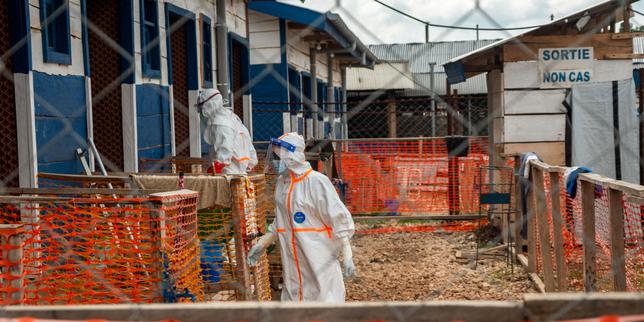
Around 1,800 people have died from cholera in the Democratic Republic of the Congo in 2026 across roughly 60,000 reported cases, marking what the World Health Organization calls the worst outbreak in decades. The surge has unfolded while health authorities battle a massive Ebola epidemic driven by the Bundibugyo virus, which has surpassed 11,600 confirmed cases and 5,600 deaths across multiple provinces.
Headline summaries treat the two outbreaks as a tragic double bill. That framing misses the real mechanics of failure. Cholera is simple to treat when clinics have oral rehydration salts, clean water, and staff on site. Yet the case fatality rate in parts of this outbreak has hovered near 3 percent—triple the standard threshold that signals a failing response. If you found value in this post, you should look at: this related article.
When a deadly viral hemorrhagic fever hijacks emergency budgets, logistics, and public attention, a treatable waterborne bacterium turns lethal. Cholera thrives in the cracks left behind by war, displacement, seasonal rains, and a health system stretched past breaking point.
Numbers Behind a Preventable Toll
Cholera does not need exotic biology to kill. A patient with severe watery diarrhea can lose fluids so fast that hypovolemic shock sets in within hours. In a functioning district hospital with intravenous fluids and oral rehydration therapy, mortality usually stays below 1 percent. For another angle on this story, refer to the recent coverage from Psychology Today.
Across the Democratic Republic of the Congo in 2026, roughly 60,000 cholera cases and 1,800 deaths tell a grim story about access rather than microbiology. Surveillance data reported in October showed more than 125,000 suspected cases and over 3,600 suspected deaths accumulated since January 2025, with South Kivu, North Kivu, and Haut-Katanga accounting for nearly 60 percent of suspected infections.
Weekly case counts have repeatedly spiked well past the 500-case alert threshold, jumping by double-digit percentages in single reporting weeks. Every spike exposes the same bottleneck: distance and delay. Villages cut off by fighting or poor roads sit hours or days from treatment centers. By the time a sick child or parent arrives, dehydration has already crossed the point where simple fluids can save them.
In public health emergencies, mortality rates measure logistics and trust just as much as pathogen virulence.
Consider a hypothetical example to see how delay compounds risk. Suppose a family in a rural health zone relies on shallow wells after heavy rain washes latrine waste into groundwater. A father falls ill at night. If the nearest cholera treatment unit sits thirty kilometers away across active front lines or washed-out tracks, waiting until dawn can be fatal. Even when a clinic has supplies, fear of violence or cost of transport keeps patients home until late stages.
How Ebola Draws Oxygen Away from Cholera
Ebola commands fear because its case fatality rate is brutal. In the Bundibugyo virus outbreak affecting the country, crude mortality has sat near 49 percent, with thousands of deaths spread across dozens of health zones and eight provinces. Cross-border alerts have reached neighboring states, including a fatal imported case in Nairobi linked to travel through the region.
A pathogen killing nearly half its confirmed victims forces governments and donors into emergency triage. Isolation wards go up. Contact tracers deploy. Supply flights prioritize personal protective equipment, diagnostics, and experimental or approved vaccines for viral containment.
That triage creates a quiet distortion in crisis response. Cholera rarely makes international front pages on its own unless numbers hit extraordinary highs, because the world assumes the fix is routine. Routine fixes fail when ambulances are tied up, health workers are reassigned or burned out, and communities grow suspicious of formal clinics.
In some areas, tension around Ebola response has even sparked hostility toward treatment facilities, with reports of facilities being attacked or burned during moments of fear and misinformation. When trust fractures around one outbreak, every public health message suffers. A household that doubts health workers during an Ebola scare is less likely to rush a relative with severe diarrhea to a hydration point.
| Crisis Dimension | Cholera Outbreak (2026) | Ebola Bundibugyo Outbreak (2026) | Operational Impact on Response |
|---|---|---|---|
| Scale & Toll | ~60,000 cases and ~1,800 deaths in 2026 | 11,613 confirmed cases and 5,678 deaths (as of Nov 17) | Dual emergencies drain funds, staff, and airlift capacity |
| Case Fatality | Roughly 2.9% to 3% | ~48.9% crude case fatality rate | High Ebola lethality pulls political and media urgency |
| Primary Spread | Contaminated water, poor sanitation, rain runoff | Direct contact with infected fluids or remains | Requires completely different field protocols and supplies |
| Key Bottleneck | Insecurity, remote clinics, late arrival | Active conflict zones, cross-border movement | Armed clashes block teams from high-risk health zones |
Conflict, Displacement, and the Geography of Risk
Epidemics do not pick targets at random in eastern Congo. Decades of armed conflict have displaced millions of people into crowded camps and makeshift settlements where clean water and sanitation are scarce. When people flee violence, they leave behind piped water, familiar clinics, and stable livelihoods.
In North Kivu and South Kivu, armed insecurity repeatedly restricts where medical teams can travel. Health zones such as Masisi and Kibua have faced access constraints that delay surveillance, water treatment, and restocking. Even when supplies exist in a provincial hub, moving chlorine, rehydration packets, and fuel across contested corridors remains hazardous and slow.
Geography widens the danger further. The Congo River corridor links eastern flashpoints and riverine islands to major urban centers downstream. Health agencies have warned that seasonal rains can wash contamination into wells and surface water, raising the risk of spread toward Kinshasa, a megacity where dense informal housing and aging drainage could turn a trickle of cases into a massive urban emergency.
Meanwhile, Tshuapa and Haut-Uele illustrate how far the footprint reaches beyond the Kivus. New health zones reporting cholera alongside Ebola expansions show that containment cannot succeed as a localized fire brigade. Once pathogens move along trade routes, displacement trails, and river networks, piecemeal responses chase yesterday's map.
Why Vaccines Are Not a Silver Bullet
International bodies have stepped up vaccine approvals and reactive campaigns. The International Coordinating Group on vaccine supply—bringing together the World Health Organization, UNICEF, the Red Cross, and Médecins Sans Frontières with Gavi funding—has approved millions of oral cholera vaccine doses for 2026, with additional requests reviewed and reactive drives deployed in zones like Mulungu and Shabunda as well as plans along the Congo River corridor. On the Ebola front, health leaders have pushed vaccination in conflict-hit eastern areas and backed clinical trial candidates.
Vaccines help blunt transmission, yet anyone who has worked humanitarian logistics knows their limits in active crises. Oral cholera vaccines buy time and lower immediate infection pressure, but they do not chlorinate a contaminated well or fix a broken latrine. Supply constraints across global cholera outbreaks have also forced rationing and targeted use rather than blanket coverage everywhere at once.
Campaigns themselves face steep friction on the ground:
- Cold chain and transport: Keeping vaccines viable and delivering them to remote river islands or conflict pockets requires tight scheduling that fighting and weather easily disrupt.
- Incomplete protection: Vaccines reduce risk rather than creating an impenetrable shield, meaning clean water and rapid rehydration remain indispensable.
- Community fatigue: Repeated emergency interventions without lasting improvements in basic services can breed cynicism among residents who see the same crises return every rainy season.
There is also a hard trade-off in funding and staffing. Launching parallel vaccination drives for both cholera and Ebola in insecure territories demands security coordination, local mobilizers, and clinical teams that are already stretched thin. Without local health workers backed by reliable pay and supplies, campaigns risk becoming short bursts of activity rather than durable protection.
What Real Reform Demands on the Ground
Talking about "resilience" in a war-affected province sounds hollow if a clinic lacks basic intravenous fluids on a Tuesday afternoon. Fixing the gap between what medicine can do and what people actually get requires unglamorous, relentless operational choices.
First, water and sanitation must sit right next to clinical care in emergency budgets, not at the back of the line. Installing chlorination points, disinfecting households and latrines in high-incidence districts like Tanganyika, and protecting drinking water during rainy seasons prevent infections before they ever reach a ward.
Second, health authorities need integrated zone-level plans rather than siloed disease fiefdoms. A single outbreak command structure should track cholera and Ebola side by side inside each health zone so supplies, transport, and community health workers reinforce one another instead of competing for the same truck.
Third, international donors and national ministries must fund basic primary care in peaceful and semi-stable pockets before flare-ups explode. Waiting until death tolls climb to surge resources guarantees high mortality—because by then, transmission is already ahead of the response.
Stop treating cholera as background noise while Ebola holds the microphone, and put clean water and rapid rehydration at the center of every emergency deployment before the rains turn a regional crisis into a national catastrophe.