Australian Prime Minister Anthony Albanese has publicly backed Climate Change and Energy Minister Chris Bowen following the collapse of Australia’s bid to co-host the 2026 United Nations Climate Change Conference, known as COP31, alongside Pacific Island nations. Attributing the diplomatic setback to "difficult geopolitical times," Albanese’s defense highlights the rigid consensus rules of the United Nations Framework Convention on Climate Change (UNFCCC) and a protracted, unresolved deadlock with rival bidder Turkey. While the Australian government framed the outcome as a casualty of broader international friction, the failure exposes deep structural vulnerabilities in global climate diplomacy, regional alliances, and domestic political messaging.
Diplomacy rarely fails in a single dramatic moment. Instead, it erodes through years of procedural gridlock, competing national interests, and the unforgiving mechanics of international consensus. For more than two years, Canberra campaigned aggressively to bring the world’s largest climate summit to Adelaide in partnership with the Pacific Islands Forum. The pitch was straightforward and emotionally resonant: bring global decision-makers to the frontlines of rising sea levels and extreme weather, demonstrating that Australia had shed its reputation as a climate laggard. Yet when the diplomatic clock ran out, the bid did not cross the finish line.
To understand why Australia and its Pacific partners fell short, one has to look past the surface-level talking points about global instability and examine the specific machinery that governs UN climate summits.
The Consensus Trap in UN Climate Diplomacy
Hosting a Conference of the Parties is not decided by a majority vote or an independent selection committee. Under UNFCCC rules, the host nation is chosen by consensus within one of five rotating United Nations regional groups. For COP31, the hosting rights fell to the Western European and Others Group (WEOG), a geopolitical bloc that includes Western European nations, the United States, Canada, New Zealand, Australia, and Turkey.
Consensus means every single member of that regional group must agree, or at least refrain from formally objecting, to the chosen host. A single holdout wields an effective veto.
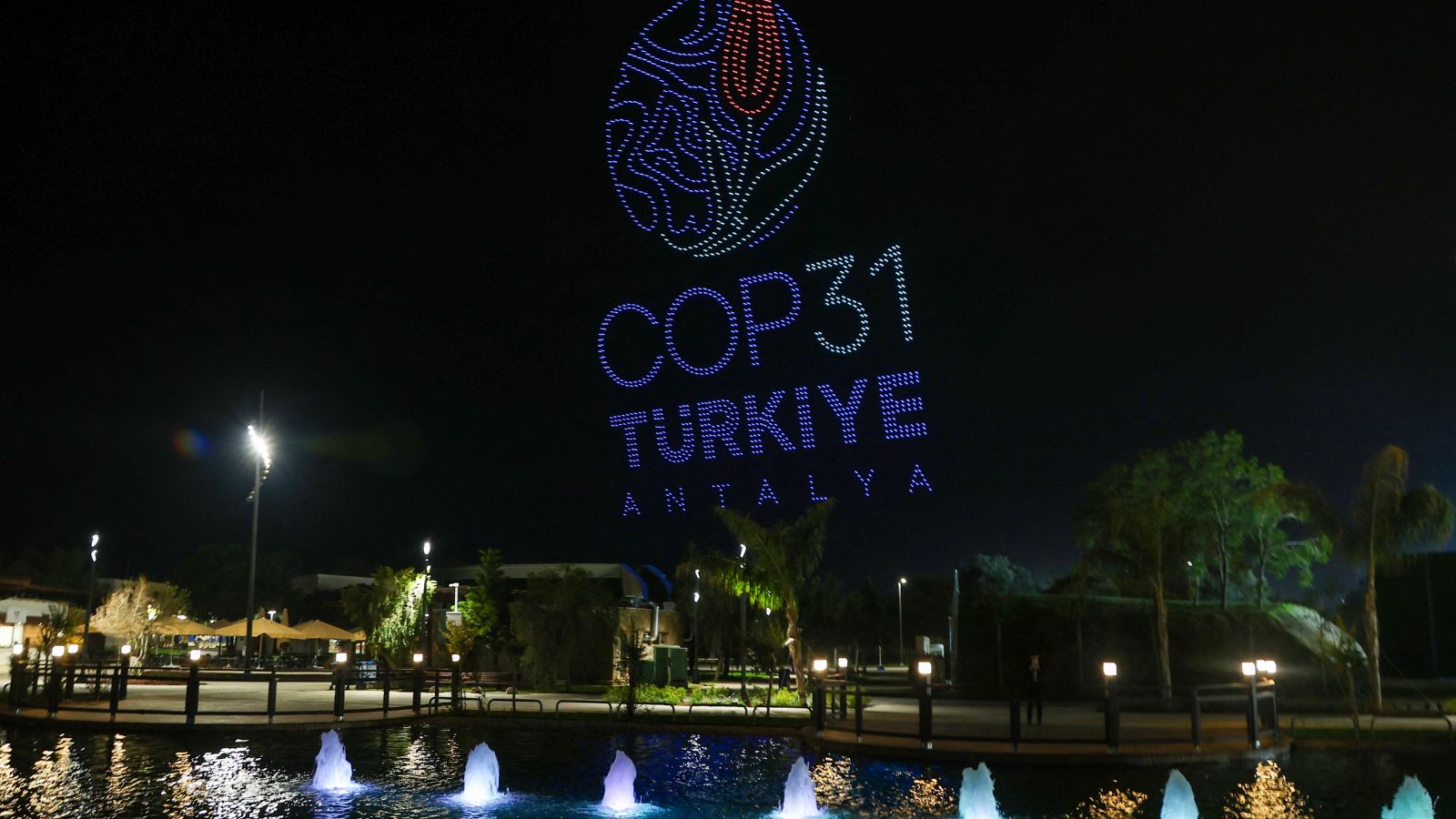
In the lead-up to the COP31 decision, two contenders emerged from the WEOG bloc: Australia, bidding in partnership with Pacific nations, and Turkey. Neither country blinked. Australia argued that the Pacific had never hosted a COP summit and deserved the global spotlight given its existential vulnerability to climate change. Turkey countered with its own strategic rationale, positioning itself as a geographical bridge between developed and developing nations, boasting lower carbon footprints for international travel due to its central location, and highlighting its substantial investments in renewable energy and zero-waste initiatives.
Diplomatic sources and public statements from the negotiations reveal a classic stalemate. Because neither Canberra nor Ankara would withdraw its candidacy, the WEOG bloc could not reach the mandatory consensus. Under UN rules, when a regional group fails to agree on a host, the summit defaults to Bonn, Germany, the headquarters of the UNFCCC secretariat, unless a last-minute diplomatic breakthrough occurs.
Albanese’s reference to "difficult geopolitical times" points directly to this diplomatic reality. In an era marked by overlapping wars in Eastern Europe and the Middle East, strained superpower relations, and shifting trade alliances, middle powers like Turkey carry immense geopolitical weight. Pressuring Ankara to step aside for Canberra was never going to be a simple diplomatic favor. Every nation at the table holds leverage across unrelated dossiers—from NATO expansion and regional security to migration and trade agreements. In that environment, climate summit hosting rights quickly become bargaining chips in much larger geopolitical games.
What Chris Bowen Actually Pitched and Where It Stalled
When Chris Bowen first unveiled the joint Australia-Pacific bid in 2022, shortly after the Labor government took office, it served a dual purpose. Domestically, it signaled a sharp break from the previous Coalition government’s climate policies. Internationally, it was designed to rebuild trust with Pacific Island leaders who had spent years criticizing Australia’s reliance on fossil fuel exports.
The logistics, however, were always daunting. Hosting a modern COP summit is an enormous undertaking, requiring infrastructure capable of accommodating anywhere from 40,000 to 80,000 delegates, heads of state, journalists, and observers. Security protocols, accommodation capacity, and transport networks are scrutinized down to the finest detail.
Because no single Pacific Island nation possesses the physical infrastructure to host an event of that scale, Australia proposed a hybrid model. The main summit would take place in an Australian city—with Adelaide emerging as the preferred venue—while pre-COP meetings and side events would be distributed across Pacific Island nations.
Critics and rival diplomats quietly questioned how a summit held primarily on the Australian mainland would genuinely center Pacific voices, particularly given the high cost of travel and accommodation in Australia for smaller delegations. At the same time, Australia’s ongoing approval of new coal and gas projects created friction with some of the very Pacific leaders Canberra sought to champion. While Pacific Island Forum leaders officially endorsed the joint bid, the underlying tension between Australia’s fossil fuel export economy and its climate diplomacy remained an open vulnerability that rival bidders were happy to exploit behind closed doors.
The Domestic Political Fallout in Canberra
In Australian politics, international setbacks rarely stay offshore for long. Following the failure to secure the COP31 hosting rights, opposition figures in Canberra swiftly targeted Chris Bowen, framing the outcome as an expensive diplomatic miscalculation.
The critique from the Coalition centered on two primary arguments:
- Cost and distraction: Opposition lawmakers argued that the government had spent millions of dollars and vast amounts of ministerial bandwidth chasing an international conference while Australian households and businesses were grappling with high energy prices and grid reliability concerns.
- Credibility gap: Critics contended that Bowen’s international ambitions outpaced domestic delivery, pointing to delays in renewable transmission infrastructure and ongoing debates over Australia’s 2030 emissions reduction targets.
Albanese’s decision to publicly defend Bowen was a calculated move to shut down speculation about a cabinet reshuffle and project unity ahead of domestic political battles. By framing the failure as the result of external geopolitical forces rather than ministerial incompetence, the Prime Minister sought to insulate his energy minister from blame.
It is a standard political playbook, yet it carries risks. Acknowledging that global geopolitics thwarted Australia’s bid also invites scrutiny over whether the government overestimated its diplomatic sway in the first place. When a government stakes significant political capital on an international campaign, falling short leaves a visible mark, regardless of how complex the underlying UN procedures may be.
The Hidden Costs of the COP Bidding Wars
The standoff over COP31 highlights a broader dysfunction in how the United Nations manages its annual climate summits. Over the past decade, COP conferences have ballooned from technical diplomatic negotiations into sprawling global trade shows, attracting tens of thousands of corporate lobbyists, financial institutions, activists, and media personnel.
As the scale of the event has grown, so too has the geopolitical prestige attached to hosting it. Nations view the COP presidency not merely as an administrative duty, but as a platform to shape the global energy narrative, attract green investment, and project soft power. Consequently, hosting bids have become fiercely contested, turning what used to be routine regional rotations into multi-year diplomatic tug-of-wars.
The consequences of this friction are tangible:
- Lost preparation time: Host nations typically need at least two years to secure venues, organize logistics, and build the diplomatic coalition required to broker a meaningful final agreement. Prolonged deadlocks eat directly into that runway.
- Erosion of trust: When regional groups spend years fighting over who gets to hold the gavel, it distracts from the core mandate of the UNFCCC—reducing greenhouse gas emissions and mobilizing climate finance for vulnerable nations.
- Financial strain: Both taxpayers in bidding nations and the UN secretariat absorb substantial administrative costs during extended campaigns that ultimately yield no host agreement.
For the Pacific Islands, the collapse of the COP31 bid is a particularly bitter pill. Pacific leaders have argued for decades that those most affected by climate change should have a central role in shaping the global response. By tying their hosting ambitions to Australia, they gained a wealthy partner capable of funding and executing the event, but they also became tethered to Australia’s geopolitical rivalries and bilateral disputes.
The Geopolitical Reality Check for Middle Powers
Australia’s experience with COP31 serves as a sobering case study in the limits of middle-power diplomacy. Since returning to power, the Albanese government has invested heavily in repairing international relationships, stabilizing trade ties with China, deepening defense partnerships through AUKUS, and re-engaging with multilateral institutions.
Those efforts have yielded undeniable dividends in trade and security. Yet multilateral forums governed by strict consensus rules operate on an entirely different axis. Goodwill from traditional allies like the United States and the United Kingdom cannot override a single determined objector within a regional UN bloc.
Turkey’s refusal to step aside demonstrated how effectively a nation can leverage procedural rules to advance its own standing. Ankara recognized that in a fractured geopolitical landscape, Western allies would be reluctant to expend scarce diplomatic capital forcing Turkey out of a UN hosting race—especially when those same allies needed Turkish cooperation on NATO matters, Black Sea grain corridors, and regional stability.
In that context, Albanese’s description of "difficult geopolitical times" is an accurate assessment of the environment, even if it serves as a convenient political shield. The rules of the game have changed. Multilateralism is increasingly transactional, and procedural vetoes are wielded with far less hesitation than they were a decade ago.
Where Pacific Climate Diplomacy Goes From Here
Without the platform of a home-region COP summit, Australia and its Pacific neighbors face the challenge of maintaining diplomatic momentum through other channels. Hosting COP31 was never going to solve the climate crisis on its own, nor was it a substitute for domestic emissions reductions or direct financial support to vulnerable island states.
The Australian government has pointed to its contributions to the Pacific Resilience Facility and bilateral climate finance packages as proof of its enduring commitment to the region. However, for many Pacific leaders, financial pledges—while necessary—do not carry the same symbolic and political weight as bringing the world’s negotiators to their doorstep to witness coastal erosion and saltwater intrusion firsthand.
Meanwhile, the UNFCCC faces mounting pressure to reform its host selection process. As summits grow larger and more expensive, fewer nations are willing or able to take on the burden, while those that do are increasingly locked in ideological or geopolitical deadlocks. Without clearer mechanisms to resolve competing bids before they paralyze regional groups, the default fallback to Bonn risks becoming a regular feature of the international climate calendar rather than a rare emergency measure.
Albanese’s defense of Bowen may steady the ship in Canberra for the immediate future, but the episode leaves lingering questions about how middle powers navigate an increasingly fractured world order. When every international forum becomes an arena for broader geopolitical leverage, even the most carefully constructed diplomatic alliances can run aground on a single procedural veto.