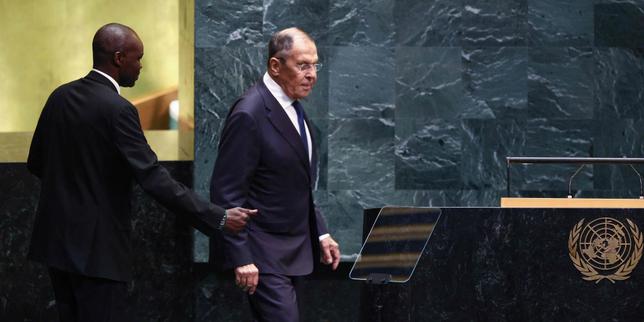
Diplomacy rarely unfolds in the harsh glare of public press conferences. More often, it stumbles forward in quiet corridors, behind heavily guarded doors, where seasoned foreign ministers exchange calculated nods and veiled warnings. When Russian Foreign Minister Sergei Lavrov meets with German diplomatic counterparts, the stakes extend far beyond bilateral relations. This contact represents a fragile conduit between Moscow and Berlin, an uneasy attempt to maintain channels of communication amid a relentless war in Ukraine that continues to reshape European security.
For decades, the Berlin-Moscow axis served as an economic engine for Europe. Cheap Russian natural gas fueled German manufacturing, and trade agreements forged a web of mutual dependency. That architecture of stability collapsed overnight when Russian forces crossed the border into Ukraine. Yet, beneath the public rhetoric of condemnation and sanctions, quiet channels persist. These interactions are not born of sudden goodwill. They are driven by strategic necessity, calculations of risk management, and the grim realization that even hostile states must occasionally test the temperature of the opposing side.
To understand the weight of these diplomatic touchpoints, one must look past the press releases. The German government finds itself in a profound structural bind. As a primary financial and military benefactor of Ukraine, Berlin walks a knife-edge. It must project unyielding solidarity with Kyiv while simultaneously monitoring the risk of escalation that could drag the broader European continent into direct military conflagration. Lavrov, a veteran operator who has navigated Russian foreign policy through decades of upheaval, understands this internal German tension intimately. He treats these encounters as diagnostic tools, probing for fractures in the Western coalition and measuring how long European publics can sustain the economic costs of the conflict.
The mechanics of these high-level conversations reveal a stark asymmetry. On one side sits a representative of an economy fully mobilized for prolonged conflict, insulated by non-Western trading partners and hardened against international isolation. On the other side sits a democratic power bound by coalition politics, industrial anxiety, and the shifting tides of public opinion. When Lavrov engages German diplomats, he is not seeking compromise in the traditional sense. He is signaling endurance. The messaging is calculated to remind European capitals that Russia views time as a strategic variable working in its favor.
Critics of these backchannel engagements argue that any diplomatic contact with Moscow legitimizes its aggressive posture. They contend that talking to Lavrov offers the Kremlin valuable propaganda imagery, projecting an aura of normalcy while artillery shells continue to fall on Ukrainian infrastructure. This viewpoint carries weight. Diplomatic theater can easily be weaponized by authoritarian regimes to dilute international resolve and foster a false sense of impending resolution where none exists.
Conversely, professional diplomats and intelligence analysts argue that cutting off all communication lines is a dangerous luxury. History offers sobering reminders of crises that spiraled out of control simply because opposing capitals stopped speaking to one another. During the height of past geopolitical standoffs, backchannels prevented minor miscalculations from escalating into catastrophic military exchanges. The meetings between Russian and German officials function less as peace negotiations and more as a rudimentary safety valve. They are designed to clarify red lines, prevent dangerous misunderstandings in the airspace or seas near NATO borders, and test whether any narrow window for eventual de-escalation exists beneath the surface of total hostility.
The economic fallout of the war forms the invisible backdrop to every diplomatic exchange. Germany's industrial base, long accustomed to predictable energy inputs, has had to painfully rewire its supply chains. Energy prices remain volatile, and corporate leaders worry about long-term competitiveness. Lavrov's delegation is acutely aware of these domestic pressures. Russian strategy relies heavily on the assumption that democratic electorates have shorter attention spans than centralized state apparatuses. By keeping diplomatic lines open, Moscow subtly reinforces the narrative in European capitals that a return to economic stability remains contingent on shifting political postures toward Ukraine.
At the same time, Berlin cannot afford to appear weak or accommodating. Any perception that German officials are entertaining compromises at the expense of Ukrainian sovereignty would shatter the fragile consensus within the European Union. Consequently, these encounters are characterized by extreme rigidity. Public posturing remains frosty, and communiques are sparse, reflecting the deep distrust that defines the current era of international relations. The substance of the dialogue is buried beneath layers of diplomatic protocol and mutual grievances.
As the conflict grinds forward, the significance of these high-level contacts will likely fluctuate. They will not produce a sudden peace treaty, nor will they bridge the vast ideological and territorial chasm between Moscow and the West. Instead, they serve as a barometer of a broken international order, a reminder that even when diplomacy is reduced to its most transactional and antagonistic form, nations locked in bitter conflict still find reasons to pick up the phone and test the dark waters of the other's intent.


