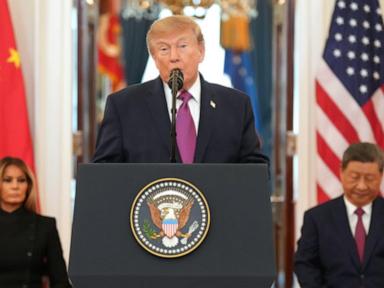
The high-stakes meetings between Washington and Beijing are rarely about what makes the evening news. Beneath the choreographed handshakes and the carefully stage-managed photo opportunities at global summits, a much colder, more calculating negotiation unfolds over the architecture of global commerce and technological supremacy. When Donald Trump and Xi Jinping sit down across from each other, the core issue is not merely the renegotiation of arbitrary tariff numbers or short-term agricultural purchase targets. It is a high-stakes endurance test to determine which superpower can better absorb the friction of a fracturing global economy.
For years, media coverage has framed these encounters as dramatic showdowns where a single stroke of a pen can reverse decades of structural decoupling. That framing is lazy, and it is dangerously wrong. Statecraft between the world's two largest economies has evolved past the era of grand bargains. Instead, both administrations operate within a state of managed friction, where summits serve primarily to prevent structural rivalry from boiling over into active economic devastation.
The Myth of the Grand Economic Reset
Consider the fragile mechanics of current trade truces. When officials negotiate extensions on tariff suspensions or haggle over specific exemptions for critical minerals, they are applying duct tape to a hull that is steadily taking on water.
For example, suppose an administration announces a temporary freeze on additional penalty duties. On paper, it looks like a breakthrough. In reality, supply chain directors and corporate strategists know that the underlying legal and regulatory volatility remains entirely unchanged. Manufacturers from Shenzhen to Ohio do not make multi-decade capital allocation decisions based on a ninety-day reprieve negotiated on the sidelines of an international conference. They build redundancy, they nearshore, and they decouple quietly, regardless of what the podium announcements claim.
Beijing approaches these encounters with a clear demographic and political clock ticking. Chinese leadership understands that domestic economic pressures require a steady flow of external demand, yet they are fundamentally unwilling to compromise on state-directed industrial policy. They view American demands regarding intellectual property protection and technology transfer not as negotiable points, but as existential threats to their long-term developmental model. Consequently, every concession offered by Beijing is tactical, designed to buy time while domestic semiconductor and advanced manufacturing sectors mature behind regulatory walls.
The Digital Iron Curtain and Strategic Stability
Nowhere is this dynamic more pronounced than in the technology sector. The competition for artificial intelligence dominance and advanced microchip supply chains has created a permanent ceiling on bilateral cooperation. While diplomatic channels occasionally establish superficial working groups for incident communication or AI safety guardrails, the foundational reality of the tech landscape is one of strict containment.
Washington’s national security establishment views advanced compute capability as the nuclear weapon of the twenty-first century. Restricting access to cutting-edge hardware is treated as an absolute imperative, regardless of the immediate pain inflicted on domestic tech conglomerates or semiconductor giants facing export restrictions. Beijing responds by accelerating indigenous innovation efforts, pouring state capital into domestic alternatives, and weaponizing its near-monopoly on rare-earth mining and refining.
When leaders discuss technology controls at these summits, they are talking past each other. The American side demands compliance with security restrictions, while the Chinese side presses for the rollback of export controls that threaten their high-tech modernization. Because neither side can afford to blink first without inviting domestic political vulnerability, these discussions inevitably yield procedural platitudes rather than substantive breakthroughs.
Navigating Domestic Political Crosswinds
External diplomacy cannot be separated from internal political survival. Both leaders face domestic audiences that demand strength, unyielding resolve, and zero capitulation to foreign rivals. In Washington, midterm election cycles and congressional oversight ensure that any perceived softness toward Beijing meets immediate, bipartisan backlash.
This political reality severely constrains executive flexibility. A president cannot offer meaningful structural concessions without inviting severe political fallout from domestic hawks. Chinese leadership faces its own constraints, balancing economic headwinds against the absolute necessity of projecting sovereign strength. When leaders are structurally incentivized to prioritize domestic posturing over compromise, major diplomatic breakthroughs become virtually impossible.
The result is a diplomatic holding pattern. The two superpowers stumble from one summit to the next, signing agreements to keep channels open while quietly preparing for a more adversarial future. Statecraft under these conditions is not about solving problems; it is about managing an inevitable rivalry without letting it spin out of control. The pageantry fades quickly, leaving behind the hard, unyielding mechanics of two giants locked in a permanent struggle for the future of global power.