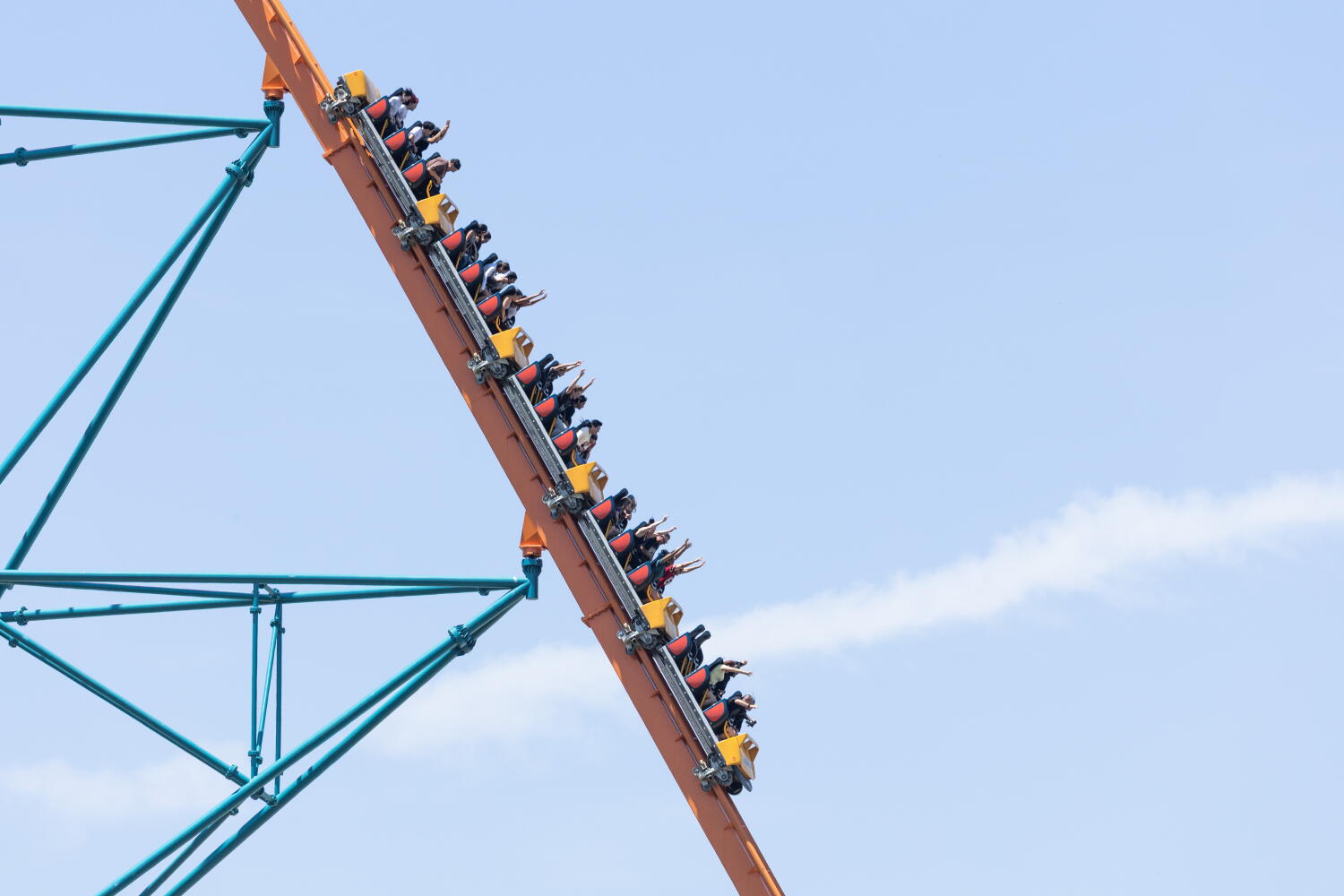
Headline news linking a second ride closure at Six Flags Magic Mountain to safety concerns and a fatal incident in Georgia exposes a core operational truth about regional amusement parks: safety events rarely stay isolated to a single attraction or state line. When a fatal ride accident occurs anywhere in a multi-park portfolio, management faces a choice between localized maintenance and portfolio-wide risk containment. Closing a second attraction at a flagship park signals an active attempt to lower operational risk before external regulators, insurers, or guests force a harsher reckoning. This analysis breaks down the operational mechanics behind precautionary closures, separates known incident dynamics from analytical hypotheses, and maps how regional operators manage safety contagion without fabricating unverified facts.
The Competitor Framing Trap
Coverage built around a headline like "Six Flags Magic Mountain shuts down second coaster amid safety concerns, rider death in Georgia" typically relies on proximity and drama. It treats two separate geographies—Southern California and Georgia—as if they were linked by a single mechanical chain, while implying that closing a second coaster proves a systemic failure inside a single park. That framing is compelling for quick clicks, yet it leaves out the structural logic that governs high-capacity thrill rides.
A single coaster closure can stem from routine preventative checks, vendor advisories, weather holds, or unscheduled parts replacement. A second closure at a high-profile park like Six Flags Magic Mountain carries heavier interpretive weight because guests and analysts naturally search for a pattern. Still, correlation in news reporting is not proof of mechanical causation. Without verified incident reports, state inspection findings, or official manufacturer bulletins, assuming that two closures at one park share a root cause with a fatality in another state stretches the evidence past what is known.
The more useful analytical lens looks at risk contagion. In multi-park entertainment businesses, reputational and liability risks travel faster than steel parts. A serious injury or death at one property shifts internal risk tolerances across the entire operating footprint, prompting leadership to scrutinize similar ride types, restraint geometries, dispatch protocols, or maintenance workflows elsewhere.
Known Facts Versus Analytical Hypotheses
Rigorous risk analysis starts by drawing a hard line between established facts and informed hypotheses. In a scenario involving a rider fatality in Georgia and a second coaster shutdown at Six Flags Magic Mountain, exact mechanical root causes, toxicology or restraint investigation outcomes, and internal maintenance logs are not established simply by the existence of the two events.
What Can Be Treated as Known Operational Facts
- Independent asset footprints: Attractions operate as distinct mechanical systems with their own maintenance histories, cycle counts, inspection schedules, and local regulatory oversight.
- Precautionary shutdowns happen routinely: Theme park operators regularly take rides offline for scheduled preventative maintenance, unscheduled diagnostics, sensor faults, staffing shifts, or engineering reviews.
- Fatal incidents trigger heightened scrutiny: A death at an amusement facility raises immediate questions from families, regulators, insurers, and the public, increasing sensitivity around visible safety actions.
Where Educated Hypotheses Belong
- Cross-park review cascades: Operators managing multiple parks often conduct fleet-wide or system-type reviews after a severe event elsewhere in the company, which can coincide with taking rides offline for inspection or verification.
- Risk-aversion recalibration: After a high-severity incident, park leadership may lower its threshold for keeping borderline or newly flagged attractions running while questions remain open.
- Demand and perception sensitivity: Thrill-seeking guests weigh perceived safety alongside ride lineup depth; visible closures at a marquee park can affect sentiment even when other headliners remain open.
Confusing these two buckets leads to sloppy conclusions. Treating a hypothesis as a confirmed defect creates false certainty, while ignoring plausible risk-contagion mechanics misses why operators act cautiously during active investigations.
The Three Pillars of Ride Risk Containment
When safety concerns intersect with high-throughput attractions, park operators balance engineering integrity, regulatory compliance, and guest confidence. Rather than relying on a single metric—such as the total number of open rides on a given day—effective risk containment rests on three operational pillars.
Mechanical and Procedural Integrity
Every coaster relies on interlocking layers of engineering and human execution. These include structural inspections, non-destructive testing, programmable logic controllers, sensors, restraint verification, and operator dispatch discipline. A ride can be mechanically sound on paper yet still be paused if a sensor trips, a manufacturer issues a check, or an operator flags an anomaly during morning cycling.
The first bottleneck in diagnosing any shutdown is information lag. Deep engineering root-cause analysis takes time, testing, and documentation. During that window, taking an attraction offline acts as a circuit breaker: it removes exposure while engineers verify whether an issue is isolated or systemic.
Regulatory and Insurance Alignment
Amusement ride oversight varies across jurisdictions, combining state regulatory bodies, third-party inspectors, manufacturer guidelines, and internal corporate standards. Even when a specific ride is not under a formal state stop-operation order, operators answer to insurers, legal teams, and risk committees that price catastrophic tail risk into coverage terms and operating standards.
A fatal event in one state can prompt broader internal audits across similar attraction categories or operating procedures. From a governance standpoint, proactive pauses reduce exposure to claims of negligence or complacency while facts are still being gathered.
Guest Trust and Lineup Economics
Regional theme parks live and die by throughput, per-capita spending, and repeat visitation. Coasters are high-capacity anchors that absorb crowds and define a park's thrill identity. Closing a second coaster at a flagship property hits two pressure points at once: it trims ride capacity—potentially lengthening queues elsewhere—and it creates a visible signal that something unusual is happening on the ground.
Yet keeping a questionable ride open carries a far steeper penalty. One serious incident damages brand equity across every park in the portfolio and invites intense scrutiny that can disrupt operations for years. In risk management, short-term capacity loss is often the price paid to protect long-term franchise value.
The Cost Function of Precautionary Shutdowns
Every decision to close or hold a ride alters the park's operating cost function. Rather than viewing a shutdown purely as lost ticket or concession revenue, operators weigh direct and indirect costs against avoided catastrophic downside.
- Direct throughput and labor friction: Fewer operating rides shift guest demand onto remaining attractions, increasing wait times and requiring crowd-flow adjustments. Ride attendants assigned to a closed attraction may be redeployed or idle depending on staffing rules.
- Engineering and diagnostic workload: Investigating potential issues or running extra verification cycles consumes specialized maintenance hours, potentially pulling technical talent away from routine preventative work on other rides.
- Reputational and legal overhang: Headlines connecting closures to a fatality create uncertainty among prospective visitors and season-pass holders. If communications are vague or delayed, speculation fills the void.
- Avoided tail-event liability: The primary benefit of a disciplined shutdown is preventing a second severe incident and demonstrating rigorous oversight if regulators or courts later examine decision-making.
This trade-off explains why shutdown decisions often look abrupt from the outside. The cost of a premature pause is measured in daily operational friction; the cost of an unaddressed hazard is measured in human life, severe injury, and existential brand damage.
Why Two Coaster Closures at One Park Spark Outsized Scrutiny
Closing one coaster rarely dominates news coverage unless an incident happens on that ride. Closing a second coaster at Six Flags Magic Mountain—a park widely known for its large coaster count and thrill identity—changes the narrative because expectations are higher.
First, salience bias makes linked headlines feel more connected than they may be. When a rider dies in Georgia and a second coaster shuts down in California amid safety talk, readers naturally connect the dots even if the specific rides differ in manufacturer, age, restraint system, or closure reason.
Second, capacity concentration magnifies the impact. At a coaster-heavy park, losing two major rides is noticeable to enthusiasts and casual guests alike. Enthusiasts track ride availability closely and share status updates rapidly online, turning a local operational adjustment into a broader public talking point.
Third, communication asymmetry widens the gap between what the public sees and what engineers know. Parks typically share limited details while safety checks or investigations are underway to avoid speculating before facts are verified. That restraint makes sense legally and technically, yet silence can look like defensiveness when emotions run high.
Common Misconceptions About Theme Park Safety
Public debates around ride closures often rely on simplified assumptions that obscure how safety systems actually work.
- "A shutdown means the ride is permanently unsafe." In reality, taking a coaster down can be a temporary diagnostic step, a preventative measure, or an operational hold unrelated to a catastrophic flaw.
- "If no state order forced a closure, there is no risk concern." Operators frequently impose stricter internal holds than minimum regulatory baselines require, especially during periods of heightened scrutiny.
- "More rides open always equals better management." High availability is desirable under normal conditions, but disciplined restraint during uncertainty is a hallmark of sound risk governance.
- "A fatality in one state proves a company-wide defect." Each incident requires evidence-based investigation into the specific ride, operation, and circumstances before drawing conclusions about other properties.
Tactical Playbook for Evaluating Safety Closures
Analysts, industry observers, and park visitors can separate noise from signal by applying a structured four-step review whenever ride closures coincide with safety news.
- Isolate the timeline and geography. Map exact dates, locations, and specific attractions involved before assuming any operational link between events in different states or different zones of a park.
- Distinguish mechanical faults from procedural or precautionary holds. Look for official statements or verifiable updates indicating whether a ride is undergoing maintenance, inspection, weather holds, or broader safety review.
- Assess capacity and crowd redistribution. Evaluate how taking one or two rides offline affects queue lengths, alternative attractions, and guest experience across the rest of the park.
- Track official findings over early speculation. Wait for verified inspection reports, manufacturer notices, or clear operational updates rather than treating initial headlines as final root-cause conclusions.
Practical Limits of This Framework
No analytical framework can substitute for primary technical evidence. Without access to maintenance records, telemetry, or official investigative findings, outside observers cannot verify whether a specific shutdown prevented a failure or simply coincided with routine operational work. Furthermore, park operators must protect ongoing investigations and legal accuracy, meaning public updates often lag behind internal technical reviews.
Strategic Recommendation for Multi-Park Operators
When a fatal incident occurs anywhere in a multi-park network and visible closures follow at a flagship destination, leadership should treat transparent, structured risk communication as an operational control alongside engineering reviews. Operators cannot rush technical investigations, nor should they invent answers before facts are confirmed, but they can clearly explain the difference between a precautionary hold, routine maintenance, and an active safety review—and set realistic expectations for when updates will follow. Pairing disciplined mechanical caution with clear, calm operational transparency contains rumor spirals, respects grieving families, and protects long-term trust across the entire park portfolio.