The air along the northern border of Vermont in July does not feel like the dead of summer. It is damp, thick with the scent of pine and early morning fog that rolls off the St. Lawrence River, clinging to the gravel roads like a damp shroud. If you stand still enough in the pre-dawn quiet, you can hear the wind rustled through the birch trees. It is a peaceful, sleepy place. It is the kind of borderland where people go to disappear.
But disappearance is an illusion in the modern age. Discover more on a connected issue: this related article.
Early on a Thursday morning, a twenty-six-year-old man named Nitish Kaushal, known to his inner circle and federal investigators alike as "Lala," stood in that cold Vermont dampness. He was a long way from the sun-drenched concrete of Southern California, and even further from the dusty, heat-baked fields of Punjab where his story truly began. He was running out of road.
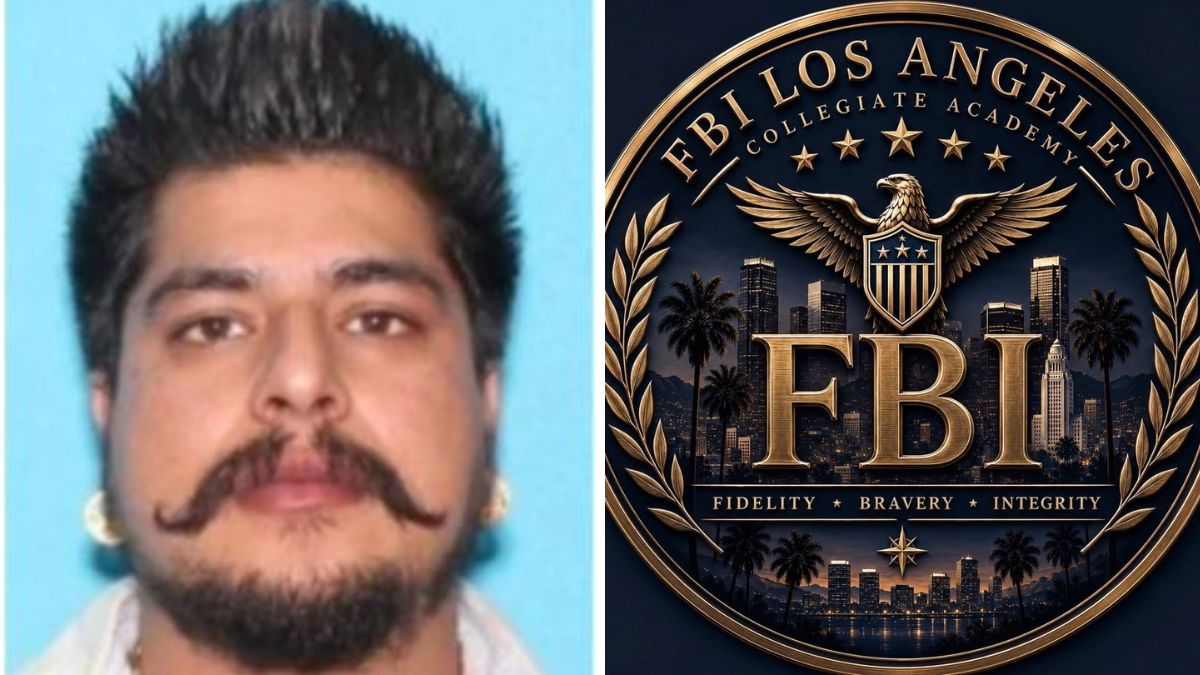
Just days earlier, his face had been uploaded to the Federal Bureau of Investigation’s "Most Wanted" list, a digital poster warning that he was armed, dangerous, and an extreme escape risk. Now, surrounded by U.S. Border Patrol agents and FBI operatives under the gray northern sky, the run was over. Further analysis by The Guardian delves into comparable perspectives on this issue.
There were no flashing Hollywood lights. No high-speed chases. Just the quiet click of steel handcuffs, the heavy sigh of a tired young man, and the realization that a global web of crime had just lost one of its threads.
The Architecture of a Modern Syndicate
To understand why a young man was hiding in the Vermont woods, you have to look beyond the local sheriff’s blotter. You have to understand how crime has evolved.
Years ago, organized crime was local. A neighborhood gang controlled a neighborhood block. Today, crime is a franchise. It is decentralized, digital, and hyper-global.
Kaushal was not operating in a vacuum. He is an alleged key operative of the Jaggu Bhagwanpuria Organized Crime Group, an enterprise born in the Indian state of Punjab. Over the last decade, this syndicate did not just grow; it migrated. It established roots in the Central District of California, snaking its way into North American communities through a portfolio that reads like a ledger of human misery:
- Targeted killings and extortion
- Interstate weapons trafficking
- Global drug distribution networks
- Human smuggling and money laundering
Under a sweeping federal indictment unsealed in California, prosecutors hit Kaushal and dozens of others with Racketeer Influenced and Corrupt Organizations (RICO) conspiracy charges. RICO is the heavy hammer of American law enforcement. It was designed in 1970 to dismantle the Italian Mafia not by chasing individual street soldiers, but by proving that the entire enterprise is a single, coordinated machine. If you perform a kidnapping or an assault in service of the group, you are not just a local thug; you are a gear in a transnational engine.
And the engine was running hot.
Operation Hard Ball and the Net That Closed
Law enforcement did not stumble upon Kaushal by accident. His arrest was the climax of "Operation Hard Ball," a massive, coordinated multi-agency surge targeting India-linked transnational syndicates operating across North America.
Imagine the sheer logistical weight of such an undertaking. For months, wiretaps hummed in California. Surveillance teams sat in unmarked cars in quiet suburbs. Analysts in Washington, Ottawa, and New Delhi mapped out bank accounts, shell companies, and encrypted chat logs.
Then came the strike.
Nearly forty operatives were indicted. Dozens of suspects were swept up in simultaneous raids across the United States, Canada, and Europe. The message from the Department of Justice was unmistakable: borders might define jurisdictions, but they no longer protect those who exploit them.
When the net closed, Kaushal slipped through. He fled north, likely hoping the vast, porous expanse of the Canadian border would offer a sanctuary.
He was wrong.
The Illusion of the Safe Haven
There is a distinct vulnerability in being on the run.
Every headlight in the rearview mirror feels like a trap. Every glance from a stranger in a diner carries a threat. The human body is not built to sustain that level of constant, low-humming adrenaline. For Kaushal, the pressure cooker of California had driven him to the edge of the map.
But the northern border is not empty. The U.S. Border Patrol agents who patrol the rural crossings of Vermont know every dirt path, every disused logging road, and every unusual tire track in the mud. They are part of a community that notices when something—or someone—does not belong.
When the FBI Albany field office announced his capture, they did so with a simple note of gratitude to their partners on the line.
"Thanks to the outstanding work our partners are doing to ensure the safety and security of our Northern Border, this dangerous fugitive was captured early this morning in Vermont."
Behind those dry, administrative words is a human reality. A team of law enforcement officers standing in the wet grass, verifying a mugshot against a living face, and realizing they had just taken a major piece off the board.
The Echoes Left Behind
What remains is the court date, the legal briefs, and the long, slow march of the justice system. Kaushal now faces the cold reality of a federal courtroom in Los Angeles, far from the quiet woods of New England.
But the larger story does not end with a single arrest. The capture of "Lala" is a window into a quiet war being fought every day. It is a war of attrition against networks that view human lives as mere transactions, whether through smuggling people across borders or distributing poison in local neighborhoods.
As the sun rose over Vermont that Thursday morning, the fog slowly burned away, revealing the green hills and the calm lakes of a quiet summer day. The road was clear again. But the invisible lines that cross our world had just grown a little more secure, reminding us that no matter how far someone runs, the world is far smaller than it seems.