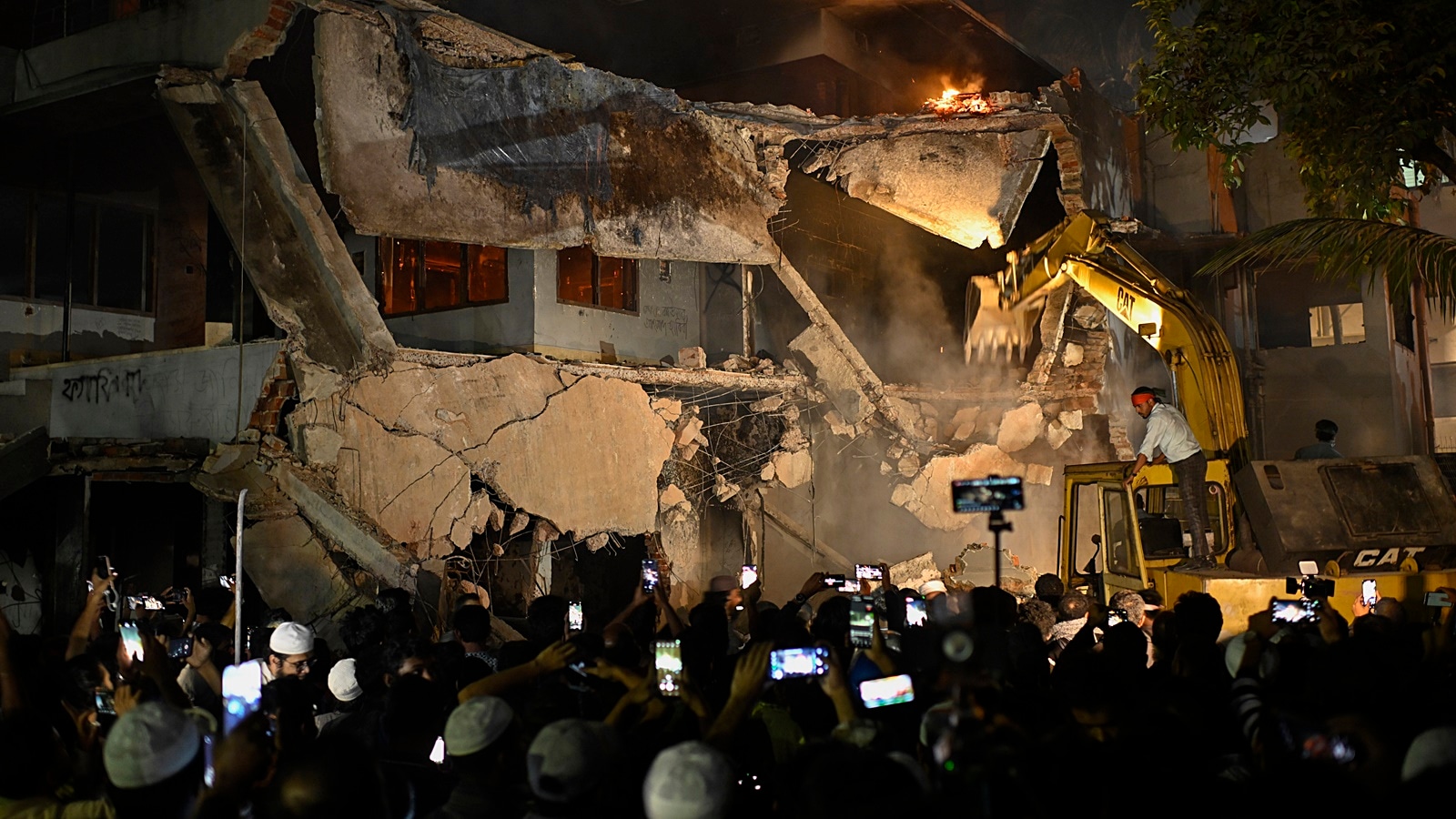
The headlines write themselves. An explosion rocks a neighborhood. A pediatric cancer facility is evacuated. Hundreds of critically ill children are wheeled into the dust-choked streets. The immediate media reaction is a predictable mix of outrage, condemnation, and debates over GPS-guided munitions.
But the mainstream outrage machine misses the entire point.
When US-backed strikes near an Iranian-linked target in Damascus or Baghdad result in the evacuation of 211 pediatric oncology patients, the public is fed a comforting lie: that this was a failure of intelligence or a tragic "error" in target selection.
It wasn't. It was the predictable, calculated reality of modern urban warfare. The lazy consensus insists that with enough "smart" tech, we can surgically excise military targets from civilian hubs without touching the surrounding infrastructure. That is a fantasy.
The Proximity Trap: Why "Surgical" is a Marketing Term
Military spokespeople love the word "surgical." It conjures images of a scalpel, clean incisions, and zero collateral damage.
But in dense urban centers, a JDAM (Joint Direct Attack Munition) is not a scalpel. It is a sledgehammer. Even if a 500-pound precision-guided bomb hits its exact GPS coordinates—directly on the underground munitions cache next door to a hospital—the physics of kinetic energy cannot be negotiated.
- Overpressure: The shockwave of a detonation shatters glass, collapses ventilation systems, and ruptures eardrums hundreds of meters away.
- Infrastructure Interdependency: Hospitals do not exist in a vacuum. They rely on the same power grids, water lines, and access roads as the military targets built right beside them.
- The Decoupling Illusion: Believing you can strike an adversary's command center without affecting a pediatric ward fifty yards away is a failure of basic physics.
I spent years analyzing battlefield damage assessments in urban environments. I have watched planners map out blast radiuses down to the millimeter to satisfy legal advisors.
Here is the truth nobody wants to admit: those maps are fiction. When a target is neutralized, the secondary explosions of stored munitions regularly dwarf the initial strike. You cannot calculate the blast radius of a stockpile you do not fully catalog.
Human Shields or Urban Reality?
The standard defense from military establishments is simple: the enemy uses human shields. They intentionally place command bunkers beneath schools and hospitals.
While asymmetric warfare actors absolutely exploit civilian infrastructure to deter strikes, relying on this excuse is a cheap intellectual cop-out. It shifts the entire moral and tactical burden away from the attacker's strategic choices.
If the objective is to degrade an adversary's capabilities, but the cost is the panic-induced evacuation of 211 children undergoing chemotherapy, the strategic victory is already lost.
[Target: Munitions Depot] ---> [Surgical Strike] ---> [Secondary Explosions] ---> [Hospital Power Grid Failure] ---> [Evacuation of 211 Patients]
The sequence above is not a glitch in the system. It is the system functioning exactly as designed under the rules of high-intensity urban combat. The decision-makers knew the hospital would be compromised. They simply decided the target was worth the public relations hit.
The False Comfort of "Collateral Damage Estimates"
Military planners use a highly formalized process known as the Collateral Damage Estimation (CDE) methodology. It is a sterile, math-based framework designed to quantify human suffering before it happens.
If the CDE model predicts civilian casualties below a certain threshold, the strike is greenlit.
But the CDE has a massive, glaring blind spot: it only counts immediate deaths and physical injuries from the blast. It does not calculate the long-term mortality rate of a pediatric cancer patient whose sterile environment was contaminated, whose chemotherapy schedule was disrupted for weeks, or who died of opportunistic infections in a chaotic evacuation center.
By treating collateral damage as a static number rather than a cascading systemic collapse, militaries can claim "proportionality" while causing absolute, long-term catastrophe.
Dismantling the Premise of "Safe" Urban Warfare
Let's address the questions people actually ask when these crises hit the news cycle.
Can't we just use low-yield kinetic weapons?
The argument for smaller, non-explosive warheads (like the R9X "Ninja" missile) ignores the nature of the targets. You cannot destroy a concrete-reinforced underground bunker or a major weapon stockpile with a kinetic blade. High-value targets require high-explosive yields. If you want to eliminate the threat, you must accept the blast radius. There is no middle ground.
Why don't we establish permanent, internationally enforced "no-strike" zones around medical facilities?
Because the moment a twenty-block radius around a hospital is declared a total sanctuary, it becomes the most valuable military real estate on the map. Adversaries will immediately park their command trucks in the hospital courtyard. The laws of war create perverse incentives where the protection of a site makes it a magnet for military exploitation.
The Harsh Reality of the Trade-Off
The hard truth is that we must choose between two brutal realities:
- Accept the Collateral Damage: Acknowledge that defeating entrenched, asymmetric adversaries in urban zones means hospitals will be evacuated, power grids will fail, and civilians will suffer the consequences of proximity. Stop pretending the strikes are "clean."
- Forgo the Strike: Accept that certain high-value targets are untouchable because the human cost of the inevitable secondary damage is too high. This means allowing adversaries to operate with near-impunity from urban sanctuaries.
Militaries want to have it both ways. They want the praise of high-tech precision while executing strikes that carry predictable, devastating civilian fallout.
When those 211 cancer patients were forced into the streets, it wasn't a failure of GPS technology. It was a failure of intellectual honesty. We knew what would happen, we did it anyway, and then we blamed the math.