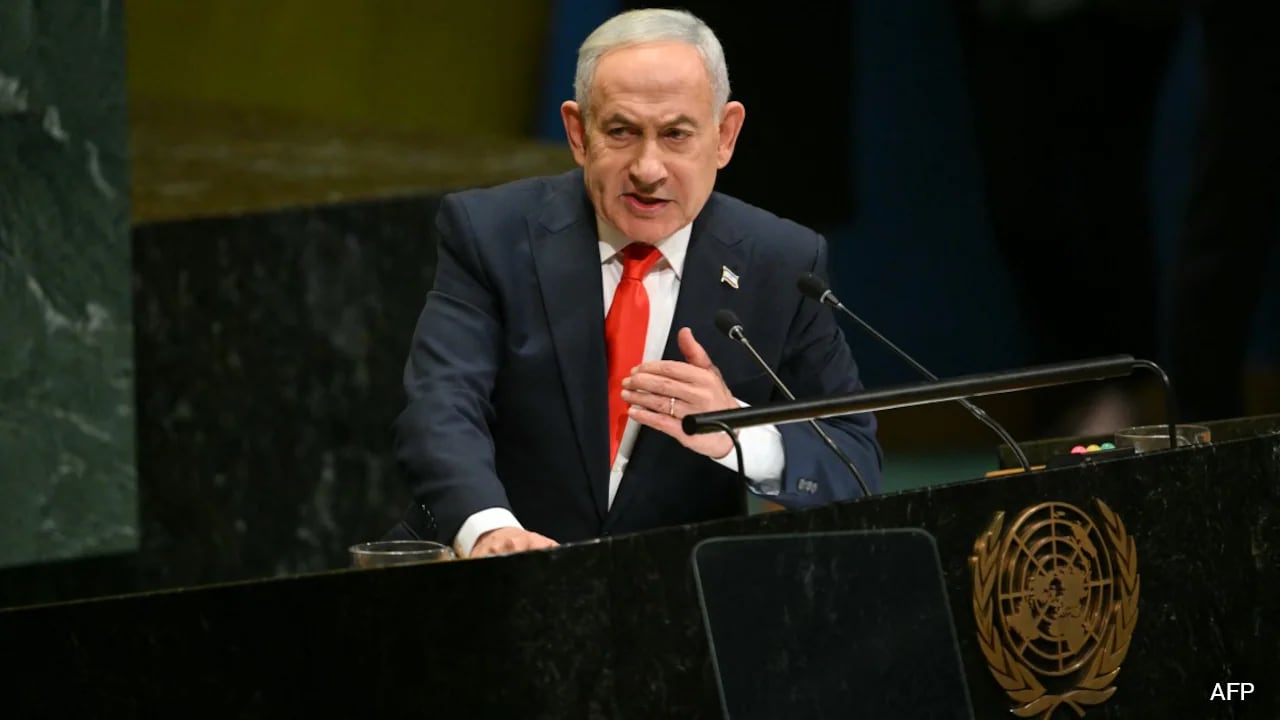
The floorboards of the United Nations General Assembly hall rarely shake from domestic municipal politics, but Benjamin Netanyahu managed it with a single direct address targeting New York City Mayor Zohran Mamdani. Standing before world diplomats, the Israeli prime minister did not merely criticize a foreign adversary; he turned his rhetorical fire directly onto the executive of the host city, declaring that under Mamdani's tenure, many Jewish residents no longer recognize or feel secure within the five boroughs.
It was an extraordinary breach of diplomatic decorum. Yet it captured a raw, unvarnished anxiety that has been quietly festering across Brooklyn brownstones, Manhattan high-rises, and Queens neighborhoods since Mamdani took office. The clash at Turtle Bay laid bare a deeper municipal fracture. New York is no longer just a backdrop for international geopolitical theater; it has become an active participant and a contested frontline in the post-October 7 ideological wars.
To understand why Netanyahu's declaration struck such a nerve, one must look past the immediate theatrical outrage of the UN floor and examine the shifting mechanics of local power. Mamdani's rise to City Hall was powered by a mobilized coalition of progressive activists, democratic socialists, and pro-Palestinian organizers who view international human rights through a hyper-local lens. For these political movements, municipal governance is inextricably linked to global solidarity campaigns.
Critics within Jewish community organizations argue that this ideological alignment has blurred the lines between legitimate critique of Israeli state policy and a permissive environment for localized hostility. When city leaders openly spar with foreign heads of state or participate in activist demonstrations, the symbolic fallout lands squarely on ordinary citizens who go to synagogue on Saturday mornings or send their children to Jewish day schools.
The security data tells a complicated story, one defined by an alarming spike in bias incidents reported to local precincts over the past few years. While the NYPD maintains specialized units to monitor hate groups and protect religious institutions, the subjective sense of safety has plummeted. Walk through Crown Heights or the Upper West Side, and the atmosphere feels charged in a way veterans of city politics have not witnessed in decades. Heavy steel barriers outside community centers are no longer temporary emergency measures; they are permanent architectural fixtures.
Mamdani's administration has consistently pushed back against allegations of institutional bias, pointing to the mayor's stated opposition to bigotry in all forms. Supporters of the mayor argue that conflating progressive municipal policies with anti-Jewish animus is a deliberate strategy designed to delegitimize a democratically elected administration. From this viewpoint, Netanyahu's UN address was an unwelcome intervention by a foreign leader facing his own legal and political pressures at home, using New York's internal divisions as a convenient political prop.
Yet this defense misses the psychological reality on the ground. For a diaspora community that views New York as the ultimate sanctuary—the largest urban Jewish population outside of Tel Aviv—the erosion of comfort is experienced as a profound existential betrayal. When the mayor of the city engages in high-profile public disputes with the Israeli government, local residents find themselves caught in the crossfire of a war of narratives that they never asked to wage at the corner grocery store or the subway turnstile.
The fallout extends far beyond diplomatic name-calling or mayoral press releases. It has forced long-standing civic alliances to fracture along ideological fault lines. Interfaith coalitions that spent decades building neighborhood trust are finding their foundational assumptions tested by starkly divergent interpretations of historical violence and moral responsibility. Synagogues are forced to weigh the cost of open community engagement against the hard security requirements of an increasingly hostile public sphere.
As the smoke clears from the General Assembly chamber, the physical reality of New York remains unchanged, even as its social fabric frays at the edges. The leaders in City Hall and Jerusalem will continue their public feuds, trading charges of bad faith and moral inversion. But the collateral damage of their confrontation is being absorbed entirely by the residents who must walk these streets long after the international press corps packs up its cameras and leaves First Avenue.