You can measure power in megawatts, in enrichment percentages, or in the dull, gray weight of newly poured reinforced concrete.
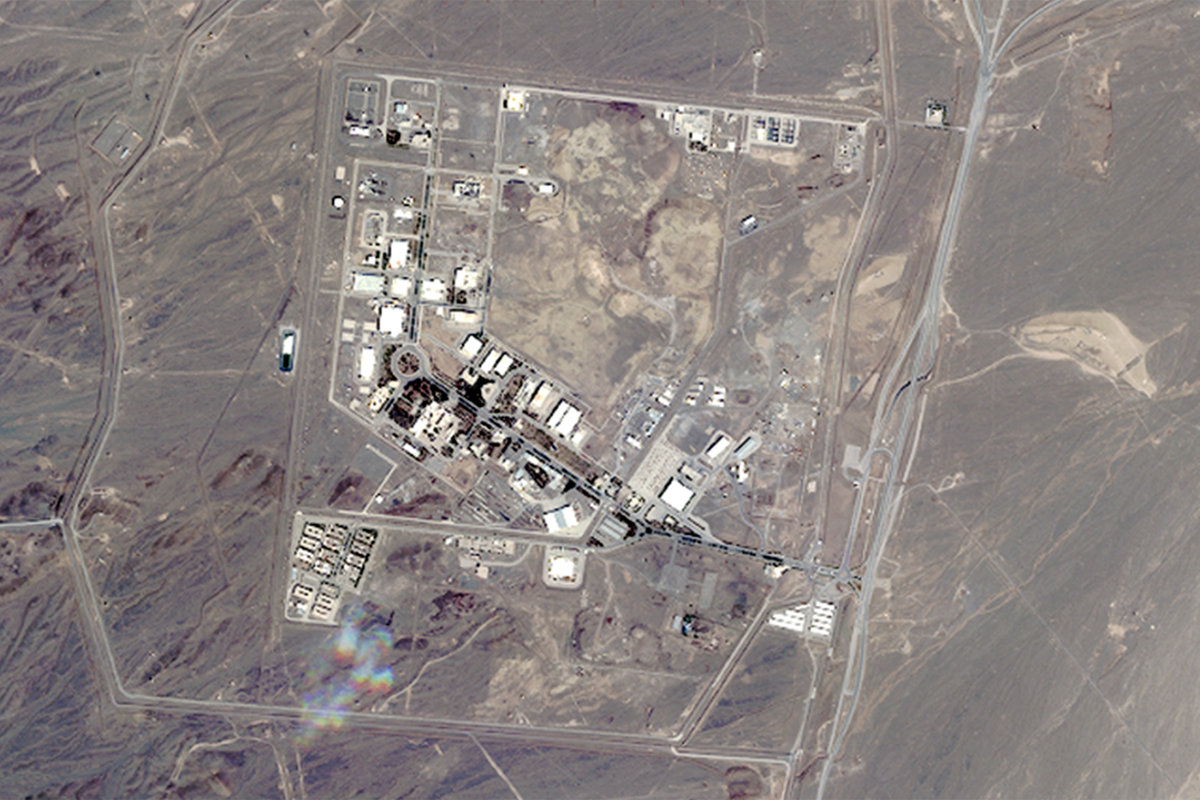
Satellites do not blink. From four hundred miles up, suspended in the quiet vacuum of low Earth orbit, synthetic aperture radar and high-resolution optical lenses peer down through the atmospheric haze at a narrow valley carved into the Zagros Mountains of Iran. To a casual observer browsing open-source intelligence feeds, the images look like nothing more than abstract geometry. Irregular shapes. Scars of white dust where heavy earthmovers have gouged the dry earth. The faint signatures of trucks lined up like ants near a tunnel entrance.
Yet these pixels tell a story of urgency.
Just days after a political figure thousands of miles away utters a public warning about the ultimate cost of unchecked ambition, the ground down below shifts. Not with explosions, but with construction. The bulldozers arrive. The cement mixers turn. The mountain accepts more weight into its belly.
Consider what happens inside a command room when the rhetoric escalates. Words carry weight, but in the shadow of the Natanz and Fordow nuclear facilities, words are measured in cubic yards of earth and steel. When threats hang heavy in the global air, the response is rarely retreat. It is fortification.
To understand this dynamic, you have to step away from the flashing television screens and look at the physical reality of modern brinkmanship.
Imagine an engineer standing inside a subterranean chamber deep beneath the rock. Let us call him Reza, though his real name is locked behind security clearances and institutional anonymity. Reza is not a zealot; he is a technician who has spent thirty years calculating load-bearing capacities and radiation shielding. When he looks at the satellite imagery splashed across foreign news networks, he does not see a political talking point. He sees a deadline. He sees concrete that needs to cure before the next seasonal rains, ventilation shafts that must be hardened against kinetic impact, and centrifuge cascades that need to be pushed deeper into the earth, safe from the reach of conventional ordnance.
When an external actor threatens destruction, the psychological reflex within a heavily sanctioned state is not surrender. It is entrenchment. Every public threat acts as a gravitational pull, drawing the project further underground, away from the sunlight, and deeper into total opacity.
This is the paradox of modern deterrence. The louder the warning, the heavier the armor.
The recent satellite imagery reveals a distinct surge in building activity at Iran’s nuclear sites following recent high-profile bomb threats. Commercial aerospace companies like Maxar Technologies and Planet Labs have captured the transformation: fresh excavation scars near the southern flanks of the mountains, new security perimeters, and specialized tunneling equipment designed to bore through solid granite.
Why now?
The timing is rarely a coincidence. Leaders under pressure respond to ultimatums by accelerating the very capabilities those ultimatums aim to stop. It is a classic behavioral loop, ancient as tribal warfare yet executed with twenty-first-century satellite telemetry. You rattle the cage, and the animal digs deeper into the den.
We have seen this script before. History is littered with the wreckage of preventive threats that achieved the exact opposite of their intended design. When you tell an adversary that their survival is on the line, you strip away their incentive for compromise. You give the hardliners the ultimate political currency. You hand them the argument that every underground tunnel, every reinforced bunker, and every kilogram of enriched material is not an offensive choice, but an existential necessity.
The satellite images do not capture the fear. They only capture the response.
Back in the valley, the dust settles on the windshields of transport trucks. Shifts change. The workers clock in and out under the watchful gaze of automated cameras and human guards. They pour the slurry into wooden forms, waiting for it to set, turning liquid gray into stone gray. Above them, the political storms rage across oceans, translated into headlines, translated into speeches, translated into the cold mechanics of masonry and steel.
The mountain grows heavier. The space for diplomacy grows smaller.
And high above the peaks, the silent mechanical eye keeps turning, recording every square foot of fresh disturbance in the dirt, waiting to see what rises next from the dark.


