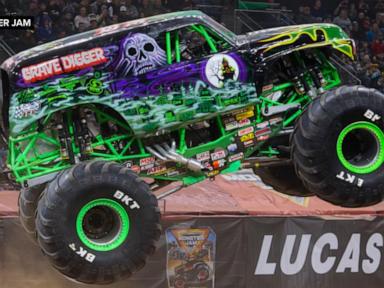
You can smell the burning nitro long before you see the blue exhaust smoke curling into the stadium lights. It gets in your hair. It settles at the back of your throat, a sharp, bitter reminder that what you are about to witness defies ordinary physics.
To the uninitiated, Monster Jam is simply noise. It is twelve thousand pounds of steel, fiberglass, and oversized rubber thrown recklessly into the air by drivers who appear to have an entirely casual relationship with gravity. But if you stand pressed against the concrete barrier when a twelve-foot tire slams into packed dirt, you realize something else.
It is architecture in motion. It is structural engineering pushed past the point of collapse, and somehow, miraculously, held together by sheer human will.
The summer series is back. That is the dry headline you will find scrolling across standard sports tickers. Veterans are returning. Newcomers are stepping into the pit. But numbers and rosters completely miss the invisible tension that hangs over the dirt floor of a packed arena in July.
Consider what happens inside the cab before a single engine turns over.
Driver Sarah Taylor, stepping into her machine for the first time this season, knows the math of the arena better than she knows her own kitchen. She knows that when she points a ten-thousand-pound truck toward a freshly shaped ramp of clay, the window for survival isn't measured in seconds. It is measured in milliseconds.
(Note: Taylor represents the collective profile of seasoned competitors returning to the circuit this year, balancing veteran instinct with the relentless evolution of truck geometry.)
"You aren't driving," Taylor often says, her voice flat and calm through the radio headset before she drops her visor. "You are translating. The truck speaks metal. You have to answer in throttle."
For years, outsiders looked at motorsport spectacles like this and saw simple demolition. They saw a brute-force display designed to appeal to the lowest common denominator of adrenaline seekers. They missed the nuance. They missed the hours of meticulous suspension tuning, the nitrogen shock pressures adjusted down to the single pound, the geometry of a four-link suspension system designed to absorb a fifty-foot drop without shattering the driver's spine.
Monsters are built, not born.
When a rookie climbs behind the wheel for the summer tour, the initiation is brutal. They face veterans who have spent decades learning how to read the compaction of dirt under twenty-ton loads. A rookie sees a flat landing ramp. A veteran sees moisture variations in the clay, a five-inch rut carved by the previous heat, and a recipe for a catastrophic roll-over.
The air grows heavy. The crowd surges upward in a wave of bright neon shirts and heavy winter coats worn against the stadium air conditioning.
Then the green light flashes.
The sound hits your chest like a physical blow. It vibrates through your ribs, short-circuiting rational thought and leaving only the primitive, thrilling pulse of the spectacle. Grave Digger doesn't just drive out; it prowls. El Toro Loco charges with theatrical fury, but behind the paint and the fiberglass horns lies an athlete operating at a heart rate that would trigger cardiac alarms in a standard medical clinic.
We love these machines because they are honest.
In a world filled with curated digital experiences and software updates that happen invisibly in the background, a monster truck is gloriously, dangerously tangible. If a driver misjudges a backflip by two degrees, the consequence is immediate, violent, and absolute. There are no safe spaces on the dirt floor. There is only the landing, or the wreck.
That vulnerability creates an unspoken bond between the grandstands and the pit. Every fan sitting in row twenty-four knows what it feels like to fail, to miscalculate, to watch a carefully laid plan flip upside down in an instant. When a truck stalls out in a cloud of white steam after a botched leap, the groan from fifty thousand people isn't mockery. It is shared empathy. We have all landed hard.
The summer series introduces a new generation of drivers who grew up watching these same fiberglass bodies launch over crushed sedans on grainy computer screens. They studied the physics. They memorized the landing angles. But simulation cannot teach you what it feels like when your stomach presses into your throat as the front end drops six stories straight down toward the earth.
Technology has evolved, certainly. Telemetry sensors feed real-time data back to crew chiefs standing on the wall, tracking oil temps and suspension travel with clinical precision. Yet, when the green light drops, the computers fade away. It comes down to raw, unfiltered human reflexes. Muscle memory carved out of bruises, broken ribs, and countless hours in dusty garages across the country.
The engines cut. The smoke slowly drifts toward the high, dark roof of the arena, thinning into a pale haze against the stadium lights.
Silence rushes back in, heavy and strange, filling the space where the roar just lived. Out on the floor, half-melted rubber clings to the dirt like black snow. Drivers climb out of their battered cages, wiping sweat from their foreheads, waving to the kids pressing against the metal barricades with signed autograph cards in hand.
The trucks sit cooling, ticking softly in the quiet air, waiting for the next town, the next dirt, the next gravity-defying drop.