Wait.
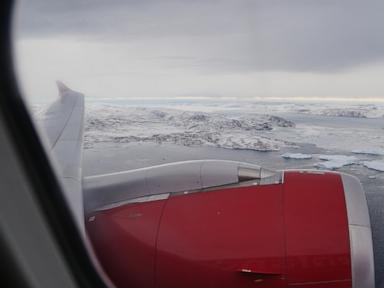
That has been the unofficial national anthem of the Arctic for as long as anyone can remember, a single syllable dictated by barometric pressure, shifting sea ice, and the stubborn geography of a granite island four times the size of France. If you wanted to visit Nuuk, the capital city perched on a ragged fjord on Greenland’s southwestern coast, you did not simply buy a ticket, pack a bag, and step off a jet onto the tarmac. You flew to Copenhagen, boarded an aging propeller plane to a former American military base called Kangerlussuaq—a dusty, windswept outpost nestled inside a long fjord three hundred kilometers north of the capital—and then you waited. You waited for the fog to lift over the coastal mountains. You waited for the crosswinds to die down. You boarded a smaller red Dash-8 turboprop that bounced through mountain passes like a cork in a torrent, and if the cloud ceiling dropped fifty feet too low, the pilot banked hard and flew you right back to where you started.
That friction was more than an inconvenience for restless travelers. It was an economic wall, an invisible tether holding an entire nation back from its own future.
Late in November 2024, the sound of jet engines finally shattered that silence. For the first time in history, wide-body commercial airliners—the kind that cross oceans without blinking—touched down on a newly blasted, 2,200-meter strip of asphalt carved directly out of the bedrock of Nuuk. A few weeks later, in early 2025, direct flights from North America began bridging the four-hour gap between Newark and the Arctic Circle. Suddenly, the world’s largest island was no longer a logistical puzzle reserved for polar expeditioners and government contractors. It was a direct flight away.
To understand why a strip of concrete in the North Atlantic matters to anyone who isn't packing a parka this winter, you have to look past the glossy travel brochures. Beneath the headlines about booming Arctic tourism lies a high-stakes wager on national survival, cultural preservation, and the terrifying arithmetic of climate change.
The Geography of Isolation
I still remember the distinct, metallic taste of stale airport coffee in Kangerlussuaq at three in the morning, staring out a frosted window at a runway built during World War II to ferry bombers across the Atlantic. Back then, the terminal was little more than a glorified cafeteria attached to a hotel where stranded passengers slept on cots when a blizzard rolled off the ice sheet. Everyone in that room—fishermen returning from North Sea trawlers, Danish nurses rotating into rural clinics, wide-eyed tourists clutching camera lenses worth more than a used sedan—shared the exact same expression of helpless resignation. You did not conquer Greenland. You negotiated with it, and Greenland usually won.
For decades, that bottleneck defined life for the roughly 56,000 people who call the island home. Think of Greenland’s old aviation network like a single-lane dirt road connecting a bustling coastal metropolis to the rest of the planet. Every fresh tomato, every spare tractor part, every medical specialist, and every curious traveler had to squeeze through Kangerlussuaq’s narrow funnel, transferring onto tiny regional planes that couldn't carry heavy cargo or fly through rough weather.
The financial toll was staggering. Air Greenland had to maintain an expensive, aging fleet of short-takeoff aircraft just to hop the final leg into Nuuk. Ticket prices from Europe routinely topped $1,500 round-trip before you even booked a hotel room. Meanwhile, the Greenlandic economy remained overwhelmingly tethered to two fragile pillars—shrimp and halibut fishing, which accounts for over ninety percent of the country's exports, and an annual block grant from Denmark that subsidizes roughly half of the public budget.
If Greenland ever wanted to stand on its own feet—and make no mistake, the political drumbeat for full independence from Denmark grows louder with every election cycle—it needed a third pillar. It needed an economy that didn't depend entirely on what comes out of the ocean or what arrives in a wire transfer from Copenhagen.
The Blast That Changed Everything
Building an international airport in Nuuk wasn't a matter of paving over flat farmland. Nuuk sits on a mountainous peninsula where granite cliffs plunge straight into freezing water. To create a runway long enough for an Airbus A330neo, engineers had to perform what was essentially open-heart surgery on the coastline.
Over four years, construction crews detonated millions of tons of solid rock, moving enough earth to fill thousands of Olympic swimming pools, leveling mountains and filling in valleys just to carve out a flat shelf between the fjords and the sea. When the dust finally settled, the $800 million infrastructure project—which also includes a brand-new international airport opening in Ilulissat further north, alongside a regional hub in Qaqortoq—represented the single largest public investment in Greenland’s history.
Consider a hypothetical character to see how this shifts the ground beneath ordinary people’s feet. Let’s call him Malik, a thirty-two-year-old boat captain in Nuuk whose family has hunted seals and fished the coastal waters for four generations. Five years ago, if Malik wanted to supplement his unpredictable winter income by taking visitors out into the Nuup Kangerlua fjord to spot humpback whales and calving glaciers, he faced a brutal math problem. His potential customers were scarce, exhausted from two days of layovers, and furious about lost luggage. Now, a couple from New York or Frankfurt can eat breakfast at home, step onto a direct flight, and stand on Malik’s wooden deck before dinner.
When you remove the friction of arrival, the entire economic gravity of a place shifts. Hotels have broken ground across Nuuk. Local culinary scenes, once limited to cafeterias and a handful of hotel dining rooms, are exploding with chefs turning musk ox, Arctic char, and foraged crowberries into world-class dining. For the first time, young Greenlanders studying in Copenhagen or Oslo are looking back home not with a sense of obligation, but with genuine entrepreneurial hunger.
The Shadow of the Cruise Ships
Yet if you walk down Imaneq, Nuuk’s main commercial street, and talk to locals over beers at Daddy’s or coffee at Pascucci, the excitement is tempered by a quiet, gnawing anxiety. They have seen what happens when the floodgates open too fast.
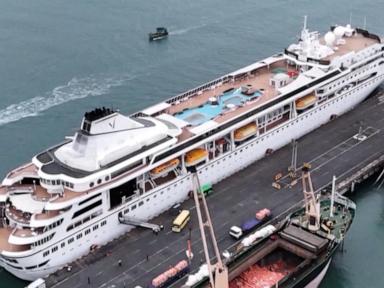
To see the cautionary tale, you don't even have to leave the island. You just have to look four hundred miles north to Ilulissat, a town of roughly 4,800 people famous for the Icefjord where colossal icebergs break off from the Sermeq Kujalleq glacier and drift silently into Disko Bay. Over the past decade, massive international cruise ships began anchoring just outside the harbor.
Imagine a floating city of three thousand passengers dropping anchor next to a town that barely has four thousand residents, a single grocery store, and two paved roads. For six hours, the boardwalks jam shoulder-to-shoulder. Tourists peer through the living room windows of brightly painted wooden houses as if the residents were exhibits in a living museum. They buy a refrigerator magnet, snap a selfie in front of a team of sled dogs, and sail away before dinner, leaving behind strained sewage systems, trampled tundra, and almost zero actual revenue for the local economy.
That is the nightmare scenario keeping Greenlandic policymakers awake at night. Tourism is a fire—it can warm your house, or it can burn it to the ground.
Greenland’s government isn't blind to the trap. Unlike Iceland, which threw its doors wide open after the 2008 financial crash and watched Reykjavik transform into a crowded, wildly expensive theme park of Puffin shops and tour buses, Greenland is trying to thread an almost impossible needle. In 2024, Parliament passed sweeping new tourism legislation designed to force the industry to stay in local hands. Under the new rules, tour operators working in sensitive areas must be majority-owned by Greenlandic residents, guides must hold local certifications, and strict zoning laws now govern where visitors can camp, hike, or land helicopters.
The goal isn't mass tourism. Nuuk’s airport isn't trying to become Cancun or Orlando. The strategy is high-value, low-volume travel—attracting visitors who stay for ten days instead of ten hours, sleep in locally owned lodges, eat local food, and pay handsomely for the privilege of experiencing one of the last truly wild places on Earth.
The Geopolitical Chessboard Beneath the Ice
There is another layer to this runway, one that has nothing to do with whale watching or boutique hotels. Look at a globe from the top down—not the distorted flat Mercator map we grew up with, where Greenland looks bigger than Africa, but a polar projection looking straight down at the North Pole.
From that angle, Greenland isn't at the edge of the world. It is dead center.
It sits directly between North America and Eurasia, straddling the GIUK gap—the strategic naval chokepoint between Greenland, Iceland, and the United Kingdom—and sitting atop some of the richest untapped deposits of rare earth elements, uranium, zinc, and copper on the planet. As the Arctic warms nearly four times faster than the global average, melting sea ice is opening new shipping lanes across the top of the world, turning a frozen buffer zone into the twenty-first century’s hottest geopolitical neighborhood.
Washington knows it. Beijing knows it. Moscow knows it.
Back in 2018, when a Chinese state-owned construction firm bid to build Greenland’s new airports, alarms went off in the Pentagon and the Danish Prime Minister’s office. Denmark quickly stepped in with low-interest loans and co-financing to ensure the runways were built with Western capital, keeping critical Arctic infrastructure out of Beijing’s orbit. A year later, the White House famously floated the idea of buying Greenland outright—an offer met with bewildered laughter in Nuuk, followed by the reopening of a U.S. consulate in the capital for the first time since 1953.
Every wide-body jet that lands on Nuuk’s new runway carries more than skiers and photographers. It carries mining executives, diplomatic delegations, defense contractors, and scientists measuring the retreat of the inland ice sheet. The airport isn't just a tourist gateway. It is a geopolitical umbilical cord tying an emerging Arctic nation directly into the global bloodstream.
The Fragility of the Prize
Still, concrete cannot conquer everything. Nature always keeps a veto in the Arctic.
Even with state-of-the-art instrument landing systems carved into the mountain approaches, Nuuk remains one of the most challenging aviation environments on Earth. Katabatic winds—dense, freezing torrents of air that spill off the massive inland ice sheet at hurricane speeds—can materialize out of a clear blue sky in minutes. Sea fog still rolls off the Labrador Sea like a thick wool blanket. During the airport’s opening weeks, severe winter storms forced several inaugural international flights to divert or turn back, a humbling reminder that technology can shorten the distance between continents, but it cannot rewrite the laws of physics.
There is also a quieter, deeper fragility at stake. The very thing bringing the world to Greenland’s doorstep is the thing threatening to erase it.
Tourists call it "last-chance tourism"—the urgent, slightly guilty rush to see glaciers before they calve into the sea, to walk on permafrost before it thaws into mud, to witness an ancient hunting culture adapting in real time to a warming ocean. For an outsider, watching a blue wall of ice collapse into a fjord is a breathtaking spectacle, something to capture in slow motion on a smartphone. For a hunter in northern Greenland, that same melting ice means the winter sea-ice highways his family has traveled by dogsled for a thousand years are now too thin to support a team, turning familiar hunting grounds into deadly traps.
Greenland is asking the world to fly thousands of miles, burning tons of jet fuel, to witness the beauty of a fragile ecosystem so that the revenue can fund a future free from colonial dependency. It is a profound, uncomfortable paradox, and nobody in Nuuk pretends to have an easy answer for it.
Standing on the Tarmac
If you fly into Nuuk today on a clear afternoon, the descent feels less like landing at an airport and more like threading a needle through a cathedral of stone and water. The plane banks low over dark, glass-still fjords dotted with luminous white icebergs the size of apartment buildings. Jagged, snow-dusted peaks rise sharply on either side of the wingtips before the wheels kiss the fresh black asphalt, kicking up a fine mist of Arctic air.
You walk down the stairs onto the tarmac, and the cold hits your lungs like a splash of ice water—clean, sharp, smelling faintly of salt, wet granite, and juniper scrub. Inside the sleek, timber-lined terminal, there are no duty-free perfume corridors or blaring television screens. Just panoramic windows framing the mountains, a small café serving hot coffee, and a crowd of locals waiting at the glass with flowers and handmade welcome signs.
For centuries, the rest of the world looked at Greenland as an empty white space at the top of the map—a resource to be extracted, a military outpost to be guarded, or a romantic wilderness to be conquered. With a single strip of concrete blasted into ancient rock, Greenland has finally seized the pen to write its own story. The door to the Arctic is wide open now, and for the first time in history, the people living on the inside get to decide who stays for dinner.