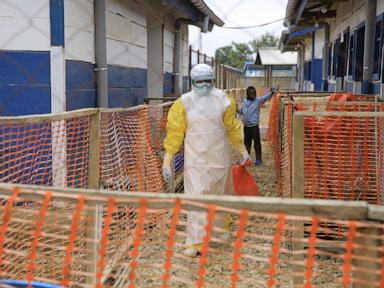
Eight provinces. Over ten thousand confirmed cases. And a pace that stunned veteran epidemiologists who thought they had seen the worst of viral hemorrhagic fevers in Central Africa.
When the Democratic Republic of the Congo declared its 17th Ebola outbreak in May 2026, response teams braced for a grueling fight in the eastern forests. Nobody expected the Congo Ebola outbreak to clear 1,000 confirmed cases in roughly 40 days—a milestone that dragged on for around 235 days during the 2018 DRC epidemic. By November 2026, WHO and national surveillance data put cumulative confirmed cases in the DRC past 11,300 with more than 5,500 deaths across Ituri, Nord-Kivu, Sud-Kivu, Tshopo, Haut-Uélé, Bas-Uélé, Sud-Ubangi, and Nord-Ubangi.
Look closely at what's happening on the ground, though. Headlines love a simple count of provinces. Real outbreak control lives in health zones, river corridors, security flashpoints, and tiny clinics where a sick child arrives hours too late.
How the Congo Ebola Outbreak Spread Across Eight Provinces
Geography in the DRC doesn't sit still. People move along rivers, footpaths, and market routes regardless of whether a health zone is listed as "active" on a daily dashboard.
Early on, transmission hit hardest in eastern provinces like Ituri and Nord-Kivu, with initial spillover and cases also tracked in Sud-Kivu. From there, the virus pushed outward into Tshopo and the Uélé districts before reaching Sud-Ubangi and Nord-Ubangi. That westward push toward the Ubangi River matters enormously. Communities on both banks share deep family ties, markets, and boat traffic, which is why neighboring countries like the Central African Republic have stepped up joint readiness and cross-border coordination.
Wait—don't read a provincial tally and assume every village inside those borders is on fire. Public health analysts tracking the response point out that provincial totals often hide sharp local contrasts. One health zone might see transmission slow down while a neighboring district lights up because a funeral went unmonitored or a clinic lost access. By early November 2026, confirmed cases had touched roughly 67 to 68 health zones across the eight provinces, even as certain earlier hotspots showed quieter weeks.
What makes this wave different from past crises isn't just the map. It's the strain driving it.
Bundibugyo Virus Changes the Playbook
Most people hear "Ebola" and automatically picture Zaire ebolavirus, the species behind the 2014–2016 West Africa crisis and many prior DRC flare-ups. This epidemic is caused by Bundibugyo virus (Orthoebolavirus bundibugyoense), a distinct species first identified in Uganda in 2007 and seen previously in eastern DRC.
That biological detail carries huge practical weight. Licensed vaccines and monoclonal antibody treatments built specifically for Zaire ebolavirus don't give you a ready-made, Bundibugyo-specific off-the-shelf fix—researchers and health agencies have been running Phase 2/3 vaccine and therapeutic trials amid the response rather than relying solely on a pre-approved Bundibugyo product. Meanwhile, the crude case fatality ratio in DRC has hovered just under 50%. Brutal, yes, yet lower than the 70% to 90% figures associated with some severe historical Zaire outbreaks. Lower percentage fatality doesn't mean milder public health impact when case counts climb into the five figures. Thousands of deaths still overwhelm mortuaries, families, and district hospitals.
Why Speed Outpaced Early Containment
In outbreak work, speed is everything—and late detection is the enemy. If a patient spends days moving between family homes, traditional healers, and under-equipped clinics before anyone suspects hemorrhagic fever, chains of transmission multiply quietly.
Having worked alongside emergency health teams in high-burden settings, I can tell you how quickly a manageable cluster turns into a regional headache when three pressures collide at once:
- Insecurity and operational pauses: Armed clashes, attacks, and displacement don't just endanger staff; they sever contact tracing. When teams lose track of confirmed cases or high-risk contacts after security incidents, chains of spread go blind.
- Labor strain and care bottlenecks: Health workers burn out fast when pay disputes, strikes, or supply shortages hit mid-crisis. Even when treatment centers expand capacity, a bed doesn't save a life if families can't reach the facility in time.
- Hard-to-reach communities: Dense forest cover, washed-out roads, and river travel turn routine follow-up into a multi-day trek. Six months into the crisis, WHO regional updates emphasized that reaching isolated communities is central to stopping ongoing spread.
Here's a detail that gets far too little attention in standard news roundups: young children are paying a steep price. Epidemiological reporting has flagged disproportionate mortality among children—especially under age five—alongside frequent deaths outside treatment centers or shortly after admission. Kids dehydrate faster, their symptoms can look like malaria or common childhood infections early on, and caring for a sick child often pulls whole households into close contact.
Cross-Border Ripples Beyond the DRC
Ebola doesn't respect passports, and neither does human travel. Alongside the massive toll inside the DRC, cases linked to this multi-country Bundibugyo event appeared in neighboring Uganda—where officials later marked the end of the outbreak after completing the required 42-day countdown—as well as clusters and imported cases tracked in Kenya and Nigeria in October 2026, plus occasional medical evacuations to Europe such as Switzerland and the United Kingdom.
Context matters here so nobody panics unnecessarily. An imported case detected at a border or treated in a specialized isolation unit is a test of surveillance, not proof of runaway global spread. In Kenya, health authorities reported cases tied to an initial patient with contacts placed under monitoring and recoveries progressing, while Nigeria tracked a single imported case with travel history to Uganda and monitored identified contacts. For travelers in Europe or North America, major agencies like the European Centre for Disease Prevention and Control and the U.S. Centers for Disease Control and Prevention have kept general population risk low, provided basic precautions are followed in affected areas.
Still, regional risk is real. Shared river basins, market towns, and porous borders mean a single missed fever case in a town like Bangui or along the Ubangi corridor could spark a fresh front.
Common Myths That Slow Down Real Protection
Whenever a major outbreak hits the news, bad information spreads almost as fast as the rumor mill. Let's clear up a few misconceptions that trip people up:
- Myth: Ebola spreads through the air like measles or flu. Honestly, this myth scares people into making terrible decisions. Ebola spreads through direct contact with blood or body fluids of an infected person who has symptoms (or has died from the disease), or through contaminated objects and surfaces. You don't catch it simply walking past someone on a street.
- Myth: Someone can pass the virus before feeling sick. People aren't contagious during the incubation period before symptoms appear. Risk rises sharply as illness progresses—especially with vomiting, diarrhea, bleeding, or handling a deceased body without safe burial protections.
- Myth: Every hemorrhagic fever headline means a global pandemic. High fatality rates and dramatic news coverage make Ebola feel apocalyptic. In reality, transmission chains can be broken through fast isolation, safe burials, contact tracing, and supportive care—assuming health teams have security and access.
What about uncertainties? Let's be straight: in an active crisis spanning dozens of health zones and conflict-affected pockets, real-time counts lag behind reality. Case numbers, recovery tallies, and contact-tracing percentages shift as labs reconcile samples and field teams reconnect with isolated villages. Treat daily figures as snapshots in motion, not carved-in-stone totals.
Practical Steps You Can Take Right Now
You don't need to be an epidemiologist to act sensibly. Depending on where you sit, a few concrete steps make a real difference:
- If you're traveling to or working in affected provinces: Check current travel health notices from the World Health Organization and your national health agency before departure. Avoid contact with sick individuals, bushmeat, and wild animals, wash hands frequently with soap and water or alcohol-based sanitizer, and know the nearest accredited clinic before you travel.
- If you develop fever, severe headache, muscle pain, vomiting, or diarrhea after visiting an affected zone: Isolate yourself immediately, call ahead to local health authorities rather than walking unannounced into a busy clinic, and monitor symptoms closely during the 21-day window.
- If you're following the crisis from afar: Support organizations delivering frontline logistics, pediatric care, and community engagement in hard-to-reach health zones—and verify claims against WHO, Africa CDC, or national health ministry updates before sharing anything online. Stopping this outbreak takes clinics, safe transport, and local trust working together day after day.