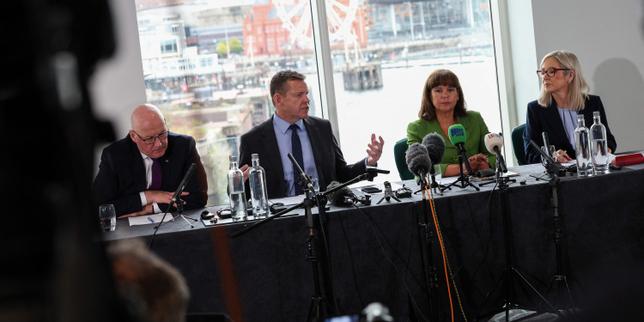
The British state is built on the quiet assumption that its periphery will eventually quiet down. For centuries, Westminster operated on a simple premise: administrative grumbling would occasionally bubble up, a few concessions on regional funding would be doled out, and the central machinery of the United Kingdom would roll onward largely undisturbed. That assumption suffered a structural fracture in Cardiff when the leaders of Scotland, Wales, and Northern Ireland gathered to sign a joint declaration.
This was not standard regional posturing. By formally asserting their right to self-determination and calling on the central government to prepare for constitutional re-engineering, figures representing the Scottish National Party, Plaid Cymru, and Sinn Féin did something unprecedented. They stopped petitioning London individually and started coordinating collectively. Downing Street’s response—dismissing referendums as entirely off the table—reveals an administration treating a chronic tectonic shift as a temporary weather event. You might also find this similar coverage insightful: The Stranger in the Bedroom.
The Mechanics of Peripheral Alignment
To understand why this joint memorandum matters, one must look past the immediate headlines of independence campaigns and examine the underlying mechanics. Historically, Westminster maintained control by keeping the nationalist movements of the devolved nations isolated from one another. Edinburgh’s arguments for fiscal autonomy were treated as fundamentally distinct from Belfast’s questions of constitutional reunification or Cardiff’s anxieties over language and cultural preservation.
By aligning their efforts, these regional leaders have effectively changed the diplomatic geography of the British Isles. They are no longer just domestic actors appealing to a reluctant Prime Minister; they are forming a united front that shares operational strategies on renewable energy, economic development, and international engagement. As discussed in latest articles by Al Jazeera, the implications are worth noting.
Consider the strategic positioning. In Scotland, the push centers on reclaiming European Union membership and bypassing fiscal constraints imposed by the Treasury. In Northern Ireland, the framework of the Good Friday Agreement provides a distinct legal mechanism for border polls that Westminster cannot easily wish away without destabilizing a delicate peace. In Wales, where outright independence has historically polled lower than in Scotland, Plaid Cymru’s participation shifts the mainstream political center of gravity toward expanded legislative powers and self-reliance. When these three streams merge into a single constitutional demand, Downing Street's defense mechanism of localized containment ceases to function.
The Westminster Blind Spot
The central miscalculation in Whitehall stems from a persistent failure of imagination. British political culture treats the union as a permanent architectural fact rather than a voluntary and continuously negotiated contract. When leadership in London insists that there is no popular mandate for change because opinion polls fluctuate month to month, they misunderstand how nationalist movements actually gain momentum.
Constitutional erosion does not happen overnight through a sudden storm. It occurs gradually, through a thousand small institutional friction points. Every time Downing Street blocks a legislative competence, rejects a fiscal proposal, or closes the door to dialogue regarding European alignment, it reinforces the core nationalist narrative: that the current governance model is structurally incapable of accommodating regional aspirations.
A hypothetical scenario illustrates the risk. Imagine a mid-sized manufacturing firm operating in South Wales that finds its export pathways complicated by central trade policies negotiated entirely around English economic priorities. Simultaneously, a local council in Scotland watches its green energy transition stall due to centralized grid funding decisions made in Whitehall. Separately, these grievances are manageable administrative complaints. Synchronized through a shared political framework, they become systemic indictments of the Union itself.
Beyond the Rhetoric of Stability
The official line from the current administration remains anchored in maintaining the status quo at all costs. Yet, stubborn resistance without an alternative vision for structural reform is a high-risk gamble. History suggests that centralized states that refuse to modernize their constitutional plumbing do not become more stable; they simply store up kinetic energy until a rupture becomes unavoidable.
The signatories in Cardiff have made their intent clear. They are building the intellectual, political, and logistical scaffolding for a post-Westminster future, whether Downing Street chooses to participate in the blueprinting or not. By treating this declaration as mere theater, the central government is misreading the room, the epoch, and the map. The periphery is no longer asking for permission to speak; they are drafting the terms of departure, and time is no longer on the side of administrative inertia.