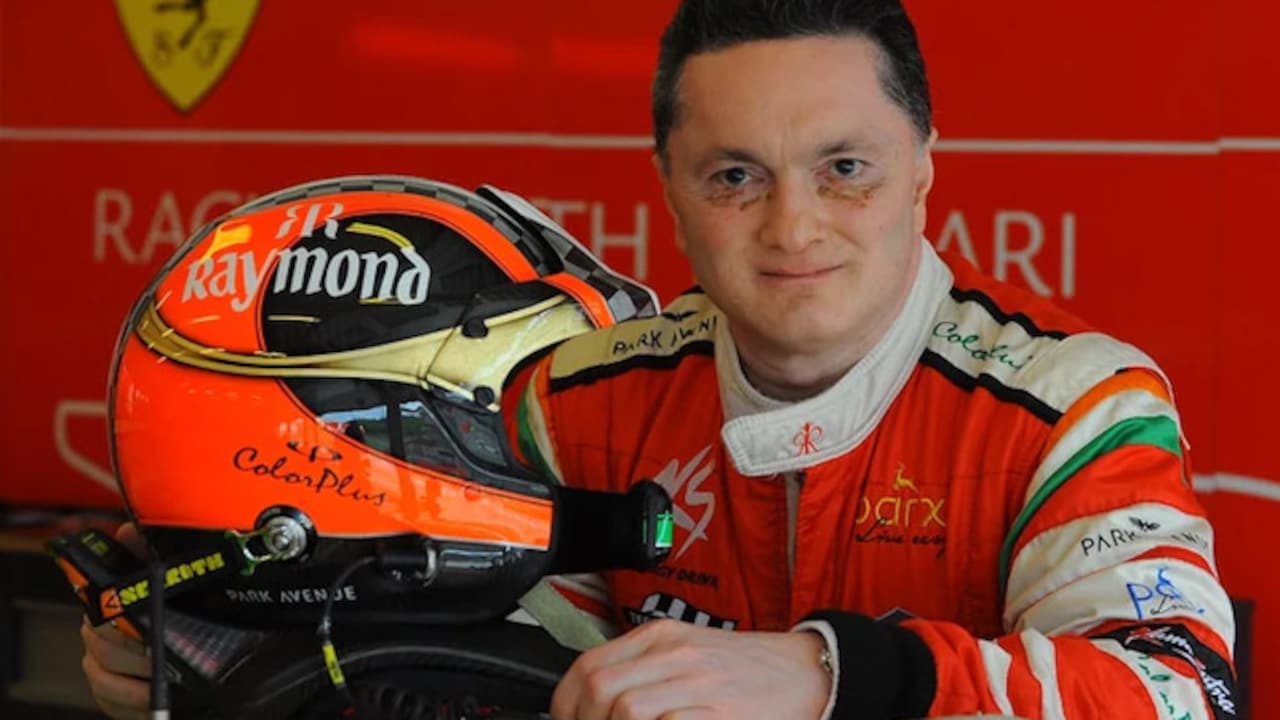
The lights of a global summit have a way of turning private armor into public speech.
In late October 2026, when Gautam Hari Singhania took the stage at the NDTV World Summit—convened under the banner "A World Between Orders"—he was not merely speaking as the chairman of a century-old Indian institution. He was speaking as a man who had spent years inside a crucible where blood, boardroom battles, and industrial reinvention collide. Watching that moment unfold from the outside, it is easy to reduce it to headline bullet points: demerger strategy, supply-chain shifts, aerospace growth, succession planning.
Bullet points are tidy. Real life rarely is.
When an industrialist stands before cameras and says, "I've lost a lot of my family to protect this organization. And this organization is not me. It's the 50,000 families that work for my company," the air in the room changes. Suddenly, a corporate restructuring stop being an abstraction for equity analysts. It becomes a question of rent, school fees, medicine, and dignity for fifty thousand households across India.
Let me admit something right away: watching family empires fracture or reorganize from afar can feel confusing, even unsettling. When you see a storied name like Raymond breaking apart pieces of itself—demerging businesses, bringing in twenty-two senior executives under what Singhania calls "Raymond 3.0," stepping back from subcommittees so professionals can run the show—your instinct as a reader might be to ask whether something is being saved or dismantled. I have sat through enough corporate transitions over the years to know how loud the noise gets when legacy meets change. Rumors outrun filings. Pride collides with arithmetic. And somewhere between the legal notices and the press briefings, ordinary workers wonder whether the ground beneath their boots is shifting.
The Weight Inside the Suit
For generations, Raymond was woven into the fabric of Indian aspiration through cloth and craft—the promise of looking sharp, standing tall, stepping into the world as "The Complete Man". To understand why that image feels different in 2026, think about how a tailor works. If a master cutter tries to force a heavyweight winter tweed and a breathable summer linen through the exact same pattern, neither garment hangs right. One pulls at the shoulder; the other loses its drape.
(Note: That tailoring comparison is my own analogy to explain why conglomerate structures often strain when disparate businesses share a single roof.)
At the NDTV World Summit, Singhania laid out why unbundling—demerging independent entities—made commercial sense. Different businesses breathe different air. A consumer textile and apparel engine faces domestic retail rhythms and shifting global tariff winds, whereas aerospace and defence move on multi-year precision engineering cycles and cross-border industrial partnerships. If you keep everything locked inside one rigid container, the slower or more capital-intensive unit can blur the focus of the faster one, and vice versa.
Yet numbers alone do not explain the emotional cost Singhania put on the table. When family disputes spill into public view, there are no painless victories. Relationships strain. Dinners go unshared. A surname that once meant effortless unity starts carrying heavy memories. Standing on a summit stage and framing those losses as the price of safeguarding fifty thousand families is a stark claim. Critics and supporters will debate every nuance of family governance for years, as they always do in high-stakes business dynasties. Still, one truth stands out: an enterprise of that scale is never just a private trophy. It is a living ecosystem.
To picture what that ecosystem looks like on the ground, consider a hypothetical character—let's call her Kavita, a production supervisor whose brother-in-law works in logistics and whose teenage son dreams of engineering. (This character is hypothetical, created to ground the human stakes of industrial transitions.)
When Kavita reads about a demerger or a "Raymond 3.0" management overhaul, she isn't thinking about valuation multiples first. She is thinking about whether her shift schedule holds, whether her younger relatives have a clear path forward, and whether leadership has the discipline to survive turbulent markets. When Singhania emphasizes putting professionals in charge, limiting his own board seats rather than micromanaging subcommittees, and declaring that succession planning is in place, he is trying to answer Kavita's quiet worry: Will this house still stand after today?
A World Between Orders
The summit's theme—"A World Between Orders"—could hardly have fit a more jittery global moment.
Across the world, trade rules are being rewritten on the fly. Tariff swings rattle supply chains that once looked permanent. Geopolitical shocks and regional conflicts—including the war Singhania referenced in his summit remarks—send ripples through energy, freight, and consumer sentiment. When global trade routes behave like weather fronts rather than paved highways, companies cannot afford sluggish decision-making.
Singhania pointed to a crucial buffer: India's domestic consumer economy. When external shocks hit—whether tariff volatility or conflict abroad—a deep internal market gives Indian enterprises room to absorb pressure that smaller, export-dependent economies might find suffocating. At the same time, shifting tariffs are forcing companies to rethink where goods are made and where they are sold, making regions like Europe more compelling to examine alongside established partners.
What happens next when an old-line brand looks beyond textiles and tailoring?
Consider what happens next: Raymond is no longer just a story about fabric. Aerospace and defence have stepped into the spotlight. In New Delhi later in November 2026, on the sidelines of the Indo-US Economic Summit—and right around the time he was honoured with the Excellence in Industrial Leadership Award by the Indo-American Chamber of Commerce—Singhania spoke about how a proposed India-US free trade agreement could deepen aerospace ties, noting that Raymond Aerospace (originally Maini Aerospace before its acquisition) has worked with American aerospace firms for over two decades and posted strong first-half growth exceeding 55 percent.
Think about that leap.
From fine suiting to precision aerospace components. From a traditional promoter-led setup toward a broader executive bench—twenty-two senior leaders brought in to align with the road ahead—and even discussions around a potential further demerger. Even his remarks at the NDTV summit drifted playfully into the future, touching on reinvention, entrepreneurship, and the wild ambition of flying cars like Tesla's.
What "The Complete Man" Means Now
Every era redefines its old slogans.
Decades ago, "The Complete Man" conjured a polished gentleman in tailored wool, poised and assured. At the NDTV World Summit 2026, Singhania was asked what that phrase means today. In a world marked by fractured alliances, tariff shocks, rapid technological shifts, and personal sacrifices behind closed doors, completeness no longer looks like effortless polish. It looks like accountability. It looks like building an institution sturdy enough not to depend on a single ego, handing operational levers to capable professionals, and keeping faith with the people whose livelihoods depend on your judgment.
There is vulnerability in admitting that family bonds were bruised along the way. There is also a hard-edged pragmatism in insisting that governance must outlast personal grievances. Whether every step of Raymond's demerger and executive reset delivers every hoped-for outcome is something markets and time will judge. Nothing in business—or family—is guaranteed.
Yet when the cameras cut away from the stage, the test remains remarkably simple.
A chair sits empty or full. A ledger balances or breaks. And somewhere in a factory, an office, or a family home, fifty thousand people wake up to see whether the promises spoken in bright lights hold up in ordinary daylight.
Gautam Singhania's NDTV World Summit 2026 remarks on Raymond's demerger and succession
This video offers a direct look at Gautam Singhania speaking at the NDTV World Summit 2026 about Raymond's demerger strategy, management shift, and succession plans discussed in the article.