
Houston just witnessed something that sports scriptwriters would reject for being too predictable. Yet, when Cristiano Ronaldo found the back of the net, the NRG Stadium erupted with a noise that felt less like a standard goal celebration and more like a collective release of historical tension. The Portuguese icon did it again. At an age when most legendary forwards are busy doing television commentary or managing youth academies, Ronaldo is still anchoring the dreams of a nation right here on American soil.
You see it every time Portugal plays a major tournament match. The pre-game talk centers on whether his presence helps or hurts the squad. Pundits talk about tactical fluidity and pressing structures. They look at data sheets and argue that a 41-year-old forward slows down the transitional game. Then the match kicks off, a cross flies into the penalty box, and those arguments evaporate in a fraction of a second.
This isn't just about one goal scored in Texas. It's about how Ronaldo transforms the entire energy of the 2026 World Cup. For the thousands of Portuguese fans who flooded Houston, and the millions watching globally, that single moment proved that the dream of international glory remains alive.
The Atmosphere Texas Had Never Seen Before
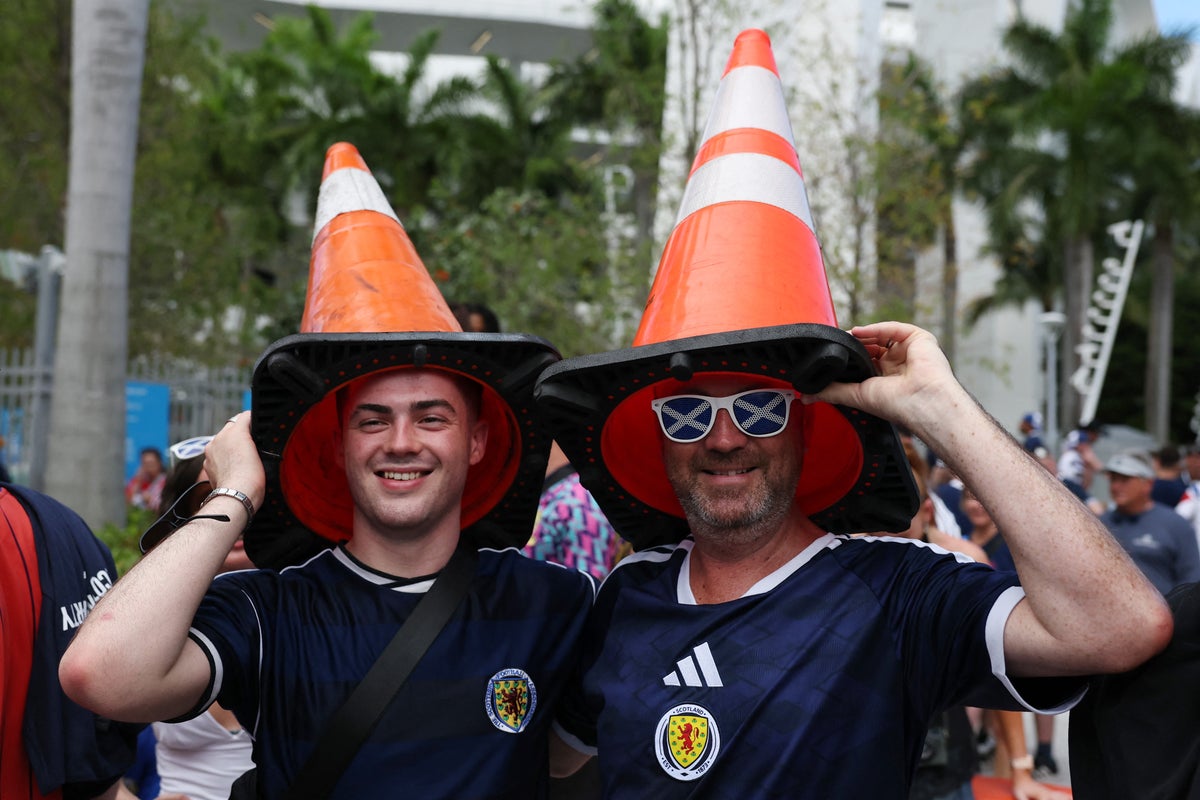
Houston loves sports, but the energy surrounding this match felt completely different from a standard NFL Sunday or a Rockets playoff game. The city became a temporary outpost of Lisbon. Streets outside the venue were a sea of red and green shirts hours before gates opened. Local fan clubs mingled with traveling supporters who crossed the Atlantic just to catch what might be the final chapter of an era-defining career.
When Ronaldo scored, the stadium shook. Literally. The press box vibrated, and the roar from the stands could be heard blocks away. It is easy to forget how much weight these moments carry for the diaspora. For Portuguese immigrants living in Texas and surrounding states, seeing their national team live is a rare privilege. Seeing their greatest player score a crucial goal is something they will talk about for decades.
Critics love to call this fandom blind worship. They miss the point entirely. Football is driven by emotion, not just spreadsheet metrics. The belief that Ronaldo injects into his teammates and the crowd creates a tangible psychological edge. Opponents feel it too. No defender looks at Ronaldo inside the penalty area and thinks they have an easy assignment, regardless of what birth year is printed on his passport.
Changing the Definition of Longevity
We need to stop comparing current Cristiano Ronaldo to the player who wore the Manchester United or Real Madrid shirt a decade ago. He isn't tearing down the wing anymore. He isn't completing five dribbles a game or tracking back to tackle opposing fullbacks in his own half. Expecting that from him is foolish.
Instead, look at how he has refined his role into something incredibly concentrated. He has become the ultimate penalty box predator. His movement off the ball remains elite. He knows exactly when to pause his run, when to dart to the front post, and how to use a defender's own momentum against them.
- He occupies central defenders, freeing up space for inverted wingers.
- He forces opposing backlines to drop deeper out of sheer fear.
- He converts half-chances that younger forwards often rush or mishandle.
The physical preparation required to maintain this level of performance at this stage of life is unprecedented in modern football. While other players face declining sharpness in their late thirties, Ronaldo remains a physical anomaly. His aerial leap is still higher than the defenders guarding him, and his striking technique remains clinical. It is a lesson in adaptation that young athletes across all sports should study.
The Roberto Martinez Plan and the Supporting Cast
Portugal's success doesn't happen in a vacuum. Under Roberto Martínez, the national team has built a structure that accommodates Ronaldo's strengths while covering his defensive limitations. The midfield engine room does the heavy lifting so the captain can save his energy for the moments that decide matches.
Players like Bruno Fernandes, Bernardo Silva, and Vitinha are the real keys to making this setup work. They control the tempo, retain possession, and deliver the precise service that Ronaldo thrives on. When Rafael Leão stretches defenses with his explosive pace on the flank, it pulls the opposing backline apart, creating the exact gaps Ronaldo needs to exploit.
The mistake many analysts make is viewing Portugal as a one-man show. It hasn't been that for a long time. This is one of the deepest, most talented squads in international football. The real tactical triumph is how they have integrated a legendary focal point without ruining their overall balance. They don't play solely for Ronaldo, but they know exactly how to find him when the game hangs in the balance.
What Most Analysts Get Wrong About the Numbers
People love to obsess over running distance statistics. They point out that Ronaldo runs fewer kilometers per ninety minutes than other elite forwards in the tournament. They claim this hurts Portugal's ability to implement a high press from the front.
That argument ignores how modern knockout football actually works. International tournaments are rarely won by teams that try to press frantically for a full month of summer matches. They are won by teams that manage their energy, defend with discipline, and take their chances with lethal efficiency.
Ronaldo's value isn't measured by how much grass he covers. It is measured by positional gravity. When he is on the pitch, the opposing team cannot commit their fullbacks forward as aggressively. They always keep an extra man back to monitor his position. That tactical sacrifice by the opposition opens up the channels for Portugal's creative midfielders to control the game.
Navigating the Road Ahead
The victory in Houston provides a massive boost, but the tournament only gets harder from here. The knockout stages of a World Cup offer no margin for error. One bad bounce, an early red card, or a lapse in concentration can ruin years of preparation.
Portugal's main challenge will be maintaining defensive stability against teams that possess elite transition speed. While the attack looks potent, the backline must remain compact to prevent teams from exploiting the spaces left behind when the midfield pushes forward to support the attack.
For fans following this journey, the next steps are clear. Keep an eye on how Martínez manages Ronaldo's minutes during tight turnarounds. Recovery will be the defining factor as the games get closer together. Pay close attention to the opening fifteen minutes of the next match. If Portugal can establish possession early and dictate the pace, it allows their veteran talisman to position himself effectively without burning through his physical reserves too early. Watch the crossing angles from the wide areas, because that is where the magic in Houston started, and that is exactly how Portugal will try to keep this dream alive all the way to the final.
.jpg?width=1200&auto=webp&trim=25%2C0%2C25%2C0)